Table of Contents
You step into your living room, and something feels wrong. The couch is great, the rug is brand new, and you’ve invested in that fancy armchair. Yet, the space still feels cramped and cluttered.
The good news? The culprit often has very little to do with the actual size of your room. Instead, it may be connected to how you arrange your furniture. If you’re working with limited space, explore our small living room layout ideas for more ways to make your room feel open and comfortable
Living room furniture layout mistakes are usually small things we all tend to overlook. We squeeze too much furniture into one space, ignore proportions, or place furniture awkwardly, blocking windows and doorways. Each of these mistakes takes away from your room’s visual space, turning a perfectly comfortable living room into a cramped box.
Here’s even better news: You can fix these problems without spending a fortune or demolishing any walls.
Let’s explore the seven biggest living room furniture layout mistakes and discover simple, practical ways to fix them.
Mistake #1: Placing Furniture Against All the Walls
It’s a mistake made by most people. It seems only natural. After all, if you place furniture against the walls, you have more space in the center, don’t you? Not really.
If you line up all the furniture along the edges, you get a wide open space in the center, a huge “bowling alley,” as designers say. You draw the attention to the wall, emphasizing the boundaries of the room and making it seem very constrained and boxed in.
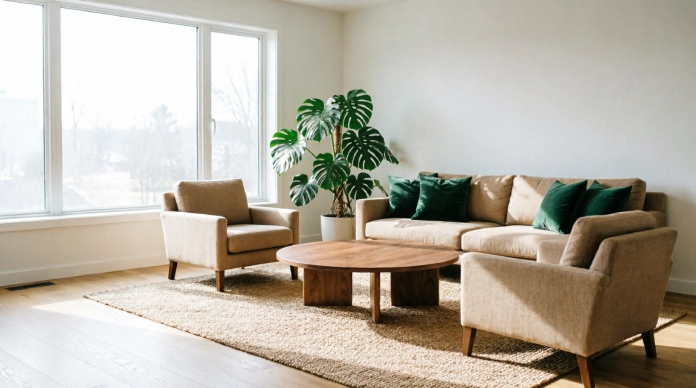
How to Fix It: Float the Furniture
Move your furniture a few inches away from the walls. Even 3-6 inches of extra space works wonders. If your room is spacious enough, consider floating your sofa even further and using it as a marker for the conversation zone.
After that, bring your seating furniture closer to each other. Arrange the sofa and chairs in such a way that people don’t need to shout when communicating across the room.
Mistake #2: Selecting Overlarge (or Way Too Small) Pieces
Scale is one of those things that we just do not give much thought to until something goes wrong. It’s when you find a mammoth-sized couch filling your entire little living room. Or when you have a minuscule sofa in a very spacious room.
Both mistakes throw off the balance between proportions, and it is the proportion that lets your brain know how big your space is.
When you choose oversized furniture, it will limit your space for movement. And you will be forced to squeeze through everything you bought, which gives you a feeling of claustrophobia. Small pieces, on the contrary, will make your room look disjointed and random. For more inspiration, check out these living room furniture ideas for long narrow rooms to create a balanced arrangement.
Solution: Measure First
Use a tape measure. Yes, literally. Before you start shopping or moving anything, take the measurements of your space and walkways. For more guidance, follow this HGTV guide to creating a floor plan and furniture layout before rearranging your furniture
- Leave 30 to 36 inches for main walking paths.
- Mark the furniture size on the floor with painter’s tape to see how it feels.
- Pick pieces with visible legs and a lower profile. When you can see the floor underneath, light travels through and the room feels airier.
Clean lines and slim arms also help. A sofa with a bulky, rolled arm takes up more visual room than one with a slim, simple arm, even if they are the same length.
Mistake #3: Obstructing Natural Light and Walkways
Natural light is the most economical method for creating an illusion of spaciousness. Therefore, by putting a high shelf or tall sofa in front of a window, you are effectively closing a great source of free space.
The same applies to walkways; if you have to dodge a chair to get from one end of the room to another, you create clutter despite having ample space.
The Fix: Keep Light and Movement Flowing
- Keep windows as clear as you can. If you need something near them, choose low pieces like a bench, a slim console, or a chair with open legs.
- Make sure you can see across the room when you walk in. Clear sightlines make a space feel longer and more open.
- Leave an obvious path from each doorway. People should be able to walk in without thinking about it.
A simple test: stand at every entrance and look around. If your eye hits a wall of furniture right away, something needs to move.
Mistake #4: Choosing the Wrong Rug Size (Or Not Having Any Rug at All)
Choosing a small rug is perhaps one of the most common living room mistakes. The small rug under the coffee table is a floating island in design terms. It attracts all attention to itself and breaks the flooring, dividing it into small sections.
The lack of a rug altogether may create an impression of emptiness, especially on wooden flooring.
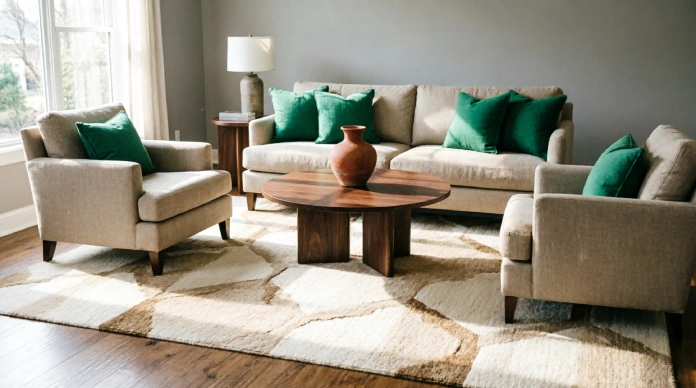
How to Fix This Mistake: Choose A Bigger Rug
Stick to the front legs on the rug rule. Your sofa and chairs should at least have their front legs placed on the rug, making everything cohesive into one zone.
For medium-sized living rooms, 8×10 or 9×12 rugs are perfect options. They might seem too big at first but will give you a sense of peace and unity once installed.
If you need to make the living room appear bigger, choose lighter-coloured or even neutral rugs. Dark and busy patterns will create a smaller appearance of a room.
Mistake #5: Not Taking Note of Focal Points and Height
Enter any room without a focal point and you feel lost – like your eyes don’t know what to rest on. This gives the impression of chaos, which translates into smallness.
A good living space will always have a focal point. This can be a fireplace, an entertainment wall, a large window giving a nice view outside, or even a large piece of art.
Another mistake people make is not thinking about verticality. Everything at eye level gives the feeling of a cramped space.
The Fix: Anchor the Room and Look Up
- Pick one focal point and arrange your seating around it.
- Hang curtains high, close to the ceiling, and let them fall all the way to the floor. This simple trick makes ceilings look taller.
- Use tall shelves, a vertical gallery wall, or a tall plant to pull the eye upward.
When the eye travels up as well as across, the room gains a sense of height, and height equals space.
Mistake #6: Excessive Clutter through Too Much Small Stuff
More pieces can be easily added. One side table, one little stool, an additional accent chair, and a few more decor pieces. Each item, standing on its own, makes sense. Collectively, they create visual clutter.
In the absence of negative space where the eyes have some place to rest, there is no way the room can feel open and airy. It is the negative space that makes a room look and feel airy.
The Fix: Choose Fewer, Better Pieces
Think “less but smarter.”
- Pick multi-functional furniture, like a storage ottoman, nesting tables, or a coffee table with a shelf.
- Remove anything that doesn’t have a clear job.
- Group small items on trays or in a single display spot instead of spreading them everywhere.
Try this: take out three small items from your living room and live with the change for a few days. Most people are shocked at how much bigger the room feels.
Mistake #7: Incorrect Placement of TV and Coffee Table
While these two pieces may be quite simple, their improper positioning may make the entire room look wrong.
If the coffee table is placed too far from the sofa, one can never reach one’s beverage without bending forward, while being too close prevents one from passing by and stretching out his or her legs. Improper mounting of the TV, either too high or on one’s side, forces one to bend his or her neck.
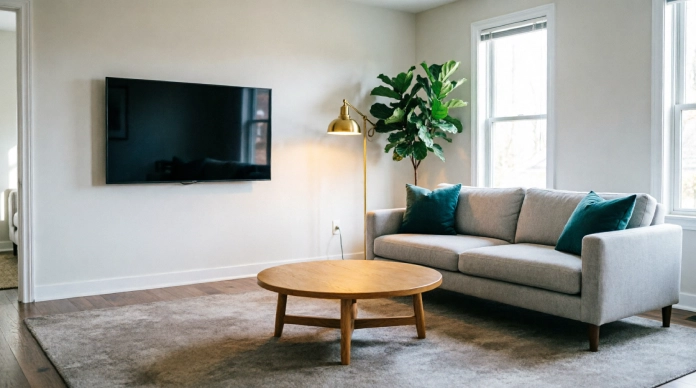
The Fix: Get the Distances Right
- Keep about 14 to 18 inches between your sofa and coffee table. It’s close enough to reach and far enough to move.
- Place the TV at eye level when you are seated, not high up like a picture frame.
- Center the TV with your main seating if you can, so the layout feels balanced.
A comfortable room almost always looks more open, because nothing in it feels forced or out of place.
BONUS: Living Room Furniture Layout Mistakes and 4 Helpful Tips to Make Your Space Look Bigger
Once you have set up the arrangement, here are some finishing tricks that can make your living room look bigger.
Utilize the power of mirrors. Place a large mirror opposite the window so it reflects the light all over the room. This is like having two windows without making any changes.
Go for a soothing colour scheme. Soft and light colours on the walls and large furniture make your room appear more spacious. You do not need to choose white only. Beige, grey, or cream colours can also work well. You can also explore these small living room paint colour ideas to create a brighter, more spacious feel. Bring contrast through pillows, paintings, or green plants.
Play with lighting. Having one ceiling light makes your living room appear smaller and flat. Use different types of lighting such as ambient (ceiling or wall lamps), task light (reading lamp), and accent lighting (small lamp or LED strip).
Showcase your floor. More visible floor makes your living room look bigger. Choose furniture pieces that have legs or mount shelves on the walls.
Quick Summary: Mistakes vs. Easy Fixes
| Layout Mistake | How It Affects the Room | The Easy Fix |
|---|---|---|
| Furniture pushed flat to walls | Feels stiff and cramped | Float pieces 3 to 6 inches from the wall |
| Oversized or tiny furniture | Blocks movement or looks scattered | Measure and choose low-profile, leggy pieces |
| Blocking windows and paths | Cuts light and flow | Keep windows and entryways clear |
| Small rug under the coffee table | Chops up the floor | Use a larger rug with front legs on it |
| No focal point or vertical interest | Room feels flat and messy | Anchor around one focal point, hang curtains high |
| Too many small items | Creates visual clutter | Choose multi-functional furniture |
| Poor TV and table placement | Uncomfortable and awkward | 14 to 18 inches from sofa, TV at eye level |
Frequently Asked Questions
How will I know if my furniture is too big for my living room?
If you need to squeeze between the furniture items in order to move around, or you cannot provide at least 30 inches for major walking routes, then the furniture in your living room is too big. You can always measure and test the size of your furniture on the floor using tape.
Is it necessary to place my sofa not against the wall?
Generally speaking, it is. Even an inch will create more space within your room. For smaller rooms you can stick the sofa to the wall while leaving a tiny gap between the two.
What size should I buy for my small living room rug?
8×10 will be a good choice for medium-sized living rooms. The basic rule is that your furniture should have its front legs placed on the rug.
Is it possible to enlarge the size of my living room without making any purchases?
Sure! Furniture rearrangement, cleaning of the windows, removal of the unnecessary decorations and installation of the higher curtains will make wonders.
How much space should I leave between furniture in a living room?
Main walkways should be about 30 to 36 inches wide. Between the sofa and coffee table, keep around 14 to 18 inches. If two chairs face each other for conversation, 4 to 8 feet apart usually feels comfortable without making people shout across the room.
Conclusion
Even a tiny living room doesn’t have to stay cramped. You don’t need expensive renovations or major home upgrades to make it feel more spacious. All you need is a furniture arrangement that works for your space.
Start by fixing one of the common living room furniture layout mistakes discussed above. Try shifting the sofa away from the wall or replacing a small rug with a larger one. Once you see the difference, move on to another adjustment.
What furniture arrangement mistake have you made, and what helped you fix it? Tell us about your favourite living room layout in the comments. If you found this article helpful, share it with friends who are struggling to make their living rooms feel more spacious.