Table of Contents
You move into an apartment, like the place, and then the truth sets in: how are you going to fit a bed, a desk, and a bookshelf into 120 square feet? Suddenly, every single inch matters.
Living in a small space can be really frustrating, but the answer isn’t just buying fewer things. The best decorating hacks for small rooms are about buying better, choosing multi-use items, and arranging everything with purpose.
In this guide, we’ll explore 11 tested methods, from smart furniture placement and storage solutions to using colour to influence how spacious a room feels. You’ll find affordable solutions as well as a few bigger purchases that may be worth considering.
Are you ready to make your small room feel larger without giving up comfort? Let’s begin with the first decorating hack.
1. Choose Furniture That Works Two Jobs at Once
When space is limited every piece of furniture needs to be useful. Multi-functional furniture gets the job done by having two jobs in one small design. An ottoman can offer a place to sit and also store things inside.
A bed frame that has drawers can take the place of a dresser. A dining table that can expand is perfect for use and can be opened up when friends come over.
Try looking for:
- Storage ottomans or benches
- Beds with built-in drawers
- Fold-down desks
- Coffee tables
- Expandable dining tables
- Sleeper sofas
Before you get excited about a piece online measure your room, doorways and the floor space available first. If you are on a budget look for secondhand items or simply made options. If you are creating a workspace in a small room, these home office ideas can also help you make better use of limited space. If you have money custom-storage furniture can make the most of space and last for many years.
2. Let the Walls Do the Work: Vertical Storage
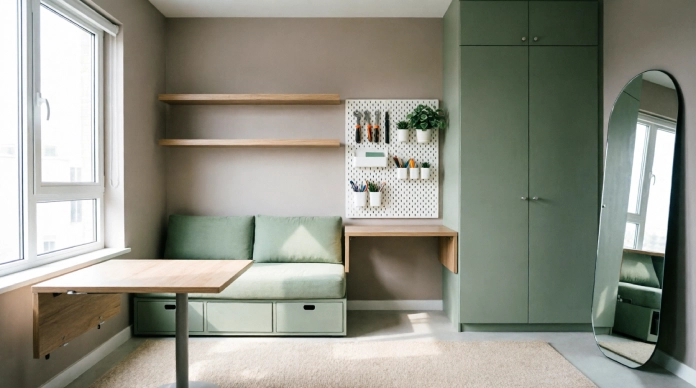
One of the most effective decorating hacks and tips for small rooms is to use your walls instead of taking up more floor space. Floating shelves, wall-mounted desks and pegboards turn wall space into useful storage without adding bulky furniture. By moving storage up we keep more of the floor visible. That trick can make the room feel larger and more open.
Here is a realistic composite example: Imagine a 90‑square‑foot studio where a resident replaces a freestanding bookcase and storage cabinet with floating shelves, a wall‑mounted desk and a pegboard.
By moving those storage functions onto the walls, the residents could free thirty percent of the area floor for movement and everyday use. This is a composite example, not a measured brand case study.
For shelves allow spacing, for the items that the resident actually needs to store rather than creating unnecessarily tall gaps. Importantly leave some space empty. Group similar items together and avoid filling every shelf vertical storage feels organized rather than visually cluttered.
3. Pick a Light and Cohesive Colour Palette
When you start looking for small room furniture ideas, colour should be part of your plan too. It is one of the simplest decorating hacks and tips for small rooms because the right palette can make the space feel more open without changing its size.
A simple small-room colour formula:
- One dominant light shade: Put this on most of your walls and big surfaces.
- One or two accent colours: Use these for things like pillows, rugs, artwork or small furniture.
- Similar furniture tones: Pick furniture that matches the wall colour to make the space look smoother and bigger.
White is a pick, but you do not have to stop there. Soft graige, ivory, pale sage, dusty blue and light mushroom all look great. Can make a room feel cozy even if you do not have much sunlight. You can mix these colours with furniture, in matching tones to make the whole room look seamless.
This does not mean you cannot use colours in a small space. A single accent wall can look wonderful if you do it the way. Just pick one wall, keep the colours simple and do not use too many busy patterns. If you do this the room will look messy.
4. Mirrors Aren’t a Cliché but a Smart Tool
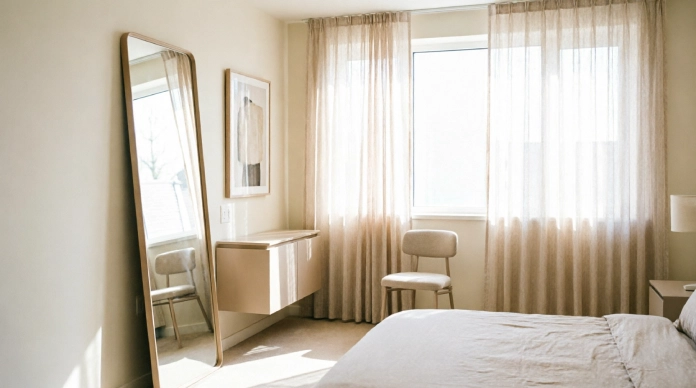
Mirrors get their reputation in small rooms because they work well with light and sightlines. When a mirror reflects a window, lamp or open part of the room it sends that information back into the space making the room look brighter and deeper. You are not adding footage, you are expanding what the eye can see.
For impact place a mirror opposite or slightly beside a window to reflect natural light. Avoid aiming at the mirror at crowded clutter or a messy corner; reflections can make visual chaos feel even stronger. A clear sightline is more valuable than placement.
In a room scale matter. A tall narrow mirror can emphasize ceiling height while a wide rectangular mirror can visually stretch a wall. Round or arched mirrors are useful when you want lines without adding bulky visual weight.
Keep the mirror frame simple. Choose the largest size the wall can comfortably accommodate.
5. Let Natural Light Lead the Design
Natural light has the power to make even the smallest room feel brighter. It makes the room feel fresher. It makes the room feel more spacious so let natural light guide your layout. Start by making sure windows are as open as possible.
Instead of heavy drapes that make the wall look heavier, pick sheer curtains or lightweight linen panels that let in sunlight without stopping it. Hanging curtains to the ceiling can also make the window look taller.
Think carefully about where to put furniture. Don’t put bookcases, wardrobes or big chairs right in front of windows. Keep the space near the window mostly open so that daylight can go deeper into the room.
If your room doesn’t get natural light add different types of artificial lighting instead of depending on just one light, above the ceiling:
- Ambient: A ceiling light or a flat light that gives brightness
- Task: A desk lamp or a reading light that gives light for jobs
- Accent: Wall lights or small lamps that add a touch and a warm feeling
If you want more ways to create a warm and functional space, explore these bedroom lighting ideas for inspiration. The idea is easy: Get as much natural light as you can first then use different lights to cover the areas that are not bright.
6. Scale Down Without Skipping Out
A small room does not require skipping furniture; it requires choosing pieces that fit the space. Sized furniture keeps the small room functional without blocking natural movement. For example, a huge sectional may look inviting but in a tiny living room it can quickly overwhelm the layout and leave little room to walk.
- Loveseats: Provide seating without the bulk of a full-size sofa.
- Slim-profile chairs: Offer seating while keeping the room visually light.
- Nesting tables: Give surface space that can be tucked away when not needed.
- Compact consoles: Add storage without taking up floor space.
Before buying measured more than the small room furniture itself. Map out room walking paths and aim for at least 30 inches of clearance, in key areas. A beautiful piece is only useful if the small room can move around comfortably.
7. Make the Bed or Sofa the Anchor Not the Center
One of the clever furniture arrangement ideas for a small room is to stop thinking of the bed or sofa as a piece that must sit in the middle. Instead use it as an anchor that helps sort the rest of the room.
In a bedroom moving the bed into a corner can free up good floor space. In a living room or studio, placing the sofa a little away from the wall can separate relaxing, working or dining spots.
Creating clear zones also gives a studio apartment a feeling of order. Even if there are no walls the mind sees areas where furniture, rugs or lights separate their uses.
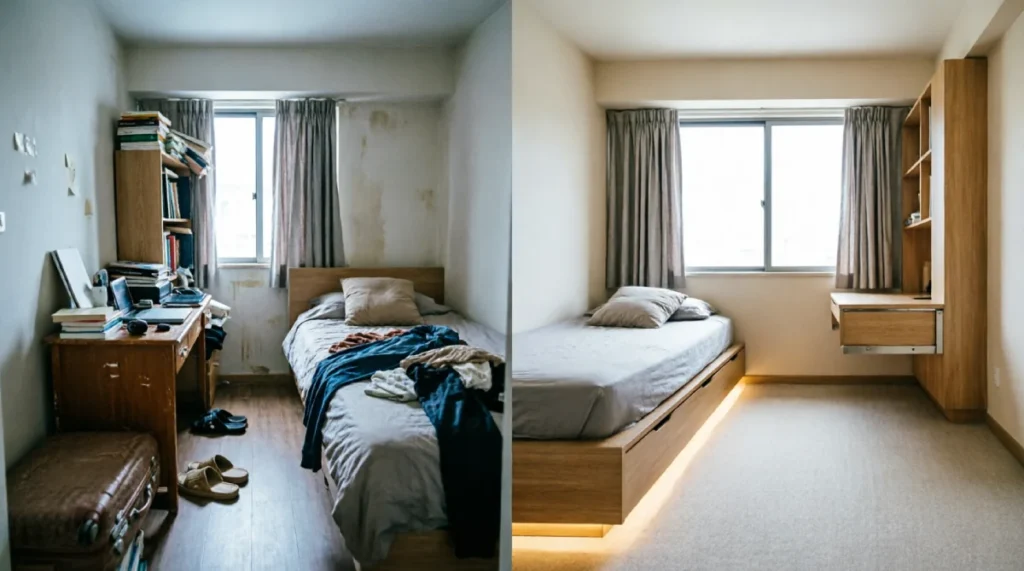
Simple before-and-after example:
- Before: Bed in the center desk blocking a path and storage spread over the room.
- After: Bed pushed into a corner, desk set against the wall and one clear path left open.
The goal is to make every area feel planned without making barriers.
8. Use Rugs and Textiles to Define Space
If you live in a room rugs and textiles can help you organize your space without using up too much room. A placed rug can help you see where the sleeping area ends and where the work area starts. This gives each spot its feel without needing to build walls or use big dividers. I find this really helpful for studio apartments or bedrooms that do things at once.
However, the size of your rug is very important. If a rug is too small your furniture might look like it is just floating around and the room will feel messy or big. You should try to pick a rug that’s big enough to hold your main furniture in place.
Quick rug-sizing tips:
- Put at least the front legs of your big furniture on the rug.
- Pick a rug if you want to tie several pieces of furniture together in one spot.
- Do not use rugs that just sit alone in the middle of the floor.
Curtains are another way to act as a soft divider. You could hang a curtain from the ceiling, between your bed and your desk. You can easily pull the curtain back when you want the room to feel open and big again. For more inspiration on choosing and placing rugs, check out these bedroom rug ideas.
9. Decorating Hacks for Small Rooms: Declutter With a System
Decluttering a room once can make a big difference but keeping it that way needs a simple system. When items are left on countertops, chairs, shelves or the floor the small room can look smaller than it actually is because your eyes have objects to process. A clear surface by contrast gives the room a feeling of breathing room.
Try these small room organization ideas:
- Labeled bins: Group items, cables, accessories or paperwork so everything has a designated home in the small room.
- Drawer dividers: Keep essentials separated and easy to find instead of letting drawers become catch‑all spaces in the small room.
- One in, one out: Whenever you bring in an item remove or donate a similar one, from the small room.
You do not need a weekend purge either. Try a 10‑minute reset: return misplaced items, clear visible surfaces and put away anything that has accumulated during the week. Small consistent habits keep the room from becoming cluttered again.
10. Get Creative with Doors and Entryways
Doors can occupy more usable space than you realize, especially in a small bedroom, hallway or studio apartment. A traditional swinging door requires an arc to open and close which can limit where you place furniture.
If your layout allows sliding doors or curtains can remove that swing area. Give you more flexibility when arranging the room.
Don’t overlook the storage potential behind the doors either. An over‑the‑door organizer can turn space into a convenient spot for everyday essentials.
- Shoe organizers: Keep footwear off the floor and easy to access.
- Accessory organizers: Store scarves, belts, bags and other small items.
- Cleaning organizers: Keep cleaning supplies neatly contained.
Near the entryway add a few wall hooks for coats, keys and bags. Giving these items a designated spot prevents them from piling up on chairs, counters or the floor. Keeps the room looking tidy, from the moment you walk in.
11. Add Height with Curtains and Art Placement
If your small room feels short or boxed, use your walls to pull the eye. One of the easiest decorating hacks for rooms is to hang curtain rods nearer the ceiling instead of right above the window frame. This draws a line from the ceiling down to the floor making the walls look taller.
Artwork can do the same. Pick oriented pieces or arrange several small prints into a gallery wall that reaches higher. This pulls the eye toward the ceiling. Gives the small room a stronger sense of height.
The best part is that this trick does not need renovation or a large budget. You can lift an existing curtain rod mix up the artwork you already own or create a gallery wall with inexpensive prints. It is one of the overlooked low-cost ways to make a small room feel taller and more spacious.
FaQs
1. How can I make a small room look bigger?
Use colours, mirrors, smart furniture placement and keep the floor as open as possible.
2. What furniture is best for rooms?
Choose -functional pieces, loveseats, nesting tables, storage beds and slim-profile furniture.
3. Do mirrors really make small rooms look bigger?
Yes. Mirrors reflect light and sightlines creating the impression of more space.
4. What colours work best in a room?
Soft white, ivory, greige, pale sage, dusty blue and light mushroom can help create a feel.
5. How do I organize a small room?
Use vertical storage, labeled bins, drawer dividers and a simple weekly decluttering routine.
Final Thoughts
Making a small room feel bigger is not about one magic trick. The best decorating hacks for small rooms involve smarter furniture, better lighting, less clutter, and intentional layouts.
You don’t need a big budget. Start by clearing clutter, improving light, and rearranging furniture before buying anything new. Pick two or three hacks to try this weekend and see how much more spacious your room can feel.