Table of Contents
If your living room has a corner, a small footprint or windows in odd places you are not alone. Many homes have living rooms that do not follow design rules and finding furniture that fits can feel like solving a puzzle with missing pieces.
Here is the good news: you do not need to knock down a wall or buy a sofa to fix your living room. With the Small Living Room Layout Ideas you can turn even the most awkward space into a living room that feels open, cozy and put together.
All of this comes down to furniture placement, visual balance and making better use of the vertical space already present in your living room.
In this guide you will find 17 layouts for narrow living rooms corner living room spaces, open floor plan living rooms and living rooms with tricky architectural quirks, plus tips on furniture, common mistakes and answers to the questions people ask most.
How to Make a Small Living Room Feel Bigger Before You Rearrange
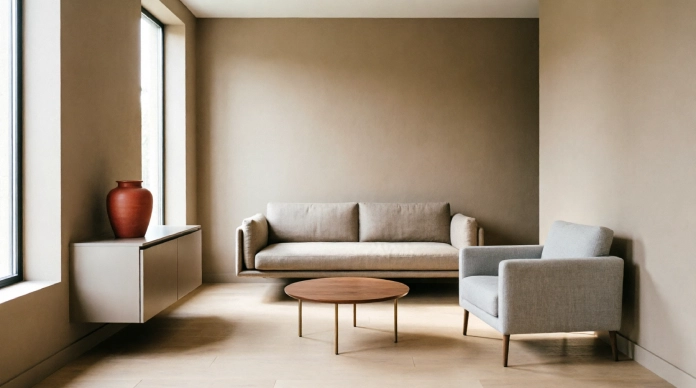
Before you jump into the 17 ideas keep these four principles in mind. They will make every layout below work better. These small room decorating ideas can make even an awkward space feel more open.
Keep the Main Walkway Clear
It is tempting to push every piece of furniture against the wall. What really matters is keeping a path for people to walk through. A living room with a walkway feels roomier even if the furniture does not touch every wall.
Choose Furniture That Fits the Room
Furniture is one of the biggest culprits behind a cramped-looking living room. Look for:
- An apartment‑size sofa of a full‑size sofa
- A slim coffee table instead of a bulky one
- Armless chairs that take up less visual space
- Furniture with exposed legs, which lets light pass underneath
Create One Clear Focal Point
Every living room needs a spot for the eye to land on first. This could be your TV, a fireplace, a large window, a piece of artwork or an accent wall. Once you pick one arrange the rest of the furniture around that point.
Use Vertical Space
Floors are not the usable space in a living room. Floating shelves, tall curtains, wall‑mounted lighting and vertical artwork all draw the eye upward. Make the ceiling feel higher.
17 Small Living Room Layout Ideas for Awkward Spaces
Here is the list. Each idea shows who it works best for how to set it up and why it actually helps.
1. Float the Sofa From the Wall
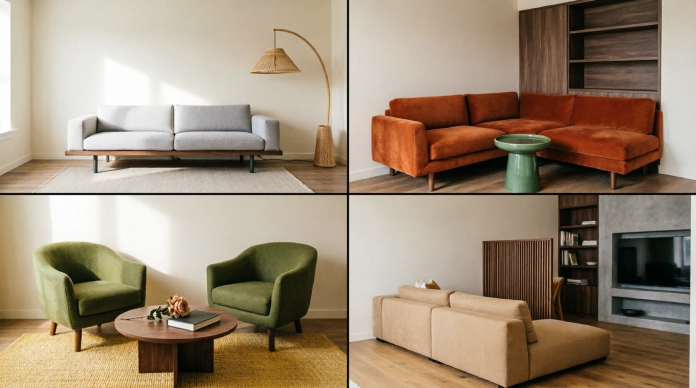
Instead of automatically pushing your sofa flush against the wall leave a small gap behind it. This small change:
- Improves traffic flow around the living room
- Makes the living room feel intentional and designed
- Works especially well, in open‑plan living rooms
2. Use an L-Shaped Sofa to Fill an Awkward Corner
Got a corner that always seems to go to waste? An L‑shaped sectional is the fix. It:
- Defines the seating area clearly
- Eliminates space in the corner
- Gives you extra seating without adding more chairs
3. Create a Conversation Layout With Two Small Chairs
Avoid the single sofa instead use a loveseat with two light accent chairs that are facing each other instead. This arrangement helps people talk gives options and makes the room feel bigger instead of closed in.
4. Try a Narrow Living Room Layout With Furniture Facing Each Other
Long rectangular rooms require a way. Place the sofa on one wall add thin chairs on the other side and put a slim coffee table in the middle. Make sure there is a path in the center so the room does not feel like a corridor.
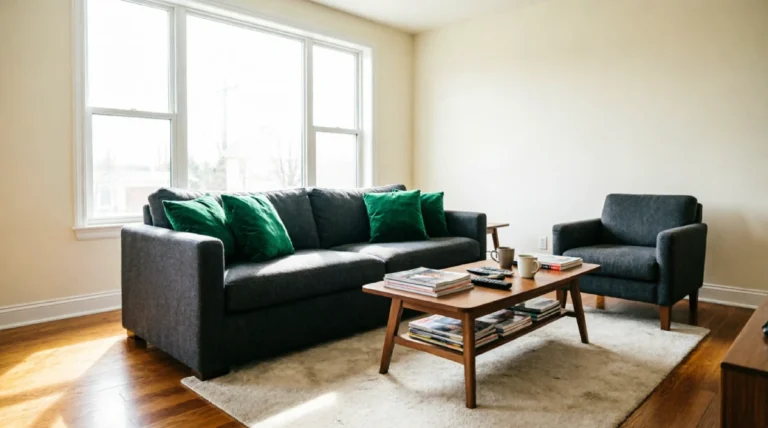
5. Place the Sofa in Front of a Window Without Blocking the Light
Window placement is a common problem in living rooms. Fix it with:
- A sofa that is low and sits under the windowsill
- Curtains that go from the ceiling to the floor to make the eye go up
- Light fabrics that let sunlight come in
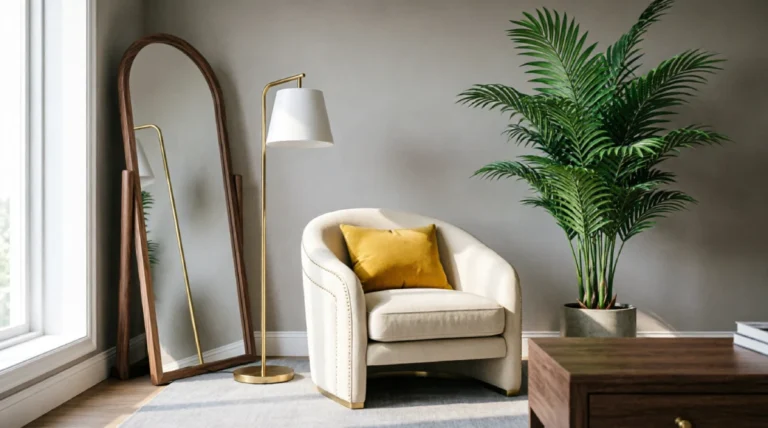
6. Turn an Awkward Corner Into a Cozy Reading Nook
Not all corners have to hold seats for people. Make it a reading nook instead with an accent chair, a floor lamp, a tiny side table and a floating shelf for books. It adds use without filling up the seating area.
7. Use a Round Coffee Table to Improve Traffic Flow
Square edges on a coffee table can make a small room feel more cramped and harder to move around. A round coffee table makes the space feel softer and easier to walk through in tight setups.
8. Mount the TV to Free Up Floor Space
A big entertainment unit takes up a lot of floor space quickly. Hanging the TV on the wall removes that space instantly. If you still need storage choose:
- A floating media console
- A console table
- Built-in shelves
9. Use a Small Loveseat Instead of a Full-Size Sofa
This is very useful for studio apartments, small living rooms or narrow spaces. Add one or two chairs with the loveseat to give seating without making the room feel too full.
10. Create Zones, in an Open-Plan Small Living Room
If your living room connects with the dining area, kitchen or entrance use furniture to show where each area ends. A carpet, sofa placement, a console table and the right lighting can all help show where one space ends and another begins.
11. Use an Area Rug to Define the Seating Area
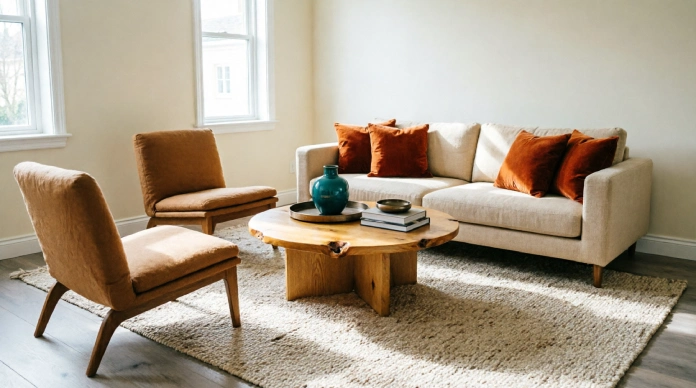
I love the front‑legs‑on‑rug trick because it works well. Make sure the front legs of the sofa and chairs sit on the Area Rug. This places the Seating Area right where you want it and gives the room a cleaner look.
12. Replace Bulky Furniture With Slim Leggy Pieces
Furniture that shows its legs lets your eye move under the furniture, which makes the whole room feel airier. Look for a raised‑leg sofa, slim armchairs, a narrow console and open shelving of solid boxy pieces.
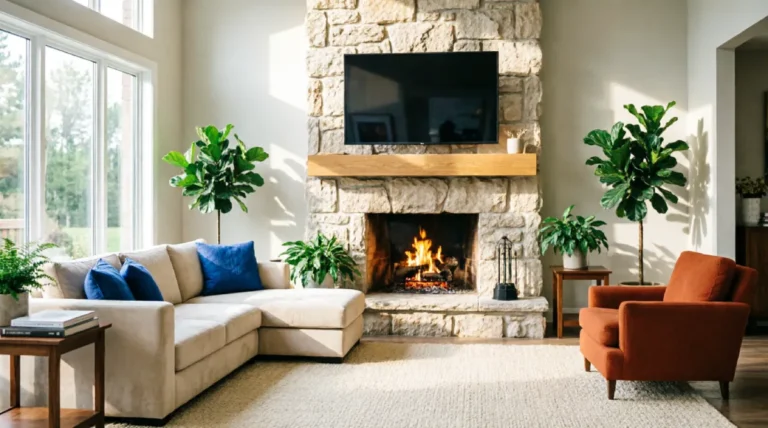
13. Make an Awkward Fireplace the Focal Point
If the Fireplace is breaking your wall layout stop fighting it and build around it. Arrange the Seating Area, accent chairs and TV placement symmetrically around the Fireplace so the Fireplace becomes a feature instead of an obstacle.
14. Use a Corner Sofa to Maximize Seating
This idea differs from the L‑shaped sofa idea. The focus is on using the perimeter of the room efficiently. This is great for families or anyone who needs seating without adding extra furniture pieces.
15. Use Vertical Storage of Floor Cabinets
Floor cabinets take up precious square footage. Swap them for:
- Floating shelves
- Narrow bookcases
- Wall‑mounted cabinets
- Vertical artwork that draws the eye upward
For more clever ways to use overlooked space, see these under-stair storage ideas.
16. Create a Layout With Lightweight Furniture
Furniture that moves easily gives you more freedom to rearrange as needed. Think tables, poufs, ottomans and movable accent chairs. This is perfect for living rooms that need to adapt throughout the day.
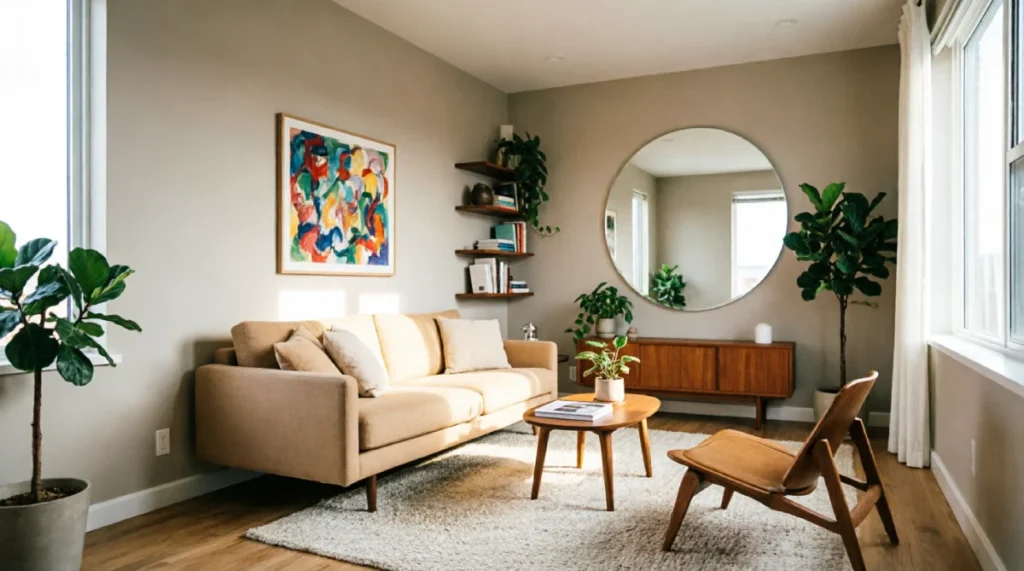
17. Use Mirrors and Light Colors to Visually Expand the Room
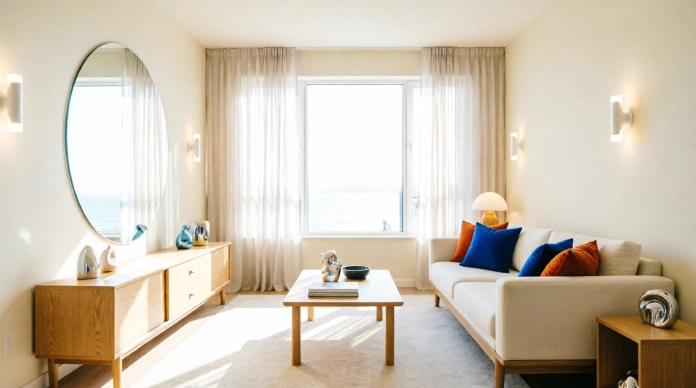
If your room feels dark, these tips can help you make a dark room look brighter. A large mirror placed opposite a window bounces light around the room and instantly makes it feel bigger. Pair it with neutral walls sheer curtains, reflective surfaces and layered lighting, for maximum effect.
How to Arrange Furniture in a Small Awkward Living Room
Before you buy furniture draw a floor plan. This is a five-step process to use:
- Measure the living room: Record exact numbers, such as wall lengths and ceiling height.
- Mark doors, windows and walkways: These’re fixed points that furniture must fit around.
- Choose the piece first: Your sofa or sectional sets the tone for all furniture.
- Add extra seating: Chairs, loveseats or poufs fill in around the piece.
- Finish with tables, rugs and lighting: These final touches bring the layout together.
Small Living Room Layout Mistakes to Avoid
Sometimes the way to make a small living room feel larger is to remove one piece of furniture. These mistakes often work against you:
- Pushing every piece against the wall no exceptions
- Using furniture that’s simply too large for the living room
- Blocking windows or doorways with bulky pieces
- Adding too many small accessories and knick-knacks
- Choosing the wrong size rug that floats awkwardly in the living room
- Ignoring lighting and relying on one overhead fixture
Best Furniture for Small and Awkward Living Rooms
Not sure what to shop for? Here is a quick cheat sheet.
| Furniture | Best Choice |
|---|---|
| Sofa | Apartment-size or compact sectional |
| Coffee table | Round or nesting style |
| Chairs | Slim, lightweight accent chairs |
| Storage | Floating or vertical shelving |
| Rug | Large enough to anchor the seating area |
| Lighting | Wall-mounted fixtures or floor lamps |
| Tables | Narrow console or slim side tables |
Look for space-saving, apartment-size and multifunctional furniture wherever possible. It makes a difference than people expect.
How to Make an Awkward Living Room Look Bigger
Want a visual checklist you can use today? Here it is:
- Use neutral colors on the walls
- Hang curtains higher than the window frame
- Keep pathways open and unobstructed
- Add one large mirror to bounce light around
- Use layered lighting instead of one harsh source
- Choose furniture with visible legs
- Keep clutter off the floor
- Stick to one cohesive color palette throughout
FAQs
What is the best layout for a very small living room?
The flexible option is usually a compact loveseat paired with one or two lightweight chairs arranged around a clear focal point such as a TV or window. This keeps the living room open while still offering seating.
How should furniture be arranged in a living room?
Focus on three things: keep the walkway clear choose furniture scaled to the living room and build around one focal point instead of trying to compete with the living rooms odd features.
Should a sofa be against the wall in a living room?
Not always. Pushing the sofa against the wall can work in tight spaces but floating it slightly away from the wall often creates better traffic flow and makes the living room feel more thoughtfully designed.
What furniture makes a small living room look bigger?
Slim raised-leg furniture with visible floor space underneath along with pieces such as nesting tables and ottomans all help the living room feel more open.
How do you arrange furniture in a living room?
Place the sofa along one wall add seating directly across from it and use a slim coffee table in between. Keep a path running down the center of the living room.
Final Thoughts
An awkward living room is not a lost cause. It simply needs a layout that works with its shape of, against it. Once you apply the right small living room layout ideas prioritize traffic flow pick scaled furniture define your zones and make use of vertical space the whole living room starts to feel different.
The goal is not to fit into a small living room. It is to make every piece earn its place.