Step into any pantry and this is what you will encounter: a single bag of rice buried beneath three cans of beans, a mysterious bottle from 2022, and a mixer that does not seem to have a place to rest at all. It won’t take long for even a big pantry to become a mess without proper planning.
Fortunately, you don’t have to expand your kitchen space in order to improve the situation. The right Walk-In Pantry Ideas will help you organize all those forgotten corners, empty walls, and the rear of the door into usable storage space.
A good pantry is never about acquiring extra shelves. A good pantry is all about having a clear view of your food and being able to access it quickly.
Here are some ideas on how to organize everything.
17 Clever Walk-In Pantry Ideas for a More Organized Kitchen
1. Install Shelves Up to the Ceiling
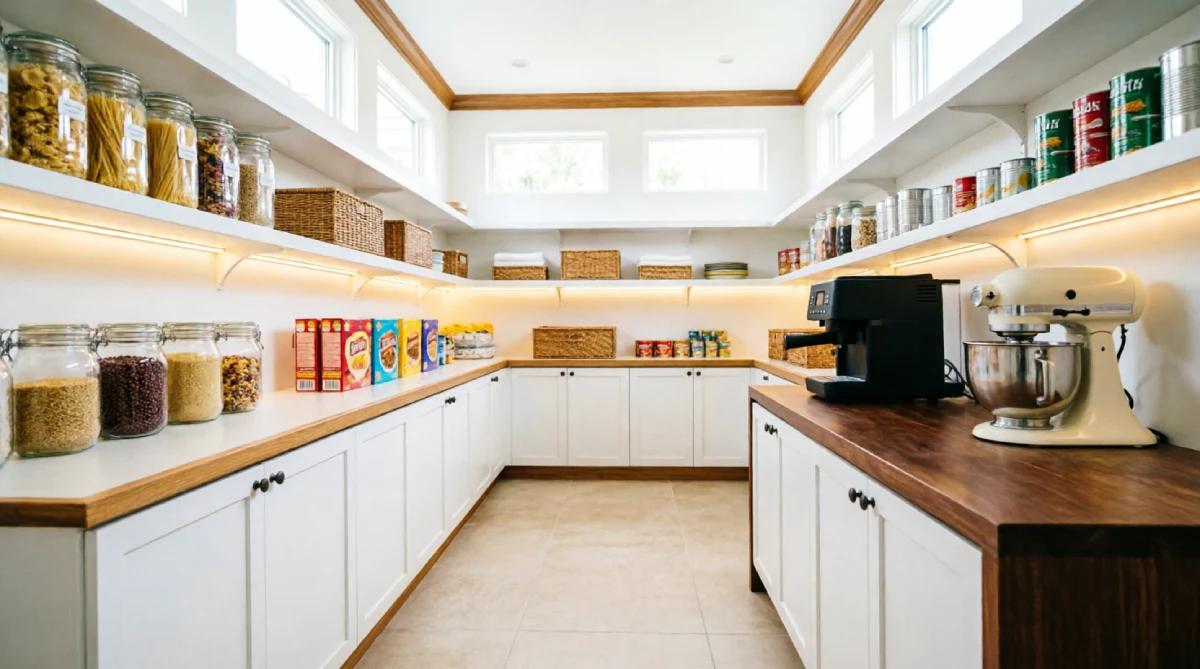
If you install your shelves only half way up your wall, then you waste space that could be used. Install shelves to the ceiling and use the high part for seasonal dishes or backup supplies of goods that you keep in bulk.
2. Get Adjustable Shelving
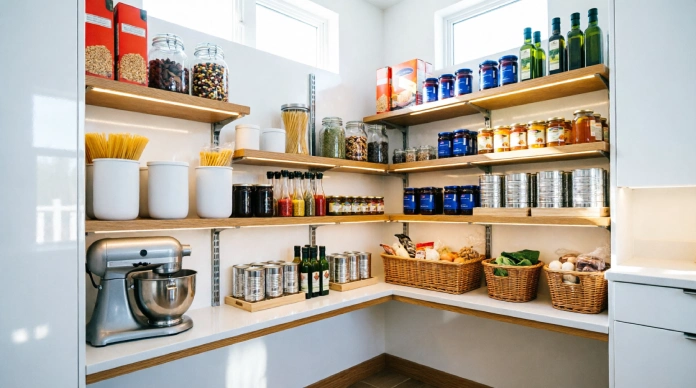
With fixed shelves, your food will always have to fit into those shelves. With adjustable shelves, you’ll get the ability to adjust your shelves depending on the products you want to store there – tall cereal boxes, small bottles of spices, and a bulky blender will all fit in there.
3. Make Good Use of the Back of Your Pantry Door
The pantry door is a free space that can be utilized by adding:
- spices and seasonings
- sauces and small bottles
- snack bars and wraps
- foil, bags, and small supplies
Keep heavy jars off the door so the hinges stay happy.
4. Assign a Place for Small Appliances
Don’t allow such small kitchen appliances like mixers, air fryers, and blenders to roam the place freely. Provide them with a single lower shelf or a station designed for small appliances. Keep heavy things on the bottom, and what you need weekly should be easily accessible.
5. Install Pull-Out Drawers for Deeper Shelves
Deeper shelves are places where food disappears from sight. But pull-out drawers pull the back of the shelf into view, making them ideal places to store such things as canned goods, baking supplies, and packages.
6. Maximize the Efficiency of a Slim Pantry
The small pantry can become very efficient and useful despite its size. Use shallow shelves, maintain a reasonable aisle, and maximize height rather than the width of your pantry.
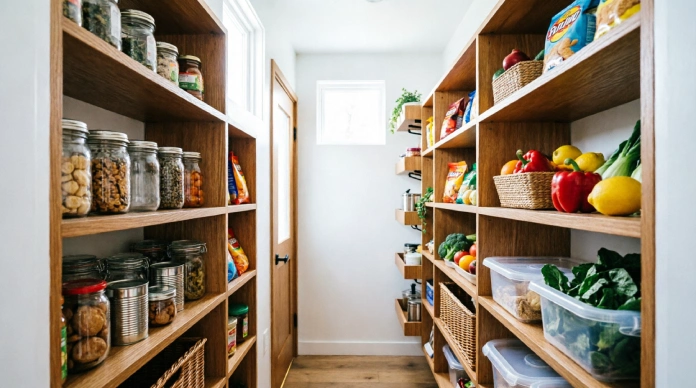
7. Store Dry Ingredients in Clear Containers
Clear containers with a tight fit will help to preserve your ingredients longer and will tell you instantly when you run out of something. Such containers will help to make your shelves organized and clean looking.
Great candidates are flour, sugar, rice, pasta, oats, and cereals. For longer-lasting pantry staples, follow recommended food storage guidelines when transferring and storing dry ingredients.
8. Consider Pull-Out Baskets for Snack and Produce Storage
Individual bags have a tendency to slide and stack. Baskets solve this problem and should be designated for specific categories, such as snacks, onions, potatoes, baking goods, and anything else you want.
9. Create a Spice Station
If your spices are spread out over three different shelves, then this process makes cooking more stressful. Instead, store all spices in one place – a slim shelf, tiered rack, or pull-out spice basket is suitable. Organize the spices alphabetically or depending on cuisines, however you prefer.
10. Include Corner Shelves
It is a well-known problem how corner spaces become wasted. Wrapping or corner shelves will solve it and will allow storing things that you rarely need, such as additional oils or backup pantry goods.
11. Include a Countertop
A countertop in your pantry will give you a great amount of working space for preparing food. This can be used as a coffee station, baking area, or just as a place to leave groceries before you put them back into your pantry.
12. Organize Everything Into Zones
Zones are the secret to a pantry that stays tidy. Here is a simple layout to copy:
| Zone | What Goes Inside | Best Shelf Height |
|---|---|---|
| Breakfast | Cereal, oats, coffee, tea | Eye level |
| Baking | Flour, sugar, baking mixes | Mid level |
| Snacks | Chips, crackers, granola bars | Easy reach or baskets |
| Cooking | Pasta, rice, canned goods | Waist to eye level |
| Appliances | Mixers, blenders, air fryers | Lower shelves |
| Backups | Bulk items, seasonal dishes | Top shelves |
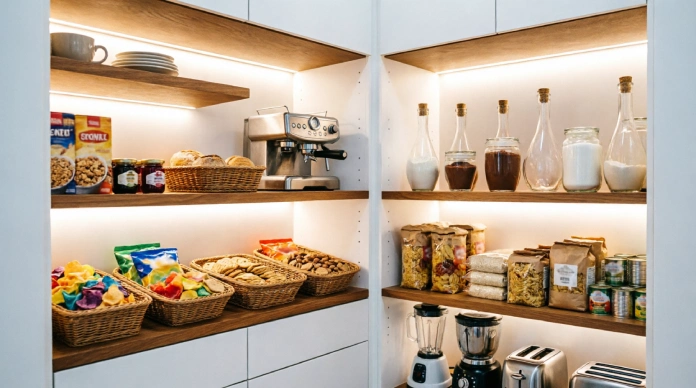
13. Matching Baskets and Bins
Matching containers give the impression that everything has been thought about rather than thrown into the space. The key is to measure your shelves before buying anything.
14. Utilize Shelf Space
It can be easy to forget about the space underneath your shelves. Baskets that slide out or even hooks under the shelves work perfectly for tea, rolls, smaller jars, and lighter snacks.
15. Don’t Forget About Lighting
The most efficient system will fail without proper lighting. Use LED strip lights on your shelves, motion-sensing lights, or install ceiling lights. Adequate lighting also helps see everything in corners.
16. Label Efficiently
Labels can be useful in helping all members of the family put things back in their correct places. Label containers and baskets by category rather than each individual item.
17. Keep Everything You Use Often in Your Reach
Keep everything you use on a daily basis from waist to eye level. Place seasonal and seldom-used items above. A pretty pantry that requires an effort to work with is not a good pantry.
6 Steps to Create Walk-In Pantry Layout Professionally
It does not require a weekend. Just follow the next six steps:
- Empty everything out. Yes, everything. You cannot organize what you cannot see.
- Declutter. Toss expired food and donate what you will never eat.
- Group similar items. Baking, snacks, canned foods, breakfast, drinks, and appliances.
- Measure your shelves. Note depth, width, and height before you buy a single container.
- Create zones. Put the most used groups in the easiest spots.
- Label and maintain. Return items to their zone every time.
How to Maximize a Small Walk-In Pantry
Working with limited space? These quick wins make a big difference:
- Choose shallow shelves so nothing gets lost in the back.
- Use every bit of vertical wall space.
- Add door organizers.
- Pick stackable, transparent containers.
- Install pull-out storage for deep shelves.
- Keep the floor clear so you can move freely.
- Skip oversized bins that eat up room.
- Store rarely used items on high shelves.
Here is a quick guide to how deep your shelves should be:
| Shelf Depth | Best For | Watch Out For |
|---|---|---|
| 8 to 12 inches | Cans, jars, spices, small packages | May feel tight for bulky items |
| 12 to 16 inches | General food storage, cereal boxes | Good balance for most pantries |
| 16 to 24 inches | Appliances, bulk goods | Items can get lost without drawers |
Common Walk-In Pantry Organization Mistakes to Avoid
Even great pantries can fall into these traps. Here is what to watch for and how to fix it:
| Mistake | Why It Hurts | The Simple Fix |
|---|---|---|
| Shelves that are too deep | Food hides at the back | Use pull-out drawers or shallow shelves |
| Ignoring vertical space | Wasted storage potential | Add shelves up to the ceiling |
| Buying containers before measuring | Bins do not fit and clutter grows | Measure first, then shop |
| Overloading shelves | Nothing is easy to find | Leave breathing room |
| Storing everything at eye level | Low and high spots go unused | Use every height wisely |
| Forgetting lighting | Dark corners become dead zones | Add LED or motion lights |
How to Keep Your Walk-In Pantry Organized
A tidy pantry is a habit, not a one-time project. Try this easy routine:
- Do a quick weekly reset and put stray items back in their zones.
- Check expiration dates regularly.
- Refill containers before they run completely empty.
- Avoid overbuying, especially bulk items you will not finish.
- Wipe down the shelves every few months.
Keeping frequently used items within easy reach is also important in other small storage areas around the home. Check out our under-stair storage ideas for more ways to turn unused space into practical storage.
Five minutes a week saves you hours later.
Commonly Asked Questions
1. What do you place in a walk-in pantry?
Stock the walk-in pantry with dry goods, canned goods, snacks, cooking items, spices, beverages, and even small appliances. People also use walk-in pantries to store their paper products, bulk purchases, and serving pieces. The important thing is to organize everything into distinct zones.
2. How do I make the most out of the small space available in my walk-in pantry?
Maximize your small walk-in pantry by going vertical. This means having taller shelves, organizing behind doors, having pull-out drawers, and using stackable containers. Keep the floors clear and use shallow shelves.
3. How deep should the walk-in pantry shelves be?
It is recommended that the depth of walk-in pantry shelves be 12 to 16 inches deep. It is enough storage space yet it allows for visibility. Deeper shelves can be used with pull-out drawers.
4. What is the optimal method of organizing my walk-in pantry?
Place similar things into categories and store all daily use things at a height between waist and eye levels. Use visible containers, baskets, and labels to maintain simplicity of the organization for all family members.
5. What should I do to make the walk-in pantry more visually organized?
Try to use same containers, shelves, labeled baskets, and proper lighting to create a visually organized pantry which will be an integral part of your kitchen design.
Conclusion
It does not take up too much space to have a lovely pantry to store food in. The best Walk-In Pantry Ideas make use of vertical storage spaces in a very efficient manner that suits your needs and also gives it an aesthetic appearance.
Start off with the basics by clearing out, making zones, and measuring first. After everything is sorted, then you can go ahead and purchase fancy stuff like lights, baskets, and countertops.
Check out more practical home improvement ideas at OliviHome.