Table of Contents
At 7 p.m., you enter your living room and turn on the light, but nothing happens. Perhaps there is no light switch or ceiling light fixture at all. Many apartments, houses, and rental properties lack overhead lighting, so once it gets dark outside, the room can feel dim and unattractive.
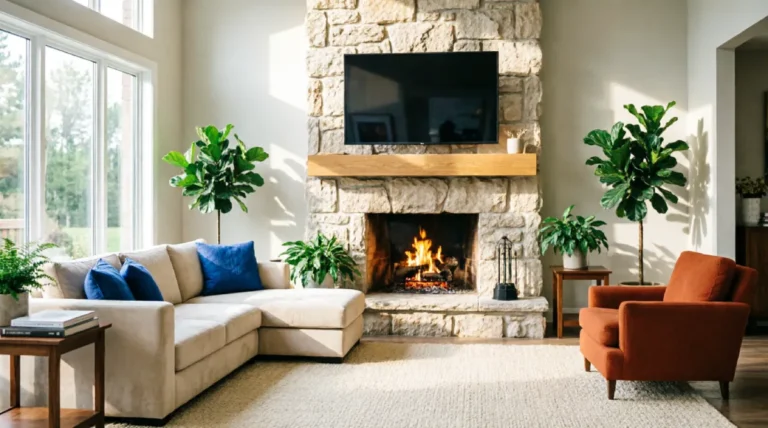
Luckily, you don’t need ceiling lights to make your room look beautiful and properly lit. In fact, you can use living room lighting ideas without overhead lights to create a warm, inviting, and luxurious atmosphere. Floor lamps, table lamps, wall sconces, and hidden LED lights can provide softer illumination while making your space feel more stylish and comfortable.
The following living room lighting ideas will work well for small apartments, rental homes, modern spaces, and comfortable family rooms. Every idea includes practical advice on lamp placement, bulb types, and how each lighting option can improve your interior. Let’s begin!
1. Floor Lamps for Dark Corners of Your Room
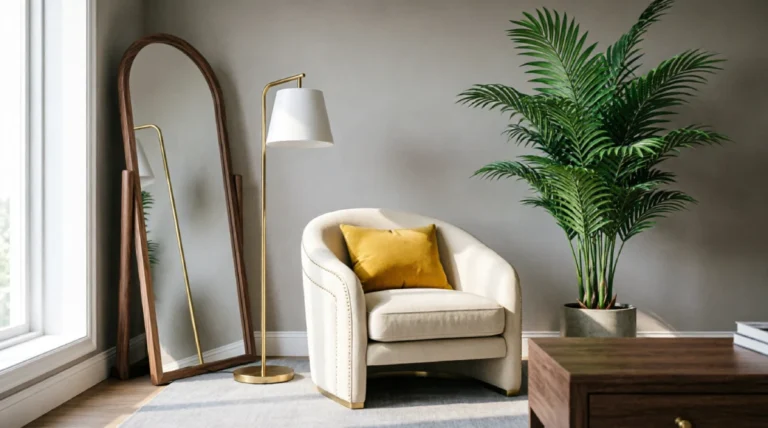
Floor lamps are the best solution for rooms without any ceiling light fixture. They are easy to install and they perfectly decorate dark corners.
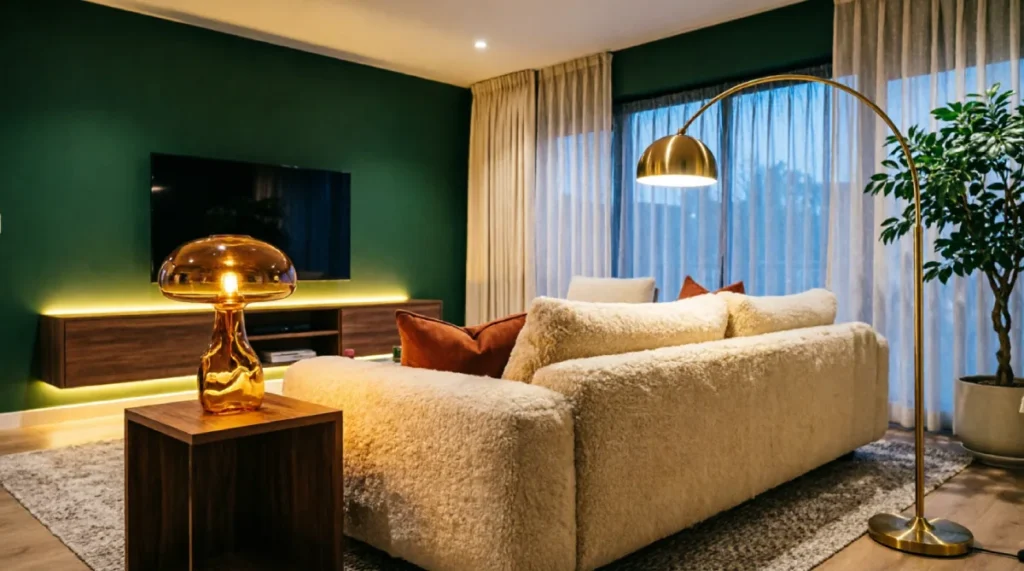
Opt for the arc floor lamp if you want to bring modernity into your space. In an arc floor lamp, light will fall where you are sitting since the light will curve over your sofa or seat. Place it behind your sofa near the end and make the arm curve over your seat cushion.
The arc floor lamp will not only bring functional beauty into your home, but it will also have sculptural appeal and create a feeling of designing without hiring one.
Try using an uplighter to achieve an ambient lighting effect. An uplighter will direct light upwards towards the ceiling and reflect light down into your space. This way you won’t experience any glare from the lights as it will be indirect light. If you combine it with a warm white bulb then the room will become calm and peaceful.
Place the single tall lamp in the darkest corner. You will be amazed at how spacious your space becomes after that. For more ways to brighten a dim interior, explore these ways to make a dark room look brighter.
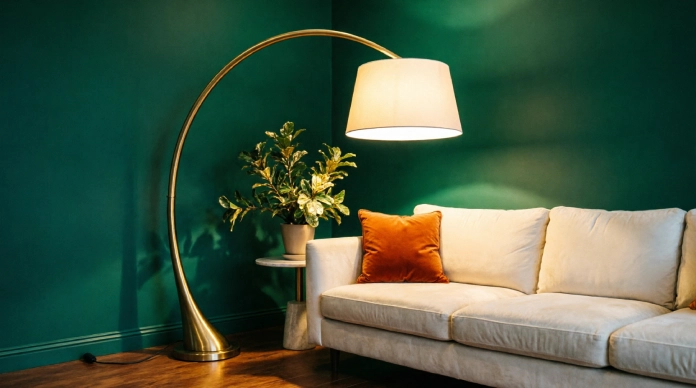
2. Layering Table Lamps to Achieve a Designer Look
Lamps may be placed on side tables, consoles, shelves or cabinets. When all lamps have the same height, the light will look flat. Combining tall and low lamps creates a feeling of depth.
You could also experiment with styles. Lamps that match each other and are placed on either side of the sofa will look balanced and traditional. Unmatching lamps, for example, a ceramic and a brass lamp, add character to the decor. Textured bases, glass and woven lampshades are great additions to the room if they coordinate with other items in the room, like a vase or a pillow.
Use a bulb that produces warm white light with a fabric lampshade. A shade softens the light and protects your eyes from looking directly at the bulb.
3. Add Plug-in Wall Sconces without Wiring
Wall sconces help create a complete look, and they do not require you to hire an electrician. These sconces plug into an outlet and are great options for renters or historic houses.
Place them near the artwork, over the console table or by the reading chair. Get adjustable arm types if you need flexibility to direct the light or an upward-facing model for a soft effect on the walls.
The one problem people have is the exposed cable. Solve that with a paintable cable holder that goes straight down the wall and is the same colour as your paint job. All it takes is a few minutes and the whole unit will blend in seamlessly.
Choose a bulb with a colour temperature of 2700k to give the wall warmth.
4. LED Strip Lights for a Luxurious Appearance
Depending on how you use them, LED strips can appear cheap or luxurious. The key to achieving luxury with LED strips is to hide them properly.
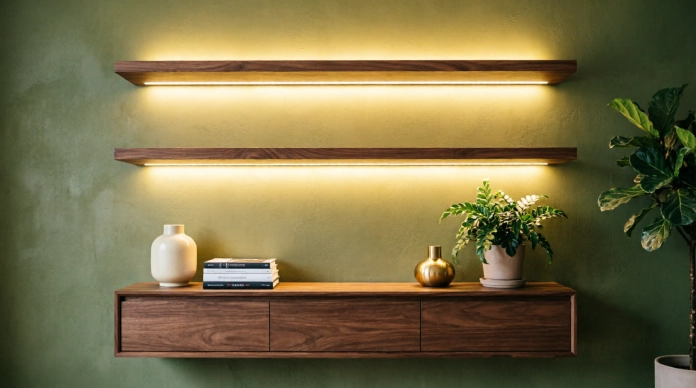
Install the strips in places where they cannot be seen such as behind the TV set, underneath a floating shelf or behind the media console. Since all you can see is the light emitted, this will make your home appear luxurious and built-in.
Select strips that have dimming capabilities and are tuned to provide warm white colour. Avoid colourful strips if you desire elegance and select a strip that features a diffusing channel to eliminate those little dots of light. For more information about LED efficiency and lighting performance, explore the U.S. Department of Energy’s LED Basics guide.
5. Make an Impact With an Over-Sized Floor Lamp
Not all the lamps have to be understated and subtle. Oversized floor lamps serve as both lighting fixtures and design objects.
Tripod floor lamps, oversize floor lamps with oversized shades, or simply bold and sculptural floor lamps are perfect choices. To achieve right proportionality, the lamp should be in balance next to the sofa neither too small nor excessively large. The shade should be positioned in such way that it is situated on eye level if one is seated.
Pair this object with neutral sofa, textured rug, or accent chair and let the lamp be the highlight of the room. It is better to have one strong object than several smaller.
6. Use Battery Powered Lamps for Versatile Lighting
Power outlets may become an issue in rentals. In such cases, rechargeable lamps will help overcome the problem and offer even more opportunities – they can be placed wherever you want.
Place it on the coffee table while having a dinner party, then move it to the bookshelf the following day. These lamps are useful in places with narrow shelves or side tables where wires could be distracting.
Remember to look out for three aspects when buying: battery duration, lighting options, and charging convenience. If the lamp offers 3-stage dimming and lasts the whole evening, it’s worth spending a little extra on it. Make sure there is a warm lighting option available to blend in with the rest of your lamps.
7. Reflecting Light Using Mirrors and Glass Decor
Although mirrors don’t produce light, they are very efficient in diffusing light. This is especially important for a living room that relies on artificial light from lamps and natural light from the window.
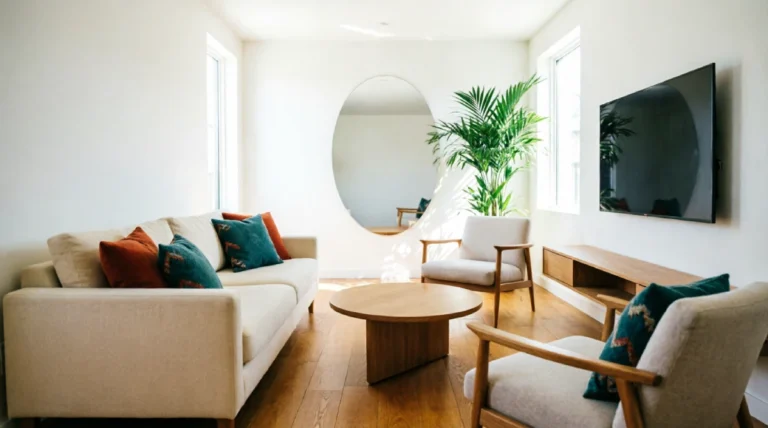
Place a mirror opposite the window to reflect daylight into the room. At night, you should position a mirror close to the lamp to reflect light into the room. Small mirrors, glass objects, and metal accents create additional lights in the room.
You should avoid overdoing this. One big mirror in the correct position is better than many small mirrors placed everywhere in the room. You shouldn’t put a mirror that reflects a messy area anywhere. It should reflect beautiful things. If you’re working with limited space, these decorating hacks for small rooms can help make your living room feel brighter and more spacious.
8. Illuminate Art Using Picture Lights
A picture light is a small light that is placed above an art piece and illuminates it. Not only does it give a professional finish to your wall, but it also adds some soft light to the space in one single go.
There are various types of picture lights available, such as battery-operated, rechargeable, and plug-in models. Rechargeable types make a good choice for renters because there is no need for any wiring. The light should be mounted above the center of the artwork, and the angle should be adjusted so the light falls directly on the art piece.
Use a warm dimmable light. If the light is too bright, it will create glare on the glass of the frame.
9. Create a Comfortable Reading Corner with its Own Lighting
Reading corner is a great solution for a dull corner, and it is also the best illustration of the importance of various lighting sources.
Put a comfy chair, a small table, and a desk lamp into one place. Set up the lamp to point on your book, providing targeted illumination without turning the whole room bright. It is a case of task lighting, and unlike it, ambient lighting is a soft overall light of the room.
As a final touch, put a cozy blanket, a couple of cushions, and a little rug under your feet. Very soon, it will become a favorite nook for everyone.
10. Add Hidden Lighting Under Shelves or Behind Furniture
Hidden lighting is an easy way to bring depth into your space. When a soft light is added from behind or under any object, shelves, cabinets, walls become more appealing.
Install LED strips behind floating shelves, in a glass cabinet, behind the console table, etc. You may install a diffuser or a hidden channel if you want a professional look. Your objective should be that the glow catches your eye, not the lighting itself.
Take care of exposed wires or places where you will find the dots of lights shining brightly from the sofa. All you have to do is take a moment, sit where you usually sit and check around.
11. Combine Multiple Living Room Lighting Ideas Without Overhead Lights for a Cozy and Expensive Look
An ideal living room does not use only one type of light source. Rather, it should consist of a combination of different sources of light.
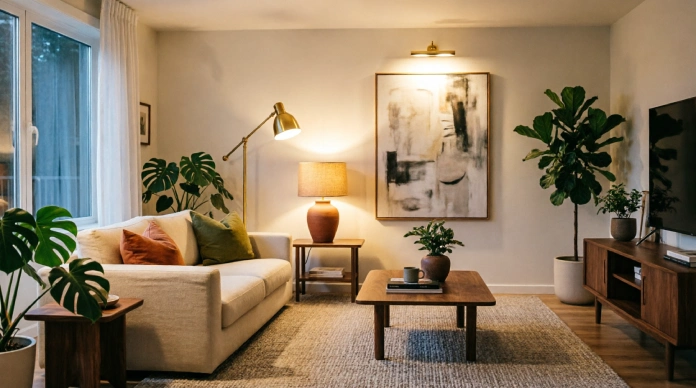
Adhere to the principle of three layers of light. This means that in addition to ambient light (floor lamps and uplighters), there should be task lighting (reading lamps) and accent lighting (picture lights and LED strips).
Pick the appropriate bulb. Bulbs with warm white light that falls within the range of 2700-3000K provide the comfort that you seek. Preferably, pick dimmable bulbs so that you could change the atmosphere from an active day to a peaceful movie night.
Balance lighting with shadows. Lamps need to be scattered around the living room rather than concentrated in one place. You will want to vary the height of the light sources, too. Shadows do not make the interior ugly; on the contrary, they add depth to the room. You can apply similar lighting principles to your workspace with these home office lighting hacks.
How to Light a Living Room Without Overhead Lights on a Budget
You do not need to buy everything at once. Here is a simple way to build up slowly.
- Start with one floor lamp and one table lamp. That alone changes a lot.
- Use the outlets you already have. Plug-in and rechargeable options save you from any rewiring costs.
- Add an affordable LED strip to one focal area, like behind the TV, instead of the whole room.
- Use a mirror to make better use of the daylight you get.
- Choose lamps that can move between rooms, so your money works harder.
Budget lighting can still look expensive if the bulbs are warm and the placement is thoughtful.
Common Lighting Mistakes to Avoid
A few small errors can ruin an otherwise lovely room.
- Relying on one lamp to light the whole space
- Using cool or harsh bulbs that kill the cozy mood
- Placing lamps where they glare on the TV screen
- Adding lots of decorative lights without enough general light
- Leaving cords across walkways, which is a trip hazard
- Ignoring your wall colour and natural light, which both change how a lamp looks
Conclusion
You don’t need ceiling fixtures to achieve a cozy and sophisticated look. With the right living room lighting ideas without overhead lights, you can create a warm, inviting atmosphere using a combination of floor lamps, table lamps, wall sconces, and accent lighting that brightens the entire space.
Start with something simple by combining two or three light sources at different heights and choosing warm white bulbs for a relaxing glow. Experiment with their placement and add more lighting if needed to eliminate dark corners and create a balanced look. For more home decorating tips, visit OliviHome.
FAQ
How can I light my living room without ceiling lights?
Combine several types of fixtures such as floor lamps, table lamps, wall sconces and LED fixtures to create an interesting and soft ambient lighting layer.
What kind of lighting is appropriate for the living room without ceiling lights?
It is appropriate to install several kinds of lights including ambient, accent, and task lights because relying on just one light source creates shadows while using different layers will illuminate all the room.
How many lamps do I need for the living room?
It is hard to tell since it is determined by the room size, interior design, natural lighting, and your activities in the room. Three to five light sources are recommended.
What colour should be used for making a living room cozy?
Warm white is preferable for creating cozy atmosphere since it has a nice golden colour and is soft enough.
How can I make my living room appear luxurious using lamps?
To make it look luxurious try to coordinate the lamps’ finish, use dimmable warm bulbs, conceal the LED lighting and maintain balance between the light sources. Try to hide wires and not to place too many lamps on the furniture.