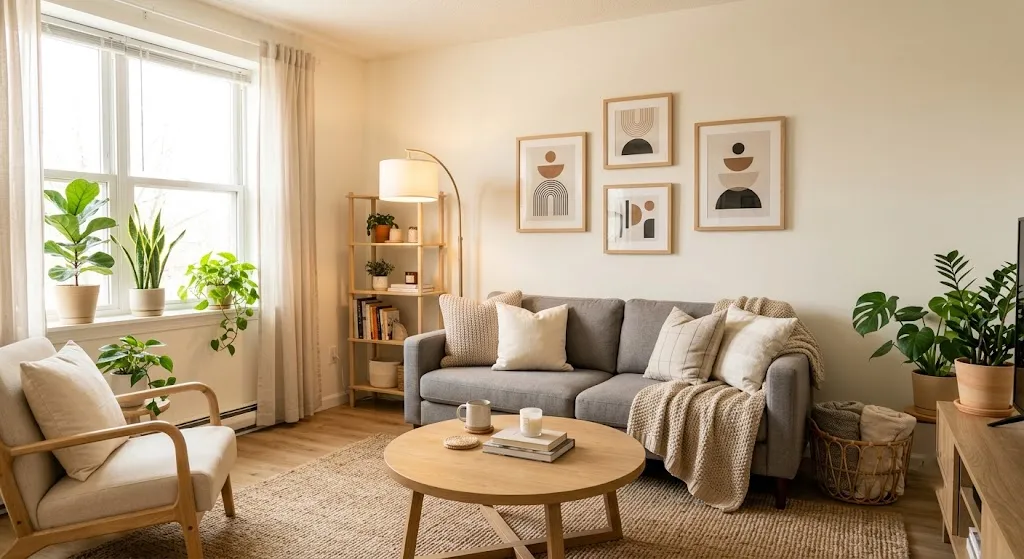
Economy home decor means making your home look good without spending a lot of money. It focuses on smart shopping, DIY projects, and using what you already own. With a few small changes like paint, lighting, and rearranged furniture, you can create a stylish home for a fraction of the usual cost.
Decorating a home can feel expensive fast. One trip to a furniture store and your budget is gone before you even pick a paint color. But here’s the good news: a great-looking home doesn’t need a big price tag. It needs good choices.
Economy home decor is about working smarter, not spending more. It’s for renters, first-time homeowners, and anyone who wants their space to feel warm and put-together without draining their bank account. Let’s walk through how to do it, room by room and idea by idea.
What Does Economy Home Decor Actually Mean
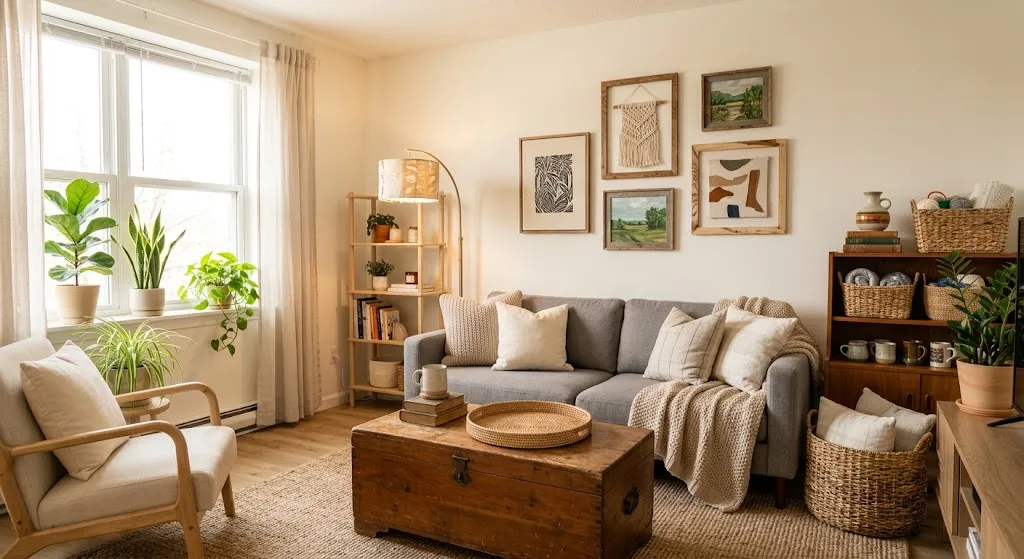
Economy home decor is the practice of styling your home using affordable materials, secondhand finds, and creative do-it-yourself projects. It’s not about buying cheap items and hoping for the best. It’s about being thoughtful with your money and getting the most style out of every dollar.
This approach rejects two common myths. The first myth is that stylish homes always cost a lot. The second is that budget decor has to look bare or unfinished. Neither is true. A home can be full of personality and comfort even when the furniture came from a thrift store or the art came from your own two hands.
The heart of economy home decor is intention. You look at what you have, decide what you actually need, and only then think about buying something new.
Start With What You Already Own
Before spending a single rupee or dollar, take a good look around your home. Most rooms don’t need more stuff. They need better arrangement.
Try moving your sofa away from the wall. Turn your furniture to face each other instead of pointing everything at the television. Small shifts like this can make a room feel bigger and more welcoming without costing anything.
Cluttered shelves and tabletops also make a home feel messy, even when the individual items are nice. Pick up everything on a shelf, then put back only the pieces you truly love. You’ll likely find you have fewer things to buy than you thought, and the room will look calmer right away.
Sometimes an item you already own just needs a new job. That old side table gathering dust could become a plant stand. A spare blanket could become a throw for your reading chair. Look at your things with fresh eyes before deciding anything is missing.
Paint and Lighting Make the Biggest Difference
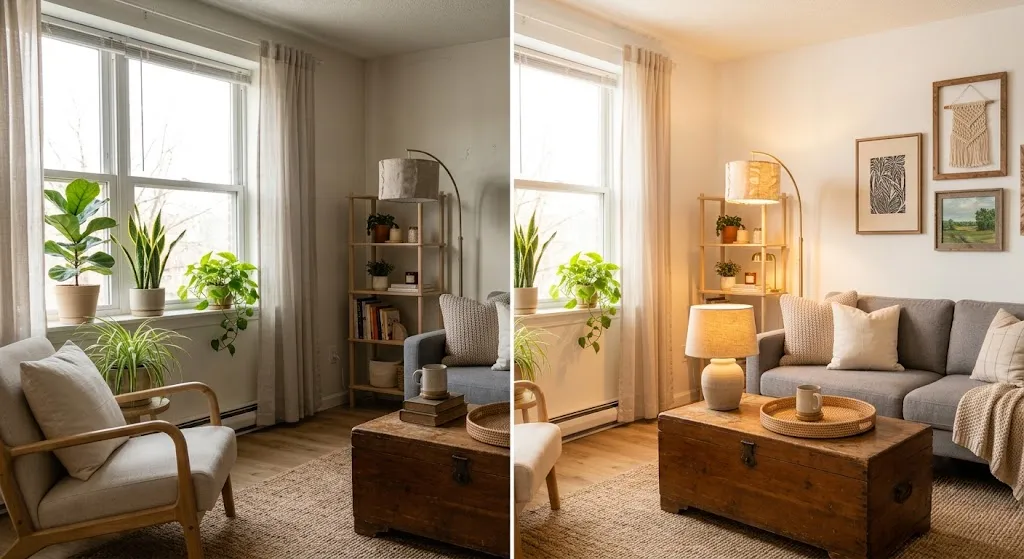
If you only change two things in your home, make them paint and lighting. Both are affordable, and both completely change how a room feels.
A fresh coat of paint in a light, neutral shade like white, soft gray, or warm beige instantly makes a room feel newer and larger. You don’t need to repaint every wall. Even one accent wall can shift the whole mood of a space.
Lighting works the same kind of magic. Many homes rely on one harsh overhead light, which can make even nice furniture look flat and cold. Add a floor lamp in one corner and a small table lamp in another. Switch your bulbs to a warm white tone instead of a bright white or blue tone. This one change softens the whole room and makes everything in it look more expensive than it is.
String lights and candles also add warmth for very little money. Use them in reading nooks, hallways, or anywhere that feels a bit flat.
Shop Smart: Thrift Stores, Sales, and Secondhand Finds
Thrift stores and secondhand shops are full of solid furniture waiting for a second chance. Look past the color or the wear and tear. Focus on the shape and the build quality. A wobbly leg can be fixed. A scratched surface can be sanded and repainted. But good bones are hard to fake.
A basic wooden side table found for a few dollars can become a standout piece with some sandpaper, primer, and paint. The same goes for dressers, chairs, and bookshelves. This kind of upcycling is one of the most rewarding parts of economy home decor, because you end up with something nobody else has.
Timing your purchases also saves real money. Sales around major holidays often bring big discounts on furniture, rugs, and home goods. Waiting for the right sale on an item you need, rather than buying it the moment you see it, can cut the price significantly.
Swapping out hardware is another small trick with a big payoff. Basic dresser handles or cabinet pulls, when replaced with matte black or brushed brass options, can make an ordinary piece look custom-made. It usually takes less than an hour and very little money.
DIY Projects That Don’t Look Homemade
DIY decor gets a bad reputation for looking rough around the edges, but that only happens when it’s rushed. With a little patience, homemade decor can look just as good as anything from a store.
Wall art is one of the easiest places to start. Frame a piece of patterned fabric, a page from an old book, or a print you designed yourself. Group a few of these together for a gallery wall that costs far less than store-bought art and feels more personal too.
Storage bins, baskets, and mason jars are simple ways to organize a space while adding texture. A woven basket in the corner of a room does double duty, holding blankets or magazines while also looking intentional.
If you’re handy with a sewing machine or even just fabric glue, cushion covers and simple curtains are another low-cost project. Textiles bring warmth and color to a room fast, and they’re one of the cheapest ways to change the whole feel of a space.
Small Details That Make a Room Feel Finished
Once the bigger pieces are in place, small details tie everything together. A mirror leaning against a wall makes a room feel larger and reflects extra light. Curtains hung close to the ceiling, rather than right above the window frame, draw the eye upward and make ceilings feel higher than they are.
Plants also bring a room to life. If you don’t have much of a green thumb, start with hardy varieties that need very little care, like a pothos or a snake plant. A well-placed plant fills empty corners and adds a fresh, lived-in feeling that’s hard to get any other way.
Layering rugs is another trick worth trying, especially if you can’t afford one large area rug. Two smaller, inexpensive rugs placed together can create a textured look that feels custom, while also helping to muffle sound in a room with bare floors.
Scent matters too, even though it’s easy to overlook. A simple reed diffuser or a scented candle creates a sense of comfort the moment someone walks through the door. It’s a small cost with a surprisingly big effect on how a space feels.
Common Mistakes to Avoid
One of the biggest mistakes in budget decorating is using too many colors at once. A room with five or six different colors competing for attention tends to look chaotic and cheap, no matter how nice each individual item is. Stick to a simple color palette, built around one or two main tones, and let texture and shape do the rest of the work.
Another mistake is buying decor items just because they’re inexpensive. Cheap doesn’t always mean good value. A ten-dollar item that breaks in a month costs more in the long run than a slightly pricier item that lasts for years. Spend a little more on pieces you’ll use daily, like a sofa or a bed frame, and save money on things that are easy to replace or update later, like throw pillows or wall art.
Finally, don’t try to finish a whole home in one weekend. Economy home decor works best as an ongoing process. Take your time, watch for sales, finish one project before starting the next, and let your home evolve naturally.
Final Thoughts
Economy home decor proves that a beautiful home isn’t about how much you spend. It’s about how well you use what you have, how creatively you shop, and how much care you put into the small details. Start with one room, try a few of these ideas, and watch how far a little effort and a lot of intention can go.