Table of Contents
Then finally, you nail the pitch in that video meeting. The words are flowing. Your boss is agreeing with you. Then the neighbor turns the power drill on, your dog barks along with the mailman, and someone in the kitchen drops the frying pan as if it owes them something.
Everyone on that call heard it. You heard it too, and you will most likely dwell on it for the rest of the day.
This is where it gets frustrating. Most people trying to fix this problem end up spending money without getting good results. You put egg cartons on the walls, cover your window with a thin blanket, and still end up with a room that sounds like a bus station. This isn’t bad luck. It’s poor information.
The good news is that the best home office soundproofing ideas can be simple, affordable, and surprisingly quick to implement. But first, you need to stop making a few crucial mistakes. Explore these practical home office ideas to create a more comfortable and productive workspace.
In this guide, you’ll discover nine common noise problems that can disrupt your home office, along with practical solutions to help you create a quieter, more comfortable, and productive workspace.
How Home Office Soundproofing Ideas Differ from Sound Absorption: The One Thing You Must Know
Before diving into the list of errors, we must first understand the one thing that confuses most people.
Soundproofing stops the noise from getting into your room. It involves having mass (solid and heavy materials) and having good seals. Sound absorption reduces the reflection within the room. It requires porous materials such as carpets, curtains, and acoustic panels.
For more details, read this helpful noise control guide to understand how different methods can reduce unwanted sound.
Consider this analogy of the leaky boat. The bucket would be the absorption; while the patch is the soundproofing. The bucket helps but it’s still not what you want. The same reason why egg cartons and cheap curtains do not work: they are lightweight and porous. In order to reduce noise at home office, you need to have two tools: and in the right order.
9 Home Office Sound Proofing Mistakes (And How to Avoid Them)
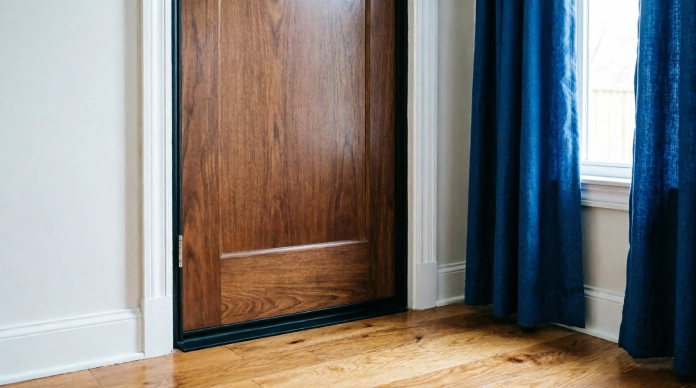
Mistake #1: Forgetting About the Gap Under the Door (Your Biggest Source of Office Noise Leakage)
Right now go and have a look at the gap under your office door. This gap is your own personal highway for voices, noises from the TV, and foot traffic.
Interior doors usually have a hollow core. In essence, the core of such a door is just a bit of cardboard covered in paint. Couple this with a gap along the edges, and sound enters the door as if paying rent.
The fix: Begin with a draft stopper or a door sweep. It doesn’t cost much and works straightaway upon installation. Next add some weather-stripping to the door along the sides and top. Still hearing too much noise? A solid core door will revolutionize your situation and is usually the most cost-effective solution for soundproofing an office door at home.
Mistake #2: Letting Your Windows Go Untouched
Glass is thin, hard, and glossy. It’s aesthetically pleasing, but it also allows sirens, traffic, and nosy neighbors to come through. Not to mention the sounds of high frequencies.
Small holes in the frame area just make things even more troublesome for you. You won’t be able to see them, but the sounds will find them every time.
Solution: Feel around the windows from the outside and inside to see if there’s any breeze going through the frame. If there’s a breeze, then there is a hole for the sound to travel through as well. Seal up these openings using acoustic caulk or weather seal.
After that, install acoustic curtains that cover the entire surface of the window. For the streets with a lot of noise pollution, a window insert will reduce noise greatly.
Mistake #3: The Egg Crate Foam Fallacy
Speaking of the most popular soundproofing myth ever on the Internet, people glue egg cartons or foam pieces all over their walls expecting the soundproofing miracle. Sounds right, doesn’t it? It does not.
Thick foam can help you get rid of echoes inside the room. You can also explore these home office decorating hacks to improve your workspace. It does nothing to protect you from exterior noises. As there is almost no mass in the material, the sound passes through it as if there was no obstacle at all. So, you are going to get a recording studio-looking office that keeps the street market atmosphere.
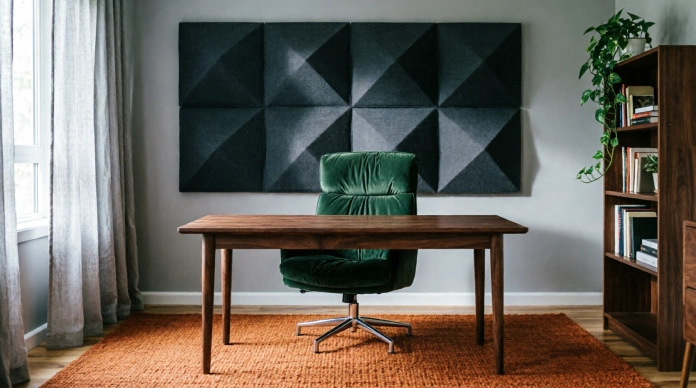
The solution: Use foam or panels for what they’re great for – improving your voice clarity. When it comes to the high-quality acoustic panels for home office purposes, choose thick panels or fiberglass boards. They will clear your voice and let you sound professional. But do not expect those panels to mute your neighbors’ music. This task requires mass and sealing.
Mistake #4: Forgetting about the Hard Floors in Your Home Office Room
Hard wood, tiles, and laminate flooring look nice. The other problem is they reflect sound in the same way as mirrors. Sound reflects from the hard floor to the ceiling and then back into the microphone – hence the sound of a hollow echo during conference calls.
Hard floors transmit vibrations through the structure of the house, which is important to consider if there are people living above or below you.
Solution: Lay out a thick carpet with a dense felt underlayment. Carpets absorb reflections, and the underlayment adds a layer of dampening to the footfall noises. Make sure you get a big carpet to cover your chair and desk, not a small one in a corner. This is an easy way to get rid of the echo problem.
Mistake #5: Not Addressing Cracks and Outlets
You won’t see this coming. Sound doesn’t just go through the center of your wall; it travels around the edges of the wall, through cracks, and directly through electrical outlets. Experts refer to them as flanking paths.
You may have an awesome wall that still leaks sound if there are any cracks where the wall connects to the ceiling, floor, or the corners of the wall. An outlet is basically a small hole that has been cut out of your wall.
How to do it right: Just grab some acoustic sealant and fill all the visible cracks in the wall, including the baseboards, corners, and ceiling lines. As for the outlets and switches, use foam gaskets or putty pads behind the cover plates. It will take you an afternoon and cost next to nothing. This is probably the most overlooked mistake when it comes to home office noise.
Mistake #6: Placing Your Desk at the Loudest Part of the Room
It’s not always the room that causes the trouble; it could be your desk placement instead.
Place your desk so that it faces a flimsy wall that separates you from another person or a loud hallway, and all that will come through to your ears – and to your microphone. Most of us place our desk by the window or by some other point of interest without even thinking about the noise.
Solution: Place your desk as far away from the noise sources as possible. The ideal location would be on the quietest wall, preferably an outer wall of the house. Make sure you place your microphone pointing away from the door and the window. The good thing about this solution is that it’s absolutely free of charge. For more practical tips, check out these home office desk setup hacks.
Mistake #7: Using Air Vents for Sound Highways
Your air ducts are a network of long pipes made of metal that wind through your entire house. This gives sound lots of ways to travel. If someone talks in the living room, their voice travels along the ductwork and comes out of the vent in your office, making it seem like they are right next to you.
How to fix this: There are several things you can do. Duct silencers or insulated flex duct will help make your ductwork quiet. A vent cover provides a little extra sound blocking. For more sound blocking, an acoustic baffling system uses sound waves and sends them all over, causing the sound to lose its energy. Are you renting your space? First, talk to your landlord, then get yourself a simple vent cover.
Mistake #8: Relying on Soft Decor Without Any Weight
A fluffy blanket hanging from the wall feels like soundproofing material. Likewise, a canvas picture, a few pieces of lightweight art or an avalanche of soft throw pillows would all feel like soundproofing materials. However, light is definitely not dense and heavy.
In order for sound to be blocked out, there should be some weight to the material. In this case, the thin blanket is weightless and allows sound to penetrate the room unhindered.
Solution: Introduce weight. Place a bulky bookshelf right into a dividing wall and fill it with dense books. The latter are heavy and will prevent any sound from passing through the shelf itself, while the shelves themselves will create an obstacle for sound waves. Instead of lightweight curtains, hang heavyweight lined curtains all the way down to the floor.
Mistake #9: Not Utilizing Active Noise Controls
It is impossible to block all noises even with the most advanced equipment. Any passing vehicle or noisy leaf blower will find its way through. The point is that many people overlook the fact that it is possible to counteract sound using special tools.
Solution: Combine physical noise control with active noise controls. White noise generator will mask any unexpected noises making them less disruptive. Good quality noise-canceling headphones will allow focusing on work. Finally, digital microphone noise suppression technology (found in almost any video call app and some headsets) will make everything more convenient for your colleagues. If you keep wondering how to soundproof a home office completely, this is the last step.
DIY Soundproofing vs. Professional Soundproofing: How Much Will It Cost?
There is no need to destroy your home to have a comfortable work place. Here is a quick guide to help you determine the cost of your project.
| Solution | Type | Typical Cost | Effort | Best For |
|---|---|---|---|---|
| Door sweep and draft stopper | DIY | Very low | Very easy | Stopping door gap leaks |
| Weather stripping and acoustic sealant | DIY | Low | Easy | Sealing door, window, and wall gaps |
| Thick rug with felt underlay | DIY | Low to medium | Very easy | Cutting echo and footstep noise |
| Heavy curtains and bookcases | DIY | Low to medium | Easy | Adding mass without construction |
| Acoustic panels | DIY | Medium | Easy | Clearer voice on calls |
| Solid core door | Upgrade | Medium to high | Moderate | Major door noise reduction |
| Window inserts or double glazing | Upgrade | High | Moderate to hard | Heavy street noise |
| Extra drywall layer or sound barrier | Professional | High | Hard | Serious, constant noise problems |
However, for most remote workers, the DIY rows will get the job done. View the pro options as a second round of work. If you’ve sealed the leaks, used mass, and the room is still noisy, then it’s time to invest some more money. But start out cheaply. You’ll be amazed at how much distance you’ll cover from just a few simple adjustments.
Your Step-by-Step Guide to Soundproofing Your Room
Getting a little bit overwhelmed? No worries! Just follow these four steps and you’ll get the major results first.
- Hunt down the noise entry points. Sit quietly in your office and listen. Check the door, window, walls, and vents. Better yet, ask a friend to make noise outside while you listen from inside. Jot down the loudest spots.
- Seal the air gaps first. This is the cheapest and most powerful step. Use weather stripping, a door sweep, and acoustic sealant on every gap you found. Sound follows air, so closing the air path closes the sound path.
- Add mass to the weak spots. Hang heavy curtains, slide a full bookcase against the shared wall, and think about a solid core door if you can afford it. This is the part that truly blocks noise.
- Soften the room from the inside. Once outside noise is under control, add a thick rug and a few acoustic panels. Now your audio sounds crisp and the room stops sounding hollow.
These home office organization ideas can help you keep your workspace tidy and functional. Follow that order. Plenty of people jump straight to step four because panels look cool, but that skips the part that does the heavy lifting.
Frequently Asked Questions (FAQs)
How can I soundproof my home office for the lowest price?
By sealing gaps in your door with a draft stopper or door sweep and using a thick carpet with a felt backing. These things are very cheap and will handle the two major culprits, drafts and echoes. They won’t take more than an hour to install.
Is it possible to soundproof a room without making holes in the wall?
Yes. Freestanding soundproofing screens, bookshelves, acoustic curtains, and thick carpets will do the job without having to make any holes or change anything permanently. It’s perfect for when you’re renting.
Do acoustic panels stop outside noise?
No. Sound panels reduce echoing within a room, making your voice clearer. Outside noise needs mass, like a solid door or another layer of drywall with sealed gaps.
What is the cost of soundproofing a home office?
It will vary depending on the amount of sound you are trying to block out. The most affordable soundproofing is made using a door sweep, weatherstripping, acoustic sealant, and a rug, which cost next to nothing. More expensive materials include solid-core doors and window inserts. Most telecommuters achieve an acceptable reduction in noise using the most inexpensive methods and only invest in higher-end solutions if necessary.
Are rugs and curtains enough to help me reduce the sound in my office?
Yes, to an extent. These items are mainly helpful when it comes to reducing echoes in the room. Heavy curtains and a thick rug with a felt underlayment absorb reverberation within the room and thus allow you to speak clearly into your device. Rugs and curtains can also reduce external noise slightly. But if your neighbors are loud, use sealed gaps and a solid door in addition to the curtains and rugs.
Final Thoughts: Your Soundproofing Checklist for Your Home Office
You don’t need to spend a fortune on soundproofing your home office because most noise problems come from a few common sources: gaps around doors and windows, hard floor surfaces, electrical outlets, and a poorly positioned desk. The best home office soundproofing ideas focus on addressing these weak spots, adding heavier materials where needed, and using simple tools to manage distracting sounds.
Here’s a quick checklist to get started:
- Seal gaps around doors and windows.
- Add a thick rug and heavy curtains.
- Fill cracks and seal electrical outlets with appropriate sealants or gaskets.
- Move your desk away from noise hotspots.
- Keep ventilation functional while using suitable sound-management solutions.
- Install acoustic panels to reduce echo inside your office.
Not sure where to begin? Start by sealing the gaps around your door. This simple fix can take just a few minutes, cost very little, and help reduce noise entering your workspace. Once you notice the improvement, you can move on to other affordable solutions and enjoy a quieter environment for your next video call.