Table of Contents
You walk into the kitchen after a day ready to put your bag down and finally take a break. Then you see it: a sink of dishes, sticky counters and that smell of burnt oil still in the air. Yuck. The problem is that most of the cleaning advice feels like the same old tips over and over again and some of it just doesn’t work when you’re dealing with real-life grease, spills, dried stains and everyday dirt.
That’s why this guide is about kitchen cleaning hacks that have been tested and proven to work. These hacks fit into a schedule instead of requiring an entire weekend to clean. You’ll discover ways to cut through simple grease methods to deal with tough messes and natural cleaners that use things you might already have in your kitchen.
No hard-to-follow. Hours of scrubbing, just quick tricks that actually make cleaning easier. Let’s look at the kitchen cleaning tips that’re worth trying.
1: Why Kitchen Cleaning Hacks Matter More Than You Think
A clean kitchen is not about showing pristine counters to guests. It also keeps the kitchen healthier and easier to use. Your kitchen deals with meat, vegetables, spills, grease and ready‑to‑eat food each day so small cleaning shortcuts can have a surprisingly big impact.
Consider the kitchen sponge. It may look harmless, but studies show that kitchen sponges can harbor many microorganisms because they stay damp and regularly pick up food residue. Your sink can also become a hotspot for germs if it is not cleaned regularly.
Smart cleaning habits help you stay ahead of the mess without turning every cleanup into a chore. They can:
- Prevent cross‑contamination between cooked foods.
- Discourage pests such as ants and cockroaches by removing food residue and crumbs.
- Save money by using household ingredients instead of expensive cleaners.
- Make cooking easier and less stressful because you start with a more organized space.
The goal is not perfection. It is making everyday kitchen cleaning quicker, easier and more effective.
2: Start With the Right Cleaning Order (Best Way to Clean a Kitchen)
Cleaning the kitchen by order can cause you to repeat the same chores. Instead use the simple top-to-bottom dry-to-wet rule. Start with surfaces then move downward and always remove dry crumbs and debris before you reach for water or cleaner. Otherwise, loose food particles become a mess that takes even longer to remove.
Cleaning kitchen countertops works best with a microfiber cloth and a pH-neutral cleaner for routine cleaning. On quartz or granite surfaces avoid pads, scouring powders and aggressive scrubbing that could scratch or dull the surface. Always check the manufacturer’s care instructions for your countertop.
Cleaning spills and grease soon, after cooking is a time-saver. Fresh splatters usually wipe away with effort while grease left overnight hardens and requires much more scrubbing. A minute now can save you plenty of effort later.
3: Quick Kitchen Cleaning Tips for Busy Mornings
You don’t need an hour to make your kitchen feel clean. A 10-to-15-minute reset can keep mess from piling up and make the next cooking session much easier.
Try these actions:
- Wipe the stovetop while it is slightly warm: Fresh grease and splatters are generally easier to remove before they cool and harden. Never clean a surface and follow your appliance manufacturer’s instructions.
- Freshen the garbage disposal: If your disposal is designed for food scraps running a lemon piece through it can help reduce lingering odors. Check the manufacturer’s guidance first.
- Create a grab-and-go cleaning caddy: Keep two or three everyday cleaning under the sink so you don’t waste time searching for supplies.
- Load dishes immediately: Put dishes in the dishwasher. Wash them after meals instead of creating a later pile that quickly becomes tomorrow’s chore.
The secret is consistency. Small resets throughout the week prevent grease, crumbs and clutter from building up making them more manageable than one exhausting deep-cleaning session every weekend.
4: The Sink Deserves Attention Than You’re Giving It
I see that the kitchen sink deals with food scraps, greasy dishes and standing water every day so the sink can collect grime faster than you might expect. Giving the sink a clean regularly can keep odors, buildup and that dull grimy look under control.
For a stainless-steel sink sprinkle baking soda over the damp surface and gently scrub with a soft sponge or microfiber cloth. Rinse with water then dry thoroughly. For shine you can follow with a light vinegar rinse but rinse the surface again afterward and check the sink manufacturer’s care instructions first.
If you have garbage disposal, drop in a few ice cubes. Run the disposal with cold water to help loosen residue. Add citrus peels afterward for a fresher smell if the disposal manufacturer allows them.
Safety reminder: Never mix bleach and vinegar. Together they can produce chlorine gas. Use cleaning products separately. Rinse surfaces, between products.
5: Natural Kitchen Cleaning with Ingredients You Already Own
Natural Kitchen Cleaning can start with Ingredients You Already Own. Before you buy another bottle of cleaner look inside your pantry. A handful of ingredients can clean many everyday kitchen messes without adding another product to your cleaning shelf.
- Vinegar + water spray: Combine parts white vinegar and water to create a simple cleaner for glass and mirrors. Do not use vinegar on stone surfaces such as marble or limestone because its acidity can damage them.
- Baking soda paste: Mix baking soda with an amount of water to create a gentle paste for tackling stuck‑on residue. Test the paste on an area first especially on delicate finishes.
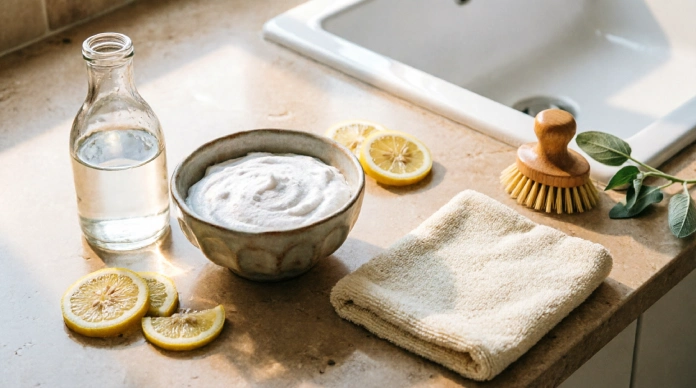
Kitchen Cleaning Tips with Baking Soda
- Burnt pot bottoms: Add baking soda and water to the pot bring the mixture to a boil then let it cool before loosening the residue with a non‑abrasive scrubber.
- Microwave interior: Apply baking soda paste to stubborn spots with a damp cloth then wipe thoroughly with clean water.
- Fridge odors: Place a box or container of baking soda toward the back of the refrigerator to help absorb unwanted odors.
Natural cleaning options can also reduce the number of strong‑smelling products used around the home. For households with children, pets or people sensitive, to fragrances choosing simpler low‑odor ingredients may feel more comfortable though “natural” does not automatically mean risk‑free so use each ingredient appropriately. Kitchen Cleaning Tips with Baking Soda offers tricks.
6: How to Remove Grease from Kitchen Surfaces (Deep Cleaning Kitchen Essentials)
Grease has a way of turning from a light splatter into a sticky baked‑on layer. Before reaching for the strongest cleaner under the sink try something much simpler: dish soap and hot water. Dish soap is made to cut through food oils.
For everyday kitchen grease dish soap can be surprisingly effective. Apply the soapy solution to the surface let grease sit for a few minutes to loosen the buildup then wipe grease away.
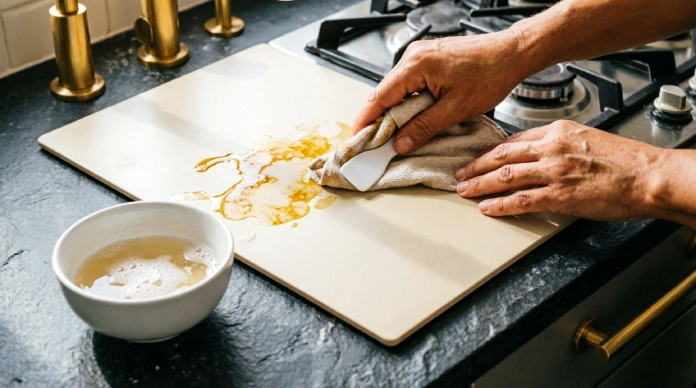
For hardened grease use a plastic scraper to gently lift the residue. Skip metal scrapers on painted, coated or delicate surfaces because metal scrapers can leave scratches.
Don’t forget the stove hood and exhaust fan. Grease can collect around the hood, fan cover and filter over time when the stovetop looks spotless. Check the manufacturer’s instructions before cleaning or soaking any filter.
A friend of mine once discovered a layer of grease behind her stove that hadn’t been touched in months. We used water, dish soap and a plastic scraper and what looked like a nearly 20‑minute mess came off in under 10 minutes. No harsh chemicals, a little patience and the right approach.
7: How to Clean Kitchen Cabinets Without Damaging the Finish
Kitchen cabinets always seem to collect grease, fingerprints, dust and cooking splatters. The big secret is to match your cleaning method to the cabinet material. This is important because wood, laminate and painted finishes can all react differently to water and cleaning products.
For sealed cabinet surfaces I suggest using:
Warm water + mild dish soap: Mix a bit of mild dish soap into some warm water.
Soft microfiber cloth: Wring the cloth out well and wipe the kitchen cabinets gently.
Minimal moisture for wood: Do not ever soak in cabinets. Much water can ruin the finish or soak into the wood.
Dry after cleaning: Use dry cloth to wipe away any leftover moisture.
Don’t Forget Cabinet Handles and Knobs
I have found that handles often have grease and grime than the kitchen cabinets themselves. Use a soft toothbrush to scrub around the grooves, edges and corners. A regular cloth just cannot reach those spots.
Clean Inside the Cabinets Too
Before you put everything back in your kitchen cabinets:
- Take out all the spices, dishes or pantry items.
- Wipe the shelves and the corners with a cloth that’s only slightly damp.
- Let the surfaces dry all the way.
- Put your items back in an organized way.
Doing this stops crumbs and grime from getting onto your freshly cleaned dishes, containers or food packages.
8: Don’t Forget the Small Appliances
Small appliances might sit quietly on your countertop, but they can gather crumbs, coffee mess, grease and food splashes fast. The good news is that most don’t need a cleaning process. These easy cleaning hacks take a few minutes and can make your kitchen feel much cleaner.
- Coffee maker: For standard coffee makers running a vinegar-and-water cleaning cycle now and then can help remove mineral buildup. Always check the manufacturer’s instructions first as some machines need a descaling solution.
- Toaster: Unplug the toaster take out the crumb tray if it has one and empty it often. You can gently turn it down over a sink or trash can to shake out remaining crumbs. Don’t shake it hard.
- Blender: Put water and a little dish soap, in the blender jar put the lid tight and blend for a short time to loosen any leftover bits. Rinse well. Follow the manufacturer’s cleaning instructions.
These quick tasks are easy to miss. Keeping them in a simple weekly or monthly schedule stops small appliances from getting very dirty.
9: Simple Kitchen Cleaning Tips for Busy People (Building Small Habits)
A clean kitchen is easier to maintain when cleaning becomes part of your routine of a chore that you keep postponing. You do not need to spend your weekend deep cleaning if you handle a few small tasks every day.
- Clean as you cook: Wipe spills, rinse utensils and wash or load dishes while food is cooking. By the time dinner is ready the clean kitchen has less to clean.
- Keep a counter cloth: Use one washable cloth that is only for kitchen counters. If many people cook a simple colour‑coded system can help keep cloths from being used for cleaning jobs.
- Follow the 2‑minute night reset: Before heading to bed spend two minutes clearing the counters, putting away food loading dishes and wiping spills.
These habits may seem tiny, but they stop crumbs, grease, dishes and clutter from piling up in the clean kitchen. Over time that means scrubbing, less stress and far less need, for a major weekend deep clean. I find that using these habits keeps my clean kitchen bright and tidy.
10: Building a Simple Kitchen Cleaning Routine That Actually Sticks
A clean kitchen does not require hours of scrubbing every day. The easiest way is to build a kitchen cleaning routine around small tasks that fit naturally into your schedule. I find that this simple kitchen cleaning routine works well for me. Of trying to make everything spotless at once focus on consistency.
Daily Kitchen Cleaning
A few quick habits each day can prevent mess and grime from building up:
- Wipe down kitchen counters after preparing meals.
- Clean the sink especially after washing dishes.
- Sweep the floor to remove crumbs, dirt and food particles.
These tasks usually take a few minutes but make a noticeable difference. I see the difference when I do them daily.
Weekly Kitchen Cleaning
Once a week give the areas that collect dirt a little more attention:
- Clean and wipe down fridge shelves.
- Wipe cabinet fronts, around handles.
- Mop the kitchen floor thoroughly.
Choosing one day for these chores can make them easier to remember. I find that picking one day helps me remember.
Monthly Kitchen Cleaning
Monthly tasks can tackle buildup that daily and weekly cleaning do not reach:
- Deep clean the oven. Remove baked‑on grease.
- Descale your kettle or coffee maker to remove mineral buildup.
- Clean behind and underneath appliances where crumbs and dust tend to collect.
You do not need to complete every task on the same day. Spread them out if that makes the routine more manageable. I find that spreading them out reduces pressure.
Remember the goal is not perfection, it is consistency. A few small cleaning habits repeated regularly can keep your kitchen fresh, hygienic and much easier to maintain without turning cleaning into a chore.
11: Kitchen Cleaning Checklist and Organization Tips to Maintain the Results
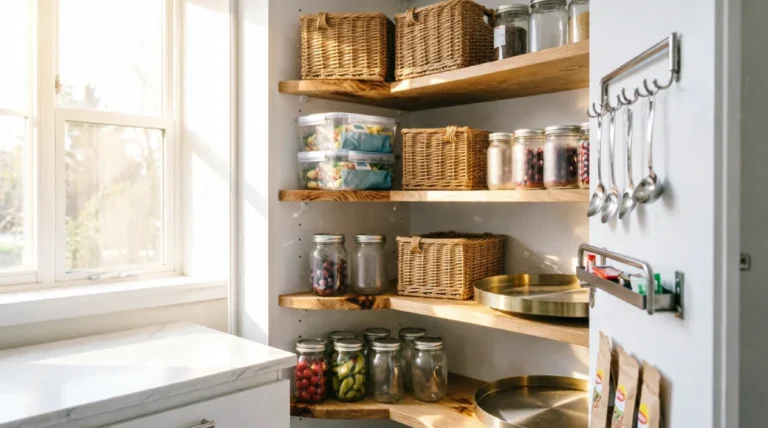
A clean kitchen can still feel messy when countertops are crowded and pantry items are scattered everywhere. Kitchen cleaning and organization go hand in hand, when everything has a place kitchen cleaning becomes easier spills are spotted faster. Clutter does not build up.
Quick Kitchen Cleaning Checklist
- Declutter countertops: Keep daily-use appliances and essentials within reach.
- Label pantry containers: Clear labels make ingredients easier to find and help prevent forgotten or expired food from piling up.
- Keep cleaning supplies together: Choose one spot, for everyday cleaners, clothes, brushes and sponges instead of scattering them around the kitchen.
- Do a 5-minute reset: Clear dishes, wipe counters return items to their proper places and deal with any obvious spills.
The earlier kitchen cleaning tips are much easier to maintain when paired with organization. Kitchen cleaning removes the grime while organization prevents clutter from returning. You need both for a kitchen that stays functional and manageable long‑term.
Frequently Asked Questions
1. What is the fastest way to clean a kitchen?
Start by taking away dishes and things that’re in the way then clean up crumbs and small pieces from the surfaces before using a cleaner. Make sure to focus on the sink the counters and the stove for a 5 to 10 minute clean up.
2. What is the best way to remove grease from kitchen surfaces?
A mix of warm water and dish soap works for many surfaces that can be washed. Let it sit for a few minutes to help get rid of grease then wipe it with a soft cloth.
3. Can I use baking soda to clean my kitchen?
Yes. Baking soda can help with things that are stuck on burnt stuff in pots, dirt in the microwave and smells in the refrigerator. Use it carefully. Do not scrub too hard on surfaces that are not strong.
4. How often should I clean my kitchen?
Do clean ups every day and regular cleaning every week then do deeper jobs like the oven the vent over the stove and places behind the appliances once a month or when needed.
5. How can I keep my kitchen clean, with a schedule?
Use small habits of waiting until the weekend to clean. Clean as you cook, wipe up spills away, put dishes in the dishwasher as soon as you are done and spend five minutes making the kitchen look better before going to bed.
Conclusion
Remember that feeling after a day when you walk into a messy kitchen and just feel tired all over again? Now try to imagine that room with clear counters, a clean sink and everything back in its right place. That calm feeling does not come from buying products or spending your whole weekend scrubbing.
That calm feeling comes from consistent actions and knowing which tricks actually work. These kitchen cleaning hacks are made for busy lives. These kitchen cleaning tips help you stay ahead of grease, crumbs, spills and clutter without adding stress to your day. You do not have to try every tip at.
Just start with two or three hacks that feel easy for your routine this week. If you stick with those two or three hacks you will be surprised at how a cleaner kitchen starts to feel like work and more like a normal part of your day.