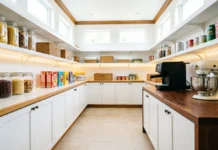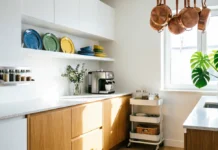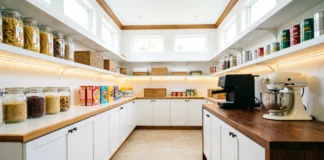
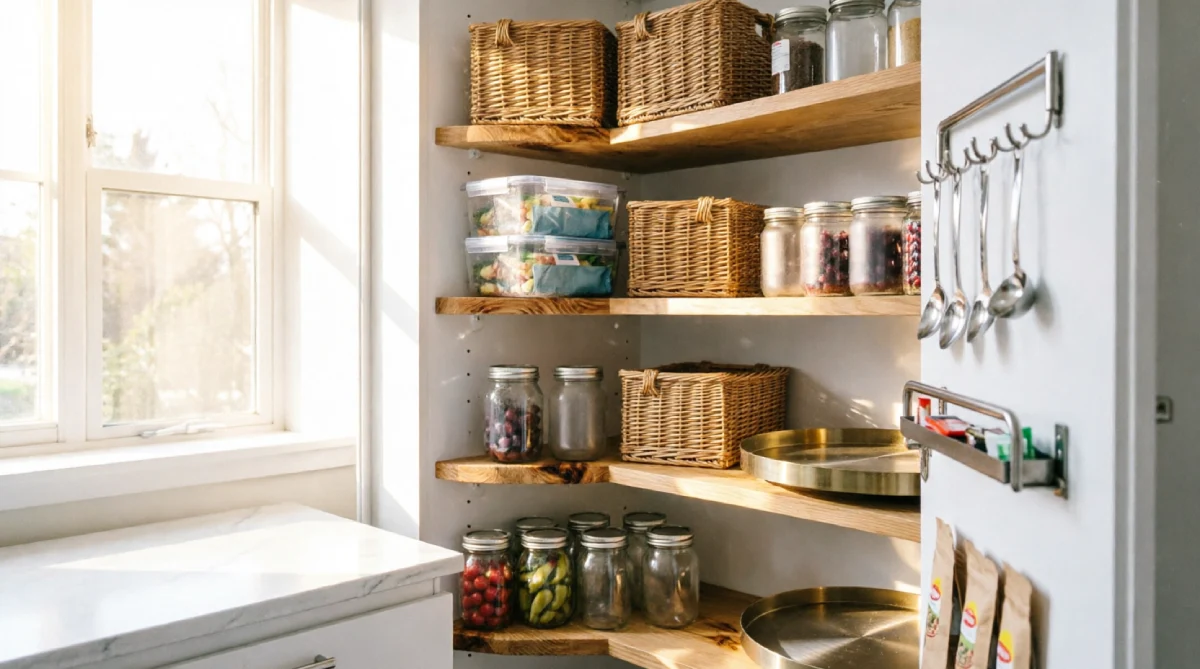
If you’ve been reading my blog for some time now, then you must know how much I enjoy an organizing project. The kitchen is my place of choice when it comes to such a project, and the pantry is where all the magic happens.
A little pantry can become a real challenge with all the things you have inside, but in reality, small places can be easier to organize when all the things are properly sorted.
There have been times when I organized narrow kitchen pantries, closet-type pantries, and even very deep shelves on which things could be put in but never taken out. Every time I learned something from these projects, and that was how we should be using all the shelves, all those corners, and yes, even that abandoned door.
If your kitchen is short on storage overall, these small kitchen storage ideas can help you make better use of every available corner.
So these are the best small pantry organization ideas, and there are seventeen of them. Nothing requires a renovation, and most can be done within a week. Let’s grab some coffee and go through them!
Why Pantry Organizing Matters
Did you ever find yourself standing in front of your pantry trying to locate the can of tomatoes? Have you come across three partially used boxes of pasta in the back? It happens to all of us. An unorganized pantry makes cooking unnecessarily challenging.
The top secret to an efficient pantry organizing is to keep only the things you need. Every unnecessary can or partially used package accumulates. The inability to see what you have leads to buying unnecessary items. Nothing complex about it really. An organized pantry saves money, reduces food waste and streamlines the process of meal planning.
17 Small Pantry Organization Ideas to Make Best Use of Space
1. Start With Clearing Your Entire Pantry
Clearing out the entire pantry can seem like quite an overwhelming task. However, this is the most critical part, and every time that I have omitted it, I have always had regrets later.
I enjoy doing this just before going to the grocery store, especially when the pantry shelves are completely bare. Take out everything and lay it on the counter. Looking at everything in one go is quite revealing.
Check the expiry dates and be realistic with yourself. For a better understanding of food dating and storage, you can also check the USDA’s guidance on food product dating.
Am I likely to use this again after not using it for a year now? Remove anything past its expiry date, sort out the duplicates, and clean the shelves. Once your shelves are clean, a few kitchen cleaning hacks can make the rest of your pantry reset much easier.
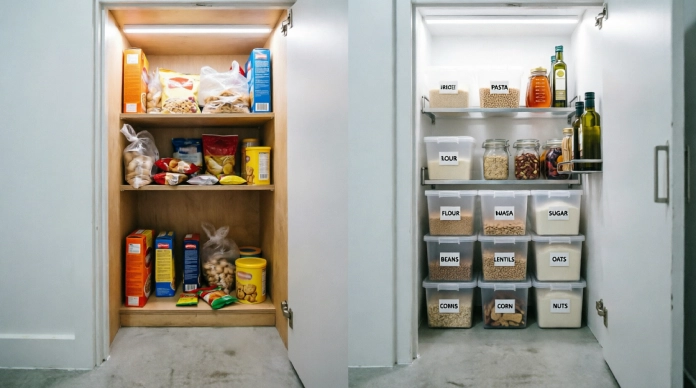
2. Create Simple Pantry Zones
Once the shelves are clean, think like a grocery store. Sort food into zones so nothing piles up randomly. My usual categories look like this:
- Breakfast foods
- Baking supplies
- Pasta and grains
- Canned goods
- Snacks
- Spices and sauces
- Drinks
- Backstock
You don’t need a million categories. Just enough that you always know where things live. I also tweak zones based on what we actually eat. If you snack a lot, give snacks more room. If you rarely bake, shrink that zone.
3. Use Clear Containers for a Compact Pantry
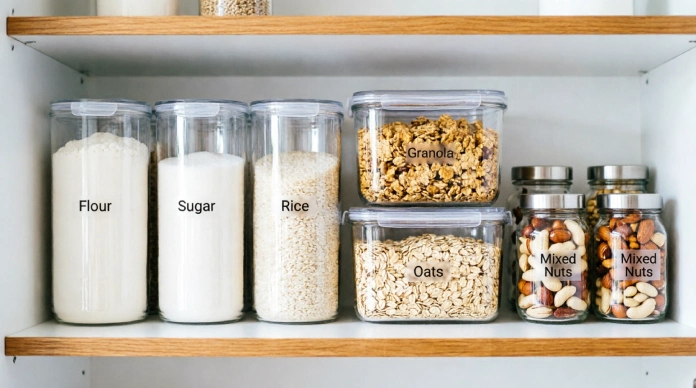
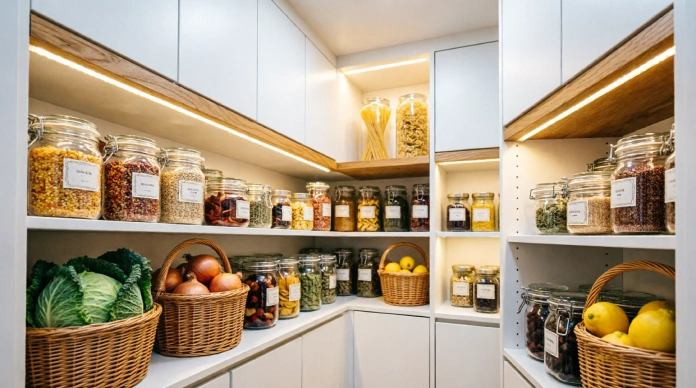
That is how I invest most of my organizing money. Packing the dry foods into transparent, airtight jars helps to save space and allows me to be sure how much is left there. No guesses anymore; no more fourth pack of oats.
I decant the items which we consume regularly – flour, sugar, rice, granola, nuts and so on. Storable and similar jars create harmony on the shelf and take up all the available space. The items that I do not decant are occasional purchases or those items which come in a perfect package. You do not have to decant everything.
4. Store Pantry Items Vertically
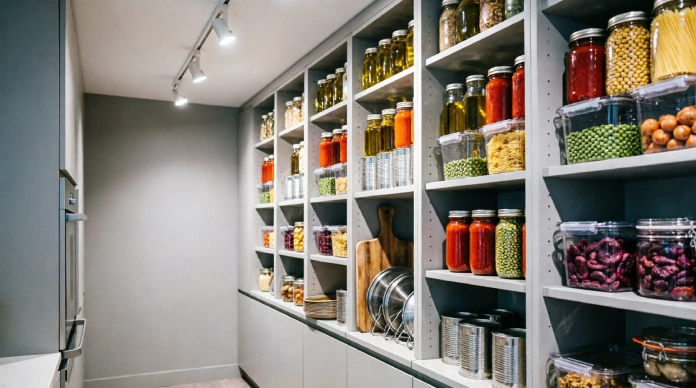
Vertical storage space is crucial in compact pantry organization. Look around your shelves now. There should be an empty space between the food products and the ceiling, right?
Shelf risers, stackable bins, tiered racks and high pasta & snack jars can help you. Vertical dividers will work for trays and cutting boards. Adjustable shelves should be adjusted to the real storage needs. It helped me change my whole approach towards the problem.
If you’re planning a larger kitchen storage update, these kitchen cabinet designs can also give you ideas for making better use of vertical and hidden storage.
5. Utilize Lazy Susans on Deep Pantry Shelves
Deep pantry shelves often end up as a graveyard of lost jars for me too. Lazy Susans solve the issue instantly.
Use them for oils, vinegars, sauces, condiments, and even small jars. No item goes missing and you see all of your pantry products with a turn of the wheel. You cannot live without them in a small pantry. Just choose a model with a little lip that prevents bottles from sliding off, and you are done.
6. Put Baskets for Loose Packs
Loose packets, open bags, and boxes mess up your shelf space right away. With baskets you organize all of them into one neat pack.
I put bins for snacks, granola bars, chips, and baking goods. Baskets also prevent loose items from slipping through wires on wire shelves and that’s just awesome! Pull-out pantry baskets are great choice for deep shelves as you pull out everything in one action. Also I store all of my powders in a “smoothie basket”.
7. Convert the Pantry Door into More Storage Space
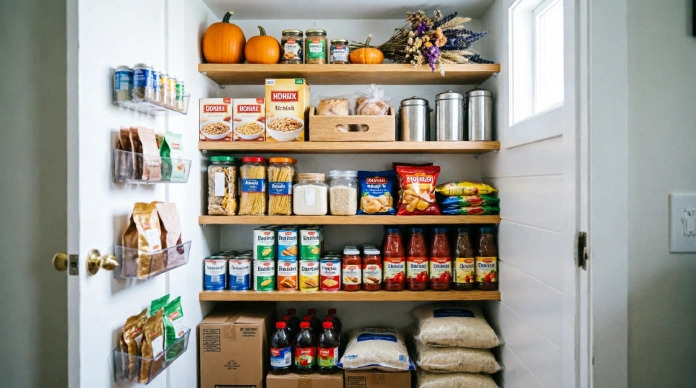
The back of the pantry door is valuable space that is often overlooked. With an over-the-door pantry organizer, you can create extra shelves without using any floor space.
It can be used to store spices, packets of snacks, aluminum foil, plastic wraps, or small sauces. However, before installing the organizer, check whether it is possible to close the door after attaching it. That is usually what people overlook. If you rent an apartment or are not sure how long you are going to stay in one place, it will be ideal since you will not need any installation.
8. Attach Shelf Risers for Additional Level of Storage
Shelf risers are the cheapest additions that can be made. They will help you get two levels on the shelf that you already have.
They are especially helpful when the shelves are tall but the items stored in them are small, which is usually the case with cans, spices, small jars. You can put tea, coffee, and other small products on the top level, and everything in the back will become more accessible.
9. Place Regular Food Items on Eye Level
Where you place items is as important as how you store them. Eye level is the best shelf for keeping regular food items such as breakfast foods and coffee.
Heavy items will always be stored low down, while rarely used items should be placed high up. Such an organization of the pantry shelves ensures efficiency in meal preparation since the most used foods are always readily available.
10. Label All the Items That Have to Remain in One Place
Labeling is attractive, but beyond its aesthetic value, labeling ensures that everybody can return the items to their rightful places and hence ensures longevity of the system.
If you are the only cook in your kitchen, then you do not have to label everything, and that is all right. In my opinion, I enjoy labeling flour, sugar, snacks, and back stock shelves. Adding the expiry date of the items in your baking containers will save you lots of hassle.
11. Use Narrow Bins in Small Gaps in Pantries
All pantries have their share of tiny gaps – the space next to a shelf, the gap between the back wall and the last shelf – and rather than ignoring these spaces, use narrow bins to maximize them.
It is ideal for holding sauce packets, tea bags, spices, baking accessories, and other small food items. Measure the gap and choose an appropriately sized bin.
12. Make a Grab-and-Go Snack Station
Snacks are everywhere in your pantry, kind of like glitter on a windy day. This one bin will end all of that.
Get a basket and stuff it full of your favorite snacking options and keep it on a lower shelf. Kids can access the snacks easily while you can see at once how much you have left. It also stops that million “where are the snacks” questions.
13. Place Heavy Items on Bottom Shelves
This tip combines safety with organization because it’s best not to lift heavy food off the top shelf when storing your groceries.
Moreover, it reduces weight on the higher shelves. When you need to keep any kitchen equipment in your pantry, such as a slow cooker, place it on the bottom shelf or on the floor.
14. Make Use of Magazine Holders for Flats
This is an organizational trick which works well for the pantry. Magazines can be kept not only in magazine holders but also flat pantry items in them as well.
They include foil, parchment paper, plastic wrap, and any other boxes which can be kept in them. They will always be easily accessible to you. They are inexpensive and available everywhere.
15. Designate a Separate Backstock Area
There’s a significant difference between the items currently being used and the items stored away for future use. You get six opened boxes of the same cereal because of the mix-up.
Choose one section where you will store extra items such as pasta, cans of foods, and other baking products. Whenever there is no stock, replenish it from backstock, put it into your shopping list. It will act as a small pantry inventory and prevent you from buying the duplicate item.
16. Install Lights in a Dimly-Lit Pantry
Small pantries can appear smaller if they are dimly lit. Bright lighting is crucial for finding the items and for increasing the usability of the storage space.
It does not take an electrician to make the change. Battery-powered LED lights, stick-on cabinet lights, and motion-sensor lights can all get the job done. It is one of the easiest improvements on this list.
17. Keep a Small Pantry Reset Routine
Organization only works if you can maintain it. My routine is simple:
- Weekly: Put things back where they belong, especially after a grocery trip.
- Monthly: Do a quick expiration check and toss or donate anything you won’t use.
- Every few months: Do a mini reset and ask yourself if the layout still works.
I also use FIFO, which stands for First In, First Out. When you unpack groceries, move the older items to the front and put the new ones behind. It’s especially helpful for canned goods and packaged staples, and it cuts down on waste.
How to Organize a Small Pantry Without Buying Too Much Storage
I’ll be honest, it’s very easy to get carried away in the organizing aisle. I’ve done it. You end up with a pantry full of bins and barely any room for food.
A few rules keep me on track:
- Measure your shelves first. A bin that’s half an inch too wide is a special kind of annoying.
- Use what you already have. Baskets, jars, and shoeboxes work fine for now.
- Skip oversized organizers. Big bins waste space and hide small items.
- Don’t fill every inch. You need room to take things out easily.
- Choose multipurpose pieces. A basket that holds snacks today can hold backstock tomorrow.
An organized pantry isn’t one packed with storage products. It’s one where everything has a logical home. That’s true whether you spend $10 or $200, and it’s the heart of pantry organization on a budget.
The same approach works in other overlooked areas of the home too, such as the space beneath the stairs. Check out these under-stair storage ideas for more ways to turn unused space into useful storage.
How to Make a Small Pantry Look Bigger
If you want your pantry to feel roomy, a few visual tricks go a long way.
- Keep containers consistent. Matching containers make shelves look calm and intentional.
- Use clear bins. You can see through them, so shelves feel lighter.
- Avoid overcrowding. A shelf that’s 80 percent full looks and works better than a stuffed one.
- Face labels forward. It keeps everything easy to scan.
- Remove bulky cardboard packaging. Decant or toss it as soon as you get home.
- Keep heavier items low. It keeps the top of the pantry feeling light.
- Add lighting. A bright pantry always looks bigger.
Small Pantry Organization Mistakes to Avoid
I’ve made most of these myself, so no judgment here.
- Buying organizers before decluttering. You’ll end up organizing things you didn’t need.
- Keeping expired food. It takes up room and adds to the clutter.
- Using deep bins for everything. Small items sink to the bottom and get forgotten.
- Hiding everyday items behind other products. If it’s hard to reach, you won’t use it.
- Ignoring vertical space. This is the biggest missed opportunity in most pantries.
- Overfilling shelves. A packed shelf is a stressful shelf.
- Creating too many categories. If you need a chart to find the rice, it’s too complicated.
- Forgetting the pantry door. It’s free storage, so use it.
Best Storage Products for a Small Pantry
You don’t need a huge shopping list. Just match the tool to the problem.
| Storage Solution | Best For |
|---|---|
| Clear bins | Snacks and packets |
| Airtight containers | Dry goods |
| Lazy Susan | Oils and sauces |
| Shelf risers | Cans and jars |
| Narrow bins | Awkward gaps |
| Over-door rack | Extra storage |
| Baskets | Backstock |
| Labels | Maintaining zones |
Pick two or three that solve your biggest frustrations, and add more only if you need them.
A Simple Small Pantry Layout That Actually Works
Not sure where everything should go? Use this as a starting point and adjust it to your household.
- Top shelf: Rarely used items and seasonal foods.
- Eye-level shelf: Breakfast items and everyday staples.
- Middle shelf: Pasta, grains, and snacks.
- Lower shelf: Canned goods and heavier products.
- Floor: Bulk items and drinks.
- Door: Small packets, wraps, and spices.
It follows the way people naturally move through a pantry, which is why it lasts.
FAQs About Organizing a Tiny Pantry
How does one organize a tiny pantry?
First, get rid of cluttered or unnecessary items, sort food items into functional zones, use clear and transparent containers for everything, and utilize vertical space with risers and stackable containers. Store frequently used food items at eye-level so you don’t have to spend time rummaging through your pantry every single day.
How can I maximize the space in my small pantry?
Utilize shelf risers to double the shelf space, install an over-the-door rack, fit narrow bins in odd corners, use vertical organization options and transparent containers to squeeze each inch of your pantry.
What should be kept on the top shelf of a pantry?
Store seasonal foods, party supplies and other items you don’t need all the time. Never put cans or jars on top of high shelves because it will take you time and effort to get them down.
How can I organize a pantry with deep shelves?
Utilize lazy Susans, pull-out bins and risers in this case. Keep the most used items in front of the shelves and use pull-out bins.
What can I do to organize my small pantry?
Start each week off by resetting, bring your older items forward when shopping, and always keep your labels updated. Do your stock check before heading to the store to avoid over-buying, and clean out the pantry every now and then.
Conclusion
It doesn’t matter how small your pantry is. It only matters how well your organizing system fits your pantry. Here are Small pantry organization ideas that may help you with decluttering, zoning, using the vertical space, creating visibility, and using the pantry door to its fullest potential.
Keep the items you use often within reach and incorporate your reset routine into the organizing process.
There is no need to do all the 17 ideas mentioned above at once. Choose the ones you need first to solve your most important problems, and then add more. In no time, your tiny pantry will be spacious and efficient.
Visit our website OliviHome for more organizing and home design ideas.