Table of Contents
How long does a roof last UK? Most UK roofs last between 20 and 50 years, but natural slate and good clay tile can pass 100 years, while a basic felt flat roof may need replacing in 15.
That spread is the whole story. There is no single average that means anything, because the covering, the fixings underneath it and the way it was fitted all run on different clocks.
This guide gives you the lifespan of every common UK covering, with the source named on each figure, and it shows the conflicts instead of hiding them. When three honest guides give concrete tile 30 to 50, 40 to 60 and 40 to 75 years, the spread itself tells you something.
It also covers what wears out first, what a warranty really promises, and the signs that say your roof is finished rather than just tired.
This is the fifth post in our Roof Repairing guides. The earlier posts price the repairs, the flat roof replacement and the full re-roof. This one answers the question underneath all of them: how long the roof should have lasted in the first place.
How Long Does a Roof Last UK by Material: The Lifespan Table
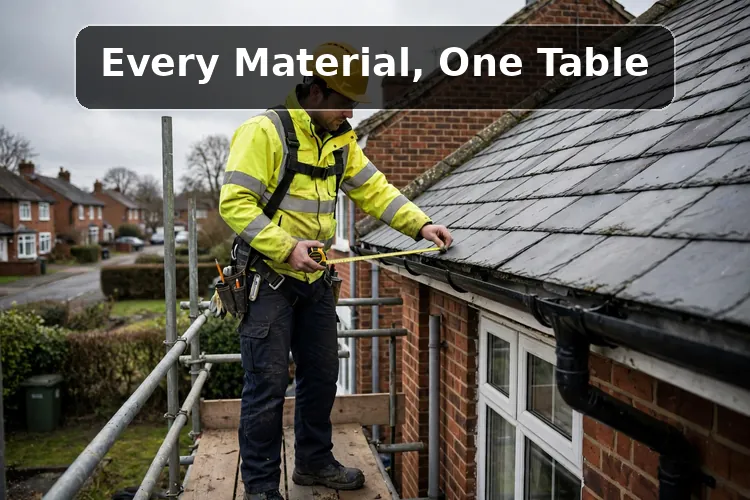
Every row below answers the same question, how long does a roof last UK, for one covering, and the source is named so you can see where the spread comes from.
| Covering | Typical UK lifespan | Source |
|---|---|---|
| Natural slate, Welsh | 80 to 100+ years, regularly 100 to 150 | Professional Roofers; Harrington; BestBuilders |
| Natural slate, Spanish graded | 50 to 80 years | Harrington; 75 to 100 (HomeBuilding) |
| Clay tile | 60 to 100 years | Harrington; BestBuilders; 60 to 80 (HomeBuilding) |
| Concrete tile | 30 to 50, 40 to 60, or 40 to 75 years | Professional Roofers; Harrington; Checkatrade |
| Metal, steel and aluminium | 40 to 70 years | Professional Roofers; Checkatrade; JDH Roofing |
| Fibre cement slate | 25 to 40 years | Harrington |
| Thatch | 25 to 60 years, ridge re-done every 10 to 15 | Professional Roofers |
| Felt, flat roof | 10 to 20 years | Professional Roofers; 10 to 15 (HomeBuilding); 15 to 25 modern torch-on (Harrington) |
| EPDM rubber, flat roof | 20 to 30 years, up to 50 if well fitted | Professional Roofers; 30 to 50 (Less, M&J Roofing); 40 to 50+ (Checkatrade) |
| GRP fibreglass, flat roof | 20 to 40 years | Professional Roofers; 25 to 30 (HomeBuilding, M&J Roofing); 25 to 40 (Less) |
| Lead, flat roof | 60 to 100 years | HomeBuilding |
| Zinc | 100 years | VMZinc and BRE Environmental Product Declaration |
Read the table as ranges, not dates. The same material on two houses of the same age can be at different stages, because exposure, fitting and maintenance move the date by years.
The two guides I would read first are the Professional Roofers lifespan guide and the Ideal Home guide to when a roof needs replacing. The first gives the honest table most UK roofers work from. The second is the clearest plain-English account of when a roof needs replacing at all.
Slate: A Century of Covering, Held Up by Nails
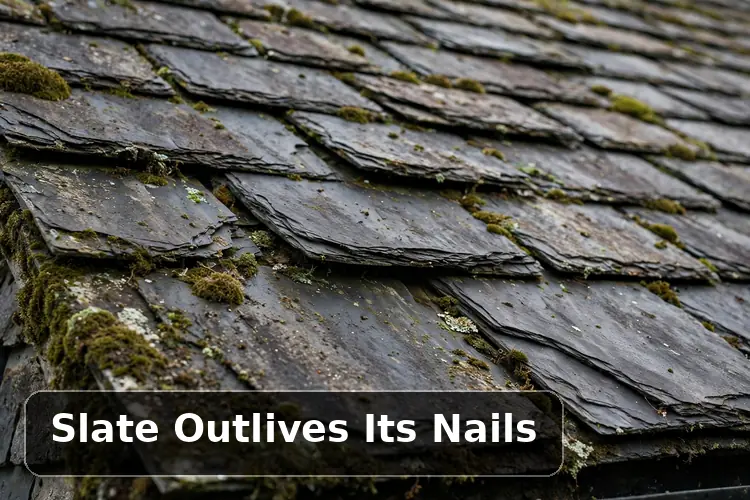
Slate is the longest-lived covering you can buy. Plenty of Victorian slate roofs are still sound after 150 years, and quality Welsh slate is regularly seen at 100 to 150 years.
That figure describes the slate, not the whole roof. The slate itself almost never wears out. The nails or hooks holding it up corrode first, and that is what ends a slate roof.
Nail sickness is the name roofers give it. The fixings rust, slates start to slip in numbers, and the roof looks fine from the street while the fixings underneath are finished.
Professional Roofers puts the threshold plainly: when more than about 25% of slates are loose, slipped or defective, the answer is strip and re-lay, not patch repairs. Patching past that point costs more than it saves.
Spanish slate is the cheaper cousin. Good graded Spanish slate runs 50 to 80 years on Harrington’s figures, while HomeBuilding puts it at 75 to 100. Reclaimed Welsh slate sits at 50 to 80. Buy the grade, not the name, and ask where it was quarried.
One more slate fact worth knowing: a slate roof can be re-laid. The old slates come off, the battens and underlay are replaced, and the sound slates go back on. That is often the cheapest way to buy another fifty years.
Clay and Concrete: The Tile Gap Nobody Warns You About
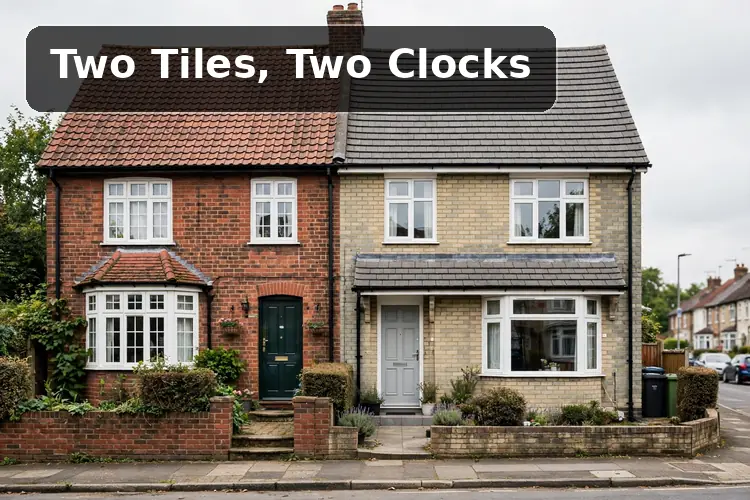
Clay and concrete tiles look alike from the street and behave very differently over decades. Clay is the long bet. Concrete is the budget bet, and the gap between them is the widest disagreement in the guides.
Clay tiles run 60 to 100 years on Harrington’s and BestBuilders’ figures. HomeBuilding puts clay at 60 to 80. Handmade clay can pass 100. The BRE sets a minimum life expectancy of 60 years for clay, as Marley reports.
Clay fails by frost. Water soaks into the face, freezes, and lifts a flake off. A clay tile in a sheltered spot outlasts the same tile on a south-facing slope that freezes and thaws every winter.
Concrete is where the guides disagree most. Professional Roofers and HomeBuilding give concrete tile 30 to 50 years. Harrington, BestBuilders and JDH Roofing give it 40 to 60. Checkatrade gives it 40 to 75.
The spread is the point, not a mistake. The coloured surface wears off in the first twenty years or so, the bare concrete underneath holds water, grows moss and gets heavier. A 1960s concrete roof and a 1990s one are different roofs.
Fibre cement slate sits below both: 25 to 40 years on Harrington’s figures. It passes for natural slate for about a decade, then goes chalky and brittle at the edges, and it does not take a repair well.
Metal covers the middle ground. Steel, aluminium and zinc run 40 to 70 years across the guides, and copper runs past 90 on BestBuilders’ figures. Lead on a chimney can see out two coverings, provided each piece is the right size.
Flat Roofs: Felt, EPDM and GRP on the Same Clock
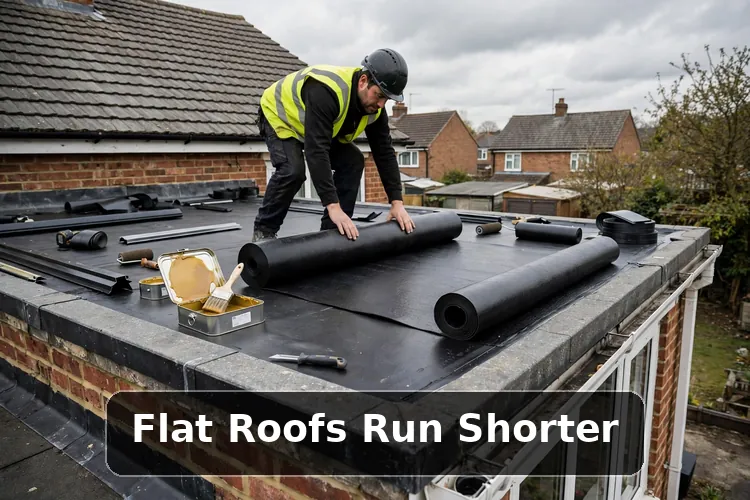
Flat roofs are where the question how long does a roof last UK gets its widest answers, because three membranes with very different lives all claim the same roof.
Felt is the shortest and the cheapest. Basic felt runs 8 to 12 years on M&J Roofing’s figures. Standard torch-on felt runs 10 to 15 on HomeBuilding’s figures and 10 to 20 on Less’s. A modern three-layer torch-on system reaches 15 to 25 on Harrington’s figures.
Felt ages on a visible timetable. M&J Roofing puts it plainly: wear shows in years 5 to 8, cracking in years 8 to 12, and by 12 to 15 replacement is usually more sensible than patching.
EPDM rubber is the long flat-roof bet, and the guides disagree about how long. HomeBuilding gives 25 to 30 years. Less and M&J Roofing give 30 to 50. Checkatrade gives 40 to 50 and more.
The rubber itself is barely aged at thirty, so the date is set by the seams, the upstands and the outlet rather than by the sheet.
GRP fibreglass sits in the middle. HomeBuilding and M&J Roofing give 25 to 30 years. Less gives 25 to 40. Professional Roofers gives 20 to 40.
The coloured topcoat that protects it from UV usually needs recoating somewhere between 10 and 20 years in.
One practical difference matters more than the numbers. EPDM goes down as a single sheet with few joins, so there are few places for water to find.
GRP is built on the roof itself and needs dry weather to cure. Felt needs a naked flame, which is why some roofers will not fit it on a timber deck over a living room.
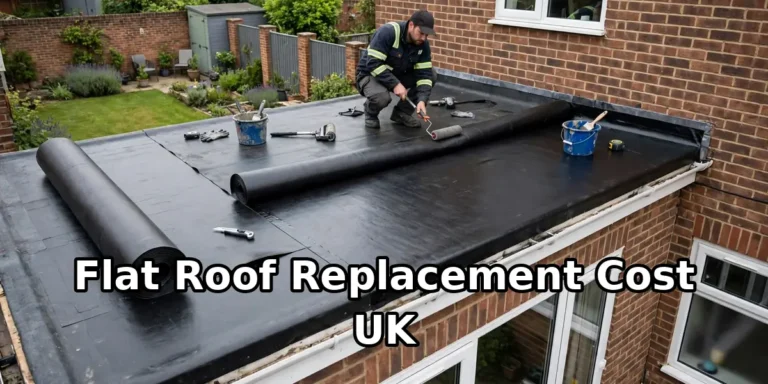
Our flat roof replacement cost guide prices all three membranes, if you want the money side next to these lifespans.
What Wears Out First: Nails, Battens, Underlay and Mortar
A roof is not one thing with one lifespan. It is a covering, the nails that hold it, the battens those nails go into, a layer of underlay, and mortar or lead at every edge and joint. Each has its own clock, and the roof is finished when the shortest clock runs out.
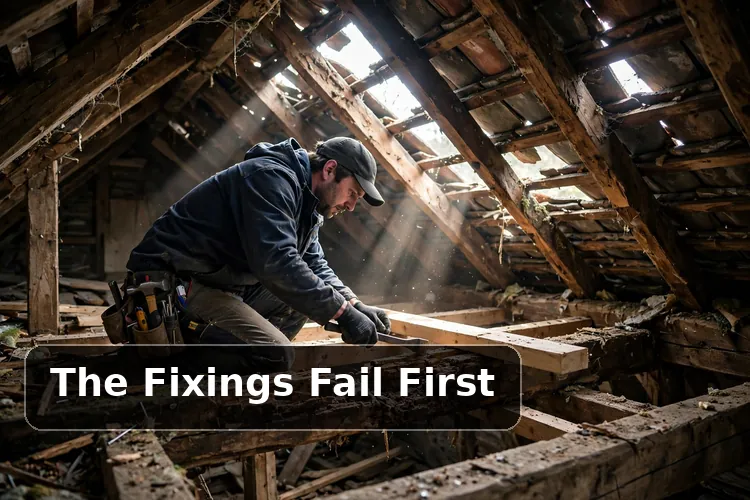
Nails go first on old slate. On a Victorian slate roof the slates are usually sound and the nails are rust. That is why a slate roof can look perfect from the pavement and still need a full strip.
Battens go next. Timber battens rot where water has sat against them, and a rotten batten will not hold a nail no matter how good the tile above it is.
Underlay is the quiet one. Most London houses built before about 1930 have no underlay at all, and a torn or perished underlay lets wind-driven rain straight into the loft. Modern breathable underlay lasts decades, but it is only as good as its laps and fixings.
Mortar fails at the edges. Ridge tiles bedded in mortar work loose as the mortar crumbles, and the ridge is usually the first place a roofer looks. Dry ridge systems fix the problem by holding the tiles mechanically instead of with mortar.
Lead lasts longer than everything around it. Lead on a chimney can see out two coverings, and lead flashing runs past 80 years. The failure is usually the length: lead run too long in one piece can split within fifteen years.
The lesson is simple. When a roofer quotes a re-roof, ask what happens to the battens, the underlay and the fixings, not just the tiles. A new covering on rotten battens is a new roof with an old clock.
Warranty Is Not Lifespan
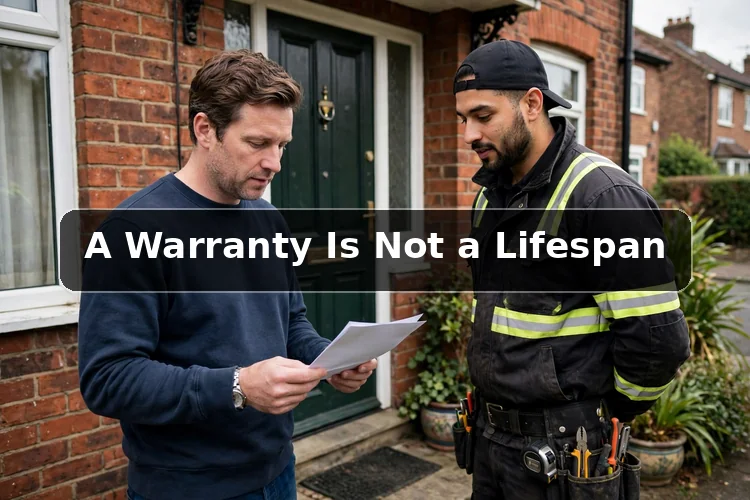
This is the single biggest source of confusion, and it catches out people who have just paid for a roof with a 30-year or 40-year guarantee. A manufacturer’s warranty of 15, 20 or 30 years covers material defects only.
It does not cover normal wear, weather damage, poor maintenance or bad installation, and it does not promise the roof will fail the day the warranty expires. The warranty is a defects guarantee with a time limit. The lifespan is how long the covering actually keeps the rain out.
GRP kits show the gap best. A GRP kit often carries a conservative 10 to 15 year guarantee, while a properly laid GRP roof typically reaches 30 to 40 years. The guarantee is written for the lawyers. The lifespan is written by the roof.
Workmanship guarantees are separate, and shorter. A roofer’s own guarantee on the fitting is usually 10 to 15 years. Ask whether it is insurance-backed, because a guarantee from a firm that no longer exists is paper, not protection.
One more warranty trap: the guarantee often requires the roof to be maintained, and maintenance means clearing gutters, checking flashings and replacing slipped tiles promptly. A warranty claim on a roof that was never looked at is a claim the maker can refuse.
Signs Your Roof Is Finished
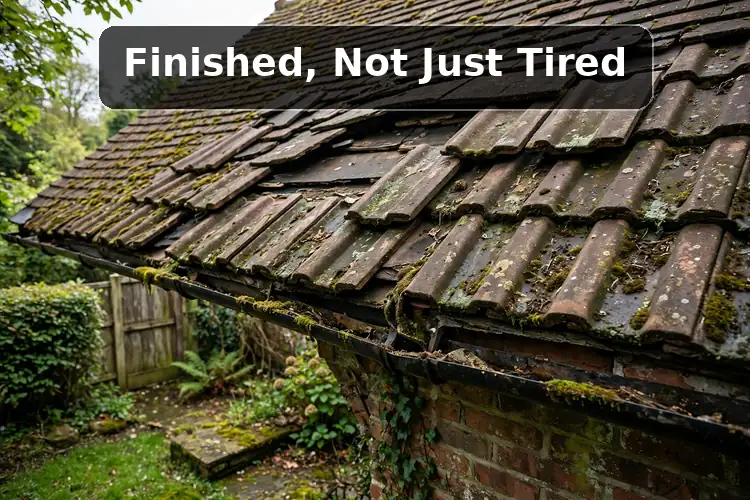
A roof rarely fails in one night. It gives warnings for years, and the difference between a repair and a re-roof is usually how many warnings you ignored.
Slipped, cracked or missing tiles across a wide area are the first sign. One slipped tile is a repair. Slipped tiles in numbers, across more than one slope, mean the fixings are going.
Daylight in the loft is the second. Go up on a bright day and look at the underside. Daylight through gaps, or damp patches on the underlay, means water is already getting past the covering.
A sagging ridge or a dip in the slope is the third, and the one not to ignore. It can mean the timbers underneath have moved or rotted, and that is a structural question, not a covering question. Get a roofer and, if needed, a structural engineer.
Repairs becoming annual is the fourth. When the same roof needs a call-out every year, the money spent on patches is buying months, not years. Add up three years of patch bills before you pay for a fourth.
On a flat roof the signs are ponding, blistering and cracking. Water that stands for more than 48 hours after rain, blisters that have split, and felt that is cracked across a wide area all say the membrane is finished.
Armour Shield’s rule is plain: replace if the felt is past 15 years and the faults are widespread, repair if the fault is one localised spot.
Building regulations add a line of their own. When more than 25% of your roof is removed and replaced, you must also upgrade the insulation to current standards. Ideal Home states it plainly, and it is worth pricing into any re-roof quote.
If the roof is leaking, our roof repair cost guide prices the common fixes, so you can see what a patch costs before you decide.
Repair or Replace, and the Questions Everyone Asks
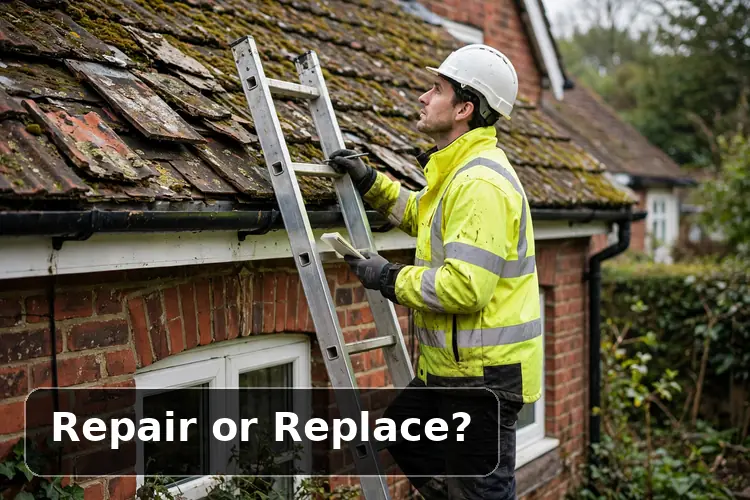
The repair-or-replace call is where how long does a roof last UK stops being a table and starts being a judgment about your roof.
Repair when the fault is local: one slipped tile, one cracked flashing, one blister on a felt roof that is otherwise sound. Replace when the faults are widespread, the fixings are going, or the roof is past the lifespan its own covering promises.
Money helps the judgment. A full replacement averages about GBP 8,000 in the UK, with most homeowners spending between GBP 4,000 and GBP 19,000, on Checkatrade’s figures. A patch that costs a tenth of that and buys five years is good money. A patch that costs a third and buys one winter is not.
Cost per year is the fairest comparison between materials. BestBuilders gives both the price per square metre and the lifespan, so the sums are simple.
Slate runs GBP 140 to 220 per square metre over 80 to 150 years, and clay runs GBP 95 to 170 over 60 to 100.
Concrete runs GBP 60 to 95 over 40 to 60, and EPDM runs GBP 110 to 200 over 35 to 50.
GRP runs GBP 160 to 300 over 25 to 30, and felt runs GBP 80 to 140 over 15 to 20.
Those are published per-metre ranges, and the source does not state the VAT treatment, so treat them as before-VAT comparisons, not quotes.
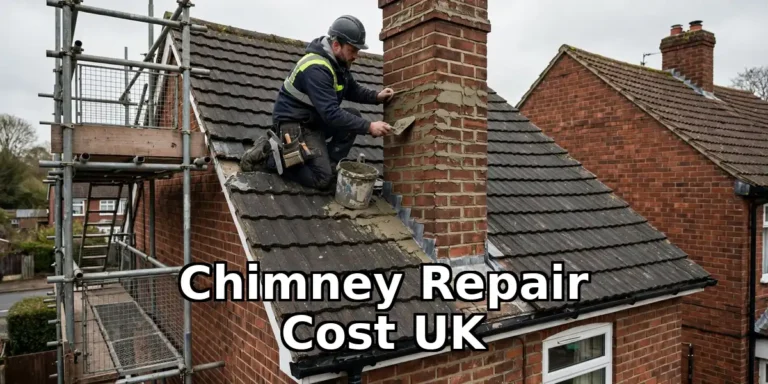
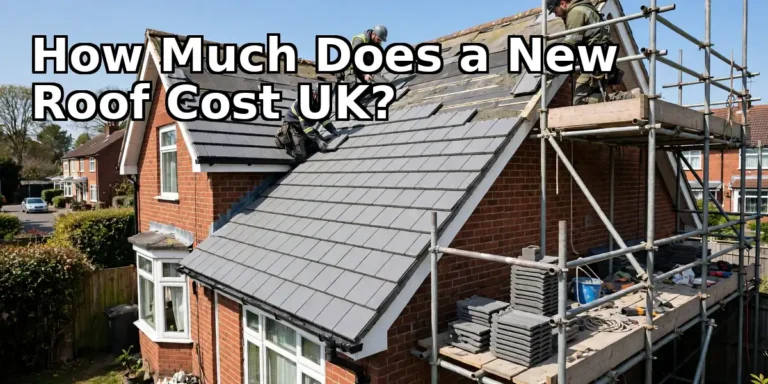
Our new roof cost guide prices a full re-roof by material and house size, and our chimney repair guide covers the stack and flashings that usually get replaced at the same time.
The cheapest roof is the one you only pay for once. The most expensive is the one you pay for twice, first as patches and then as a re-roof you could have done years earlier.
How long does a slate roof last?
Welsh slate lasts 100 years or more, regularly 100 to 150. Spanish graded slate runs 50 to 80, or 75 to 100 on HomeBuilding’s figures. The slates outlive the nails, so a slate roof’s real date is set by its fixings.
How long do clay tiles last?
Clay tiles last 60 to 100 years, with handmade clay passing 100. The BRE sets a minimum of 60 years. Frost is what shortens clay, so a sheltered slope outlasts an exposed one.
How long do concrete tiles last?
Concrete tiles last 30 to 50 years on Professional Roofers’ and HomeBuilding’s figures, 40 to 60 on Harrington’s, BestBuilders’ and JDH Roofing’s, and 40 to 75 on Checkatrade’s. The spread comes from the coloured surface wearing off and the concrete underneath holding water.
How long does a flat roof last?
A felt flat roof lasts 10 to 20 years, EPDM 20 to 50 depending on the source, and GRP 20 to 40. EPDM is the longest flat-roof bet in every guide, and felt is the shortest in every guide.
How long does a new roof last?
A new roof lasts as long as its covering: 80 to 150 years for slate, 60 to 100 for clay, 40 to 60 for concrete, and 15 to 50 for a flat roof depending on the membrane. The warranty is shorter than the lifespan, and it covers defects only.
Ask your roofer two questions before you sign anything: what is the covering’s published lifespan, and what happens to the battens, underlay and fixings. The first tells you what you are buying. The second tells you whether it will last.
And keep the table from this guide. When a quote lands, check the covering against it. If the price promises a century and the material promises thirty years, the quote is the one that is wrong.