Table of Contents
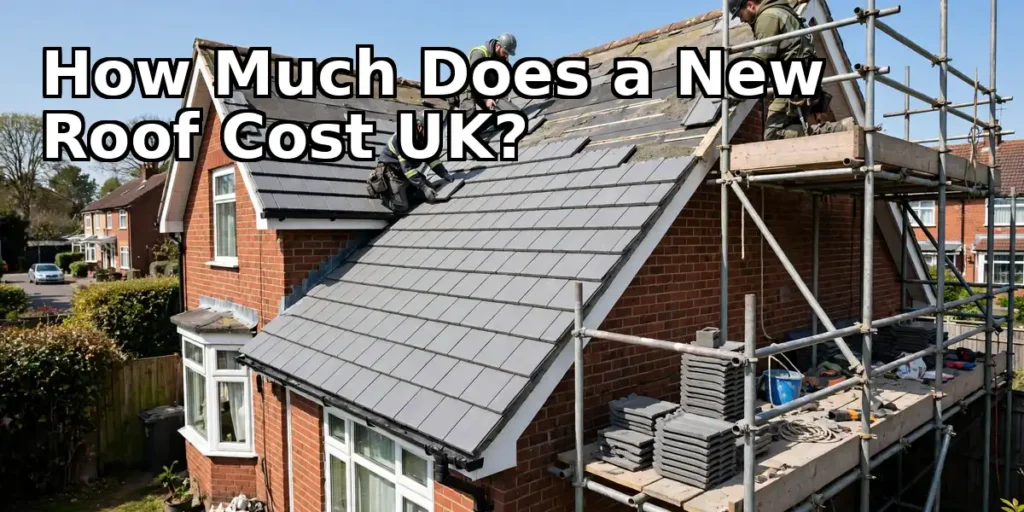
A new roof in the UK costs around £8,000 on average in 2026, with most jobs landing between £4,000 and £19,000. That average comes from Checkatrade’s cost guide, updated in October 2026, and it is the figure behind most of the numbers you will see quoted.
That £8,000 figure is the one behind most searches for how much does a new roof cost UK, and it hides a spread that runs from a small terraced re-tile to a large slate roof on a detached house.
This guide names the source and the date behind every figure, says whether VAT is included, and shows what your quote should list line by line.
This is the third post in our Roof Repairing guides, after our roof repair cost guide and our flat roof replacement cost guide. Those two cover repairs and flat roofs. This one is the pitched-roof pillar: the full replacement, from the tiles to the scaffold to the building control sign-off.
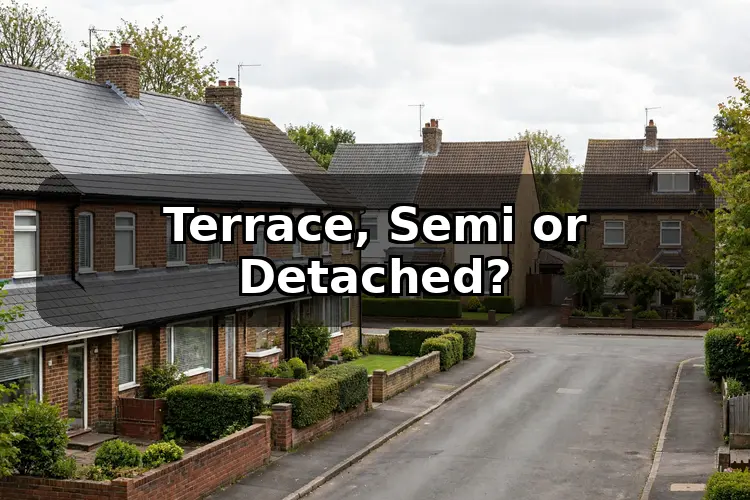
How Much Does a New Roof Cost UK by House Type
The table below answers how much does a new roof cost UK homeowners by house type, using May 2026 guide ranges that already include VAT. The figures come from the Roof Replacement Calculator, and they allow for materials, labour, membrane and battens, standard access, waste removal and a scaffold allowance.
| Property type | Roof area | Typical range, VAT included |
|---|---|---|
| Terraced house | 68 m² | £6,900 to £16,100 |
| Semi-detached house | 85 m² | £8,450 to £19,500 |
| Detached house | 120 m² | £11,700 to £26,800 |
Checkatrade gives a similar picture from a different angle: around £12,000 for a three-bedroom semi, inside its £4,000 to £19,000 range for most jobs. BestBuilders, working from a Midlands baseline with scaffolding included, puts the same three-bed semi at £9,200 to £13,000 in concrete tile, with a midpoint of £11,100.
Three sources, three methods, and the same message: a normal semi lands somewhere around £10,000 to £12,000. Size is the main reason the range is so wide. A terraced roof of 68 square metres and a detached roof of 120 square metres are different jobs, even before you choose a material.
The rest of the spread comes from the roof’s shape, its pitch, how easy it is to reach, and what the timbers look like once the old covering comes off.
A simple gable is the cheapest shape to re-roof. A hip roof, with its sloping ends and extra cutting, runs higher: Checkatrade puts hips at £9,250 to £18,000 before VAT, against £7,000 to £16,250 for a gable.
What a New Roof Costs by Material
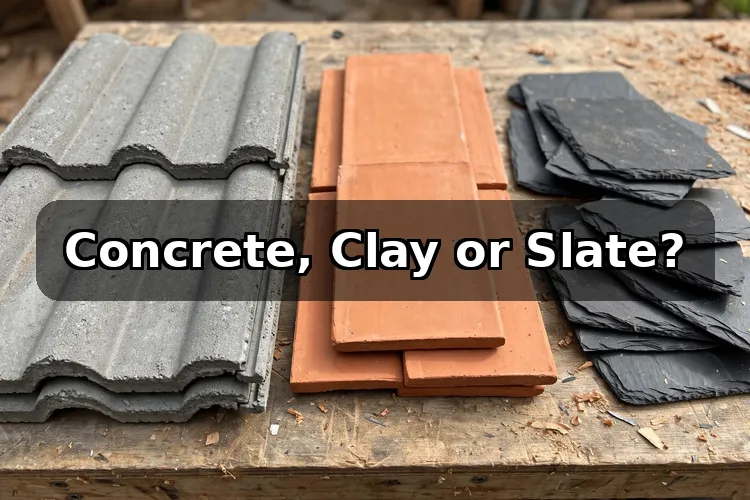
Material is the lever that moves how much does a new roof cost UK wide more than any other single choice. On a typical 80 square metre roof, the covering alone can move the bill by £8,000 or more.
| Material | Fitted per m², Fix My Roof | Fitted per m², Checkatrade | Lifespan |
|---|---|---|---|
| Concrete tiles | £70 to £100 | £120 to £230 | 40 to 60 years |
| Clay tiles | £80 to £120 | £160 to £275 | 60 years or more |
| Natural slate | £120 to £180 | £160 to £275 | 100 years or more |
Why do the two sources disagree? Fix My Roof’s figures are typical prices for straightforward jobs, while Checkatrade’s per-metre rates run to the top end, where complex roofs and premium tiles sit. Neither is wrong. They describe different jobs, which is why a single per-metre figure quoted without a source is worth very little.
On a three-bed semi, Fix My Roof’s worked examples land at £5,900 to £8,200 in concrete tile, £6,700 to £10,200 in clay and £8,700 to £13,200 in natural slate.
BestBuilders, pricing an 80 square metre roof in the Midlands with VAT included but scaffolding separate, gives £7,970 to £11,230 for concrete, £10,290 to £14,510 for clay and £14,610 to £20,590 for slate.
Slate costs roughly double concrete on the same roof, and it lasts roughly double as long. Concrete tile is the default on most post-war UK homes for a reason: it is the cheapest mainstream covering, it goes on fast, and every roofer knows it.
Clay holds its colour better and suits period streets, and planning rules in conservation areas sometimes insist on it.
Slate is the long-life choice. Welsh slate runs £140 to £210 per square metre fitted, Spanish slate £90 to £130, and it is the one material that can outlive the mortgage.
Synthetic slate sits in the middle at around £150 per square metre fitted, with a 30 to 50 year life, and metal standing seam runs around £180, lasting 40 to 70 years.
One weight warning before you fall for a material. Plain clay tiles weigh around 70 kg per square metre, roughly double natural slate, and a roof built for something lighter may need its timbers checked first.
The Planning Portal treats a covering 15 per cent or more heavier than the old one as a job that needs Building Regulations approval, whatever its size.
The Extras Your Quote Might Hide
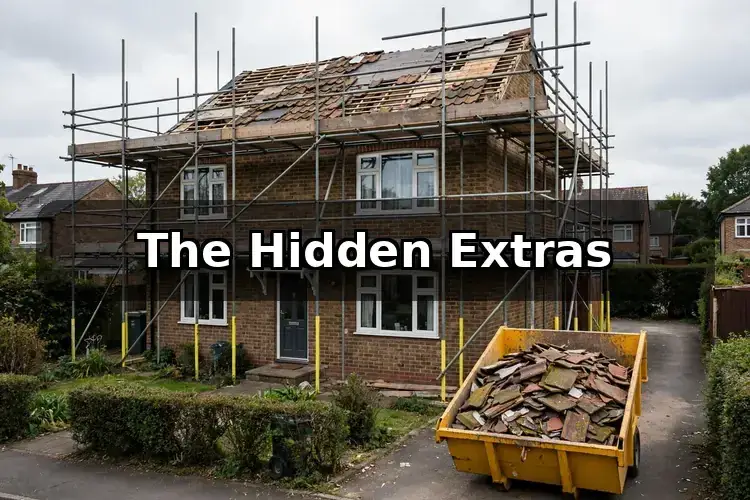
The covering is only part of the bill. The extras below are where quotes differ most, and where a cheap headline price often grows.
| Extra | Typical cost |
|---|---|
| Scaffolding, two-storey house | £700 to £1,500 |
| Waste disposal, skip hire | Around £300 per skip |
| Rotten rafters or purlin ends | £800 to £3,500 |
| New fascias, soffits and guttering | £1,200 to £2,800 |
| Insulation upgrade during the re-roof | £25 to £80+ per m² |
| Dry ridge, semi-detached house | Around £800 |
Scaffolding deserves its own line in your head, because it is the extra most often left out. Checkatrade puts it at £700 to £1,300 for a roof replacement, and its weekly table works out at roughly £875 a week for a two-storey semi. A six-week scaffold wrap on a semi can run £2,000 to £3,000.
A scaffold that stands on the pavement needs a council licence, which your scaffolder normally applies for. Allow 5 to 10 working days for it to come through, and expect the scaffold to stay up a few days after the roofers finish, for the lead and gutter work.
Timber is the other unknown. Nobody knows the state of the rafters until the old covering comes off, which is why a good quote carries a provisional sum for timber repairs instead of pretending the figure is fixed.
BestBuilders allows £800 to £3,500 for rotten rafters or purlin ends, and a whole slope needing significant structural repair can run £1,000 to £3,000 on its own.
Insulation is the extra that pays you back. When more than half the roof is renovated, Approved Document L expects the whole roof to be brought up to a U-value of 0.16 W/m²K, which usually means adding insulation while the roof is open.
It costs £25 to £80 or more per square metre, and it is far cheaper to do now than to come back for later.
Water that gets in through a failed covering does not stop at the ceiling. It runs down inside the wall, and the repair for that kind of wall damage is a separate job, which is another reason to fix a failing roof before the next winter, not after it.
VAT, Building Regulations and Planning Permission
Three sets of rules sit behind every re-roof, and they are easy to mix up. Planning permission is about how the house looks. Building Regulations are about how the work is built. VAT is about the bill.
VAT first, because it changes every figure in this guide by a fifth. A re-roof on an existing home is standard-rated at 20 per cent. A new-build roof can be zero-rated, which does not help you if you are replacing the roof on the house you live in.
The trap is that guides do not label their figures the same way. Checkatrade’s headline average of £8,000 carries no VAT label, while its roof-shape table is headed with VAT added on top. The Roof Replacement Calculator and BestBuilders both state that their figures include VAT. Ask any roofer to state whether their price includes it, in writing.
Building Regulations are the part most homeowners miss. The Planning Portal sets two tests, and both have to hold before it says no application is normally needed: less than 25 per cent of the total building envelope affected, and less than 50 per cent of the roof.
A full re-roof strips the whole roof, so it passes the 50 per cent limit on its own.
That is why a full replacement will in most situations need Building Regulations approval. Two more triggers apply at any size: a new covering 15 per cent or more heavier than the old one, and a covering that would behave significantly differently in a fire.
That does not mean a council application and a long wait. A roofer registered with a competent person scheme, CompetentRoofer or NAPIT, can self-certify the work instead, and that is the route most re-roofs take.
Whoever signs it off, the insulation rule still applies: once more than half the roof counts as renovated, the whole roof should meet the 0.16 W/m²K U-value in Approved Document L.
Planning permission is usually the easy one. A like-for-like replacement that does not materially change the outside of the house will usually not need it. You will need consent if the house is listed, sits in a conservation area, is covered by an Article 4 direction, or if you change the roof’s shape, pitch, height or material.
Check with your local planning authority before ordering anything, because the exceptions are the part that catches people out. Checkatrade’s roof replacement planning guide covers the same ground, from the signs it is time to act to finding the right roofer.
How Long a New Roof Takes, and What Happens Each Day
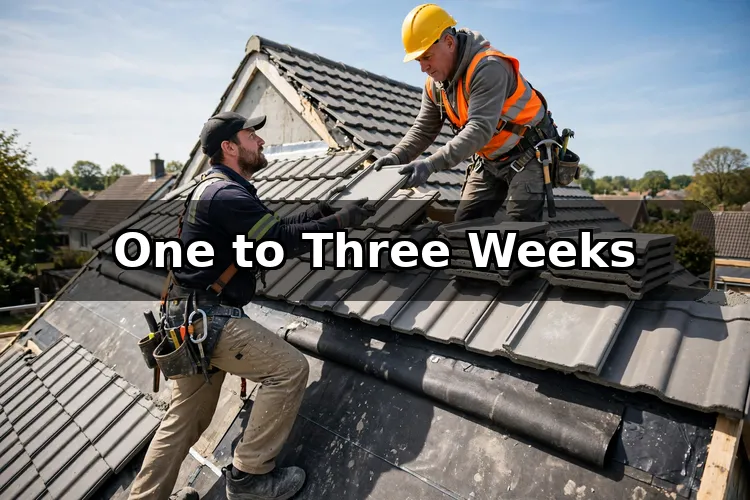
The hands-on roofing work on a typical three-bed semi in concrete tile takes about three to five working days. The job as a whole, scaffold up to scaffold down, commonly runs one to three weeks once you add weather days and any timber repairs found after stripping.
| Stage | What happens | Typical time |
|---|---|---|
| Scaffold erected | Access and edge protection, skip delivered | 1 day |
| Strip-out | Old covering, battens and felt removed, timbers inspected | 1 to 2 days |
| Structural repairs | Rotten rafters, purlin ends or decking dealt with | 0 to 3 days |
| Underlay and battens | Breathable membrane and new treated battens fixed | 1 to 2 days |
| Covering laid | Tiles or slates set out and fixed | 3 to 8 days |
| Details | Ridge, hips, verges, valleys, flashings and chimney work | 1 to 3 days |
| Clear and inspect | Gutters cleared, site tidied, walk-round and sign-off | 1 day |
Small terraced houses take two to four days on the roof. A detached or larger roof takes six to ten days, and a cut-up roof with dormers and several valleys takes longer still. You can stay in the house while the work happens: it is noisy, and the crew leaves the roof watertight at the end of every working day.
While the scaffold is up, it is the cheapest time to deal with anything else up high, and our DIY home improvement guide covers the jobs worth bundling while access is already paid for. Gutters, fascias and a chimney repoint all cost less when the scaffold is already there.
One timing trap: expect to wait for a start date. Two to four weeks in winter, and up to eight weeks between April and July, when everyone wants the work done. Book the survey early, even if the work itself waits for a dry spell.
How to Read a Roofing Quote Without Getting Caught Out
A roofing quote is only useful if you can compare it with the next one, and that means every quote has to list the same things. Here is what a proper written quote names, line by line.
- The covering by name: manufacturer, product and colour, never just “slate” or “tile”.
- Breathable underlay specified by type, and all-new graded, treated battens.
- The fixing specification for your exposure zone, and a dry-fix ridge and verge rather than mortar bedding alone, which no longer complies with BS 5534.
- Scaffolding as its own line, with the hire period stated, and waste disposal with the number of skips.
- A provisional sum for timber repairs, so a rotten rafter is a priced item and not a surprise.
- Whether VAT is included, and the guarantee in writing: workmanship and materials separately.
- Who signs the work off: council building control, or a CompetentRoofer registered contractor.
Get three itemised quotes, and standardise the scope across them before you compare the totals. A national firm’s quote can run 30 to 60 per cent above a local roofer’s range, and a cash-in-hand quote 30 per cent below it, so the comparison is the work, not the headline number.
Check the roofer before the roof: reviews, references, insurance, and a written fixed price that does not change once work starts, other than for something genuinely hidden. If a roofer wants a large deposit up front, walk away.

New Roof Questions, Answered
These are the questions I hear most, with the short answers I give friends before they spend anything.
How much does a new roof cost for a terraced house?
A terraced house usually lands between £6,900 and £16,100 for a pitched roof, using May 2026 guide ranges that include VAT. A small terrace with a simple gable and concrete tiles sits at the bottom of that range, while a larger terrace or a slate covering pushes it up.
Access can be awkward on a terrace, and scaffolding sometimes has to wrap to the rear, which adds to the bill. A scaffold licence is needed where the scaffold stands on the pavement, so ask who applies for it.
Do I need planning permission for a new roof?
Usually not, if you replace like for like and do not change the shape, height or material. You will need consent if the house is listed, sits in a conservation area, or is covered by an Article 4 direction. Building Regulations approval is a separate question, and a full re-roof will in most situations need it.
How long does a new roof take?
Three to five working days on the roof for a typical three-bed semi in concrete tile, and one to three weeks from scaffold up to scaffold down. Slate takes longer than tile, and a complex roof with valleys, dormers and chimneys takes longer than a simple gable.
Can I stay in the house while the roof is replaced?
Yes. It is noisy, and you will hear every tile come off, but the crew leaves the roof watertight at the end of each working day, so you sleep under a roof every night. Move cars away from the house, cover anything in the loft, and warn the neighbours.
Is it cheaper to repair than replace?
Almost always, if the damage is local. A slipped tile or a small leak is a repair job, and our roof repair cost guide puts most repairs in the hundreds, not the thousands.
Replacement is the right call when the covering is at the end of its life, when leaks keep coming back in different places, or when the timbers underneath are failing.
If two roofers in a row tell you to replace, believe them.
The Quote I Would Get Before Signing Anything
So how much does a new roof cost UK readers in the end? The honest answer is that nobody can tell you from an article. What an article can do is tell you what a good quote looks like, and that is where the money is saved or lost.
If this were my house, I would take a concrete tile re-roof on a three-bed semi at around £10,000 to £12,000 including VAT and scaffolding, with a dry-fix ridge, a named membrane and battens, and a CompetentRoofer sign-off.
I would spend the difference between that and a slate roof on the insulation, because the insulation is the part you feel every winter and the slate is the part you admire twice a year.
Then I would get three written quotes, all itemised the same way, and I would not sign the cheapest one until I knew what it had left out. A roof is the one job where the expensive mistake is invisible until it rains.