
Table of Contents
Roof Repair Cost UK by Job: The 2026 Price Table
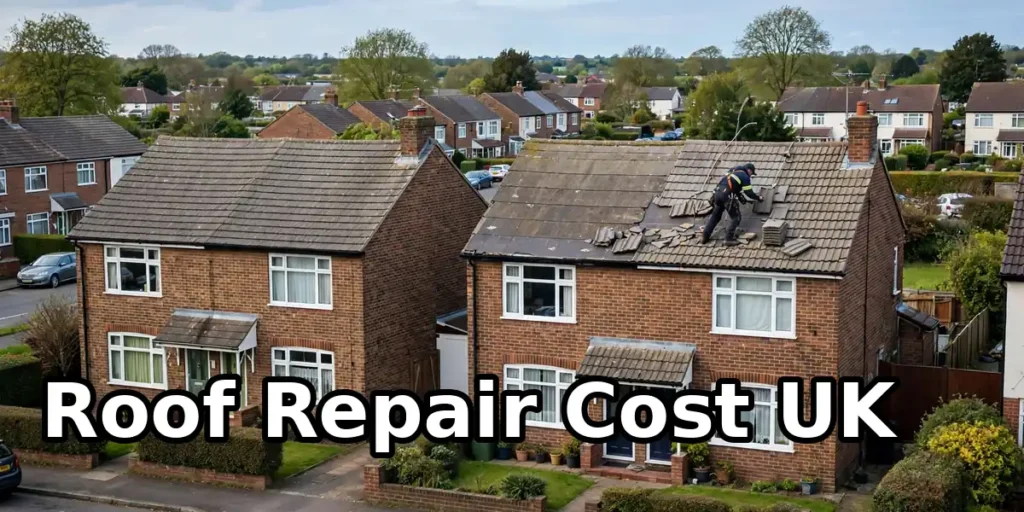
Most roof repairs in the UK cost between £150 and £500. Ask any roofer what roof repair cost UK homeowners actually pay and you will get a range, not a number, because a slipped tile and a sagging roof are two very different jobs.
The average sits around £500 to £650 depending on which cost guide you read. The bill can climb past £1,500 once scaffolding, hidden timber damage or a hard-to-find leak joins in.
This guide gives you the real 2026 prices, job by job, and the reasons a quote moves up or down. Use it to check a roofer’s price before you say yes. It is part of our home improvement guides, where smaller repair jobs sit alongside the bigger ones.
The table below is the honest version of roof repair cost UK: seven common jobs, priced as ranges, not promises.
| Repair | Typical cost | What it usually means |
|---|---|---|
| Replace a few slipped or broken tiles | £150 to £400 | The commonest call-out, often done in a morning |
| Fix a minor roof leak | £150 to £500 | Obvious source, easy to reach, caught early |
| Repair chimney flashing | £200 to £600 | Re-dress or replace lead where the stack meets the roof |
| Repoint or re-bed ridge tiles | £150 to £800 | Fresh mortar, or full re-bed for a lasting fix |
| Patch a flat roof | £150 to £400 | Small split or blister on felt, EPDM or GRP |
| Replace a valley | Around £540 | Typical full replacement for a standard run |
| Repair sagging timbers | £1,000 to £3,000+ | Rafters and timbers, usually after a long leak |
All figures are typical UK ranges for 2026 from published cost guides, for a standard two-storey house with reasonable access. They leave out VAT unless stated, and they are not quotes for your roof.
Cost guides split jobs into three bands, and the split is worth knowing. MyBuilder puts a minor repair at £100 to £300, a moderate repair at £500 to £1,000, and a major repair at £2,500 or more. Most homes sit in the first two bands.
Averages differ between guides because they count different jobs. One trade site puts the average repair at £500 to £530, MyJobQuote puts it near £650, and a price comparison site puts the average minor repair at £350. All three can be right at once.
Why One Tile Costs £150 and Another Costs £900
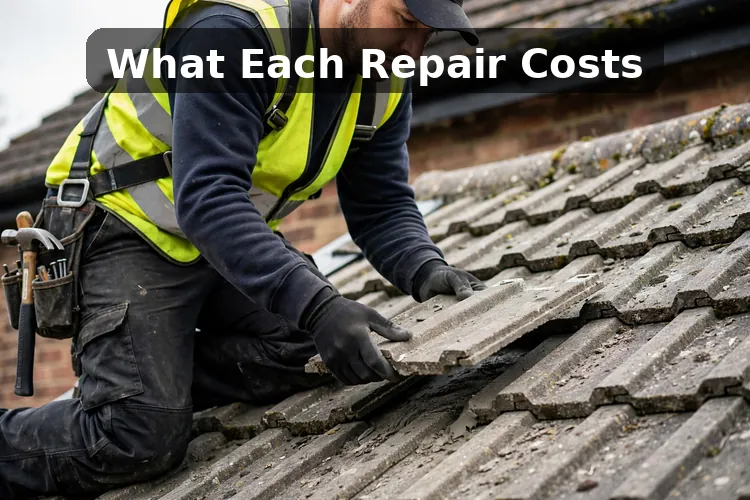
The tile is the cheapest part of a tile repair. A concrete tile costs about £1 to £4, a clay tile about £2 to £8, and a single slate a few pounds more. What you pay for is the call-out, the labour and the safe way up there.
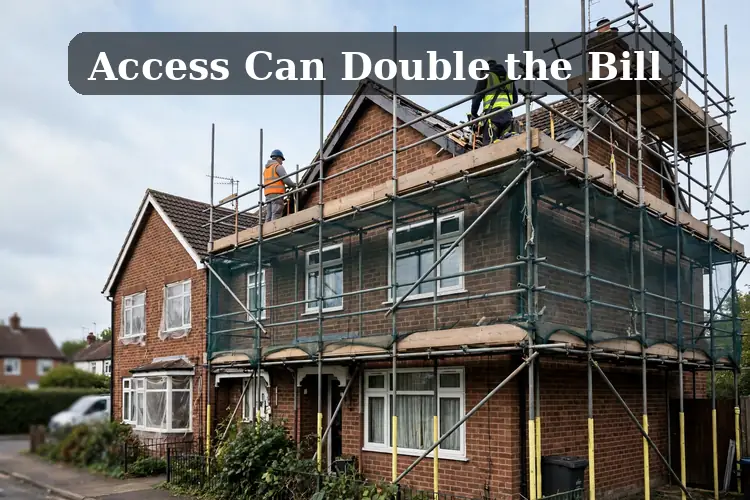
A low tile on a bungalow can be reached from a ladder. The same tile on a third storey, or around a chimney, usually needs scaffolding, and that changes the shape of the bill completely. A £200 tile job can quietly become a £900 visit once the scaffold goes up.
Scaffolding for a standard two-storey house typically costs £600 to £1,200 to erect, with hire usually running for six to eight weeks. MyBuilder puts the same job at £850 to £1,200, and Checkatrade at £700 to £1,300. A chimney scaffold alone usually runs £400 to £900.
There is also the pavement licence to think about. If the scaffold stands on a public footpath, the council charges for a licence, typically £50 to £200, and the scaffolding firm applies for it. That adds cost and a little lead time, so a rush job gets harder.
This is not roofers padding the bill. The Work at Height Regulations 2005 require a proper risk assessment for working at height, and for chimney work or a full roof section, scaffolding is usually the only access method that passes that assessment.
A ladder is fine for an inspection or a single low tile. It is not fine for a day spent re-leading a stack.
If you have several repairs due, group them into one scaffold visit. That is the single easiest way to cut the cost of roof work, and it is the reason a good roofer will ask what else needs doing while they are up there. Roof work is not a DIY home improvement job, and access is the main reason why.
What a Roof Leak Repair Costs, and Why Tracing It Takes Time
A roof leak repair costs around £375 on average, according to MyJobQuote, with most jobs landing between £220 and £550. A minor leak with an obvious, accessible source falls in the £150 to £500 band. That is the price of a patch, not a rebuild.
The cost climbs to £800 to £1,500 or more when the leak is hard to locate, or when water has been getting in long enough to rot the underlay or the timbers. The expensive leaks are rarely the hard ones. They are the old ones.
Water rarely drips directly below where it gets in. It runs along rafters and battens before it falls, so the wet patch on your ceiling can sit a metre or more from the actual fault.
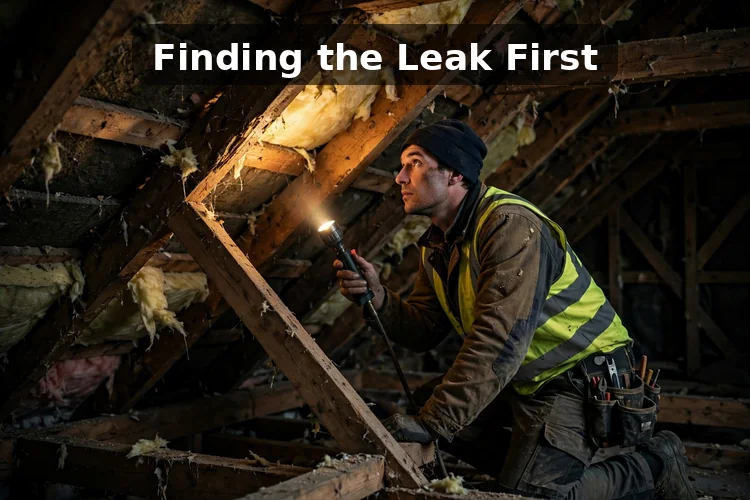
A roofer will usually start with a loft inspection, looking for dark or damp timbers with a torch. Then they confirm the source with a hose test, working from the bottom of the roof upwards.
Tracing is usually part of the repair rather than a separate charge. Where the source cannot be found from inside, the job moves into the £800 to £1,500 band because the roof has to be opened up in sections. A standalone roof inspection, if charged separately, typically runs £150 to £400.
Catch a leak early and you are paying for a patch. Leave it, and you are paying for the patch plus replacement underlay, timber treatment and possibly a ceiling repair inside.
Damp that has spread also tends to need scaffolding for a proper fix rather than a quick ladder job. Damp stains on walls mean repairing wall damage before any repainting.
Storm work costs extra. An emergency call-out in a storm or at antisocial hours typically adds £100 to £300, and MyJobQuote puts ordinary storm repairs from around £300, with extensive storm damage at £1,200 or more. A bucket under the drip and dated photos, inside and out, are worth doing before the roofer arrives.
Roof Tile Replacement Cost: When a Few Tiles Become a Re-Tile
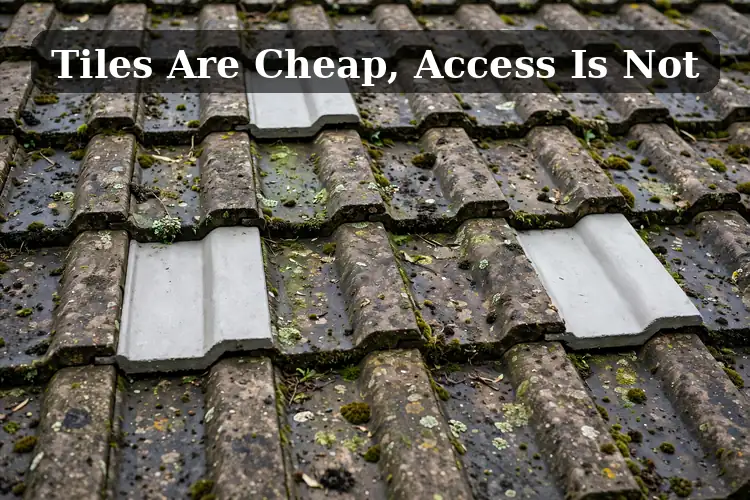
Roof tile replacement cost starts low and climbs fast with scale. Replacing one to five slipped or broken tiles typically costs £150 to £400, and Checkatrade puts up to five tiles at £170 to £500, with the top end reflecting jobs that need scaffolding. MyJobQuote puts the average at around £215 for five tiles.
The tile itself is only £1 to £8, but a roofer’s minimum call-out and safe access mean a single-tile job realistically costs £170 to £350. Concrete tiles cost roughly £0.80 to £2 each, clay tiles £1.50 to £6, and slate more again. You are paying for the visit, not the tile.
Matching the tile can be the hard part. A common interlocking concrete tile is cheap and widely available, but an unusual profile or a discontinued tile can mean sourcing a reclaimed tile at a premium. Natural slate costs more to work because it is brittle, slower to lay, and each slate has to be nailed or hooked individually.
Per square metre, Checkatrade gives concrete tiles at £90 to £120, clay tiles at £110 to £160 and natural slate at £150 to £220, all excluding VAT and for repairs up to 3 square metres.
A partial re-tile of one pitch, around 25 to 45 square metres, typically runs £1,500 to £4,000. A full re-tile of an average semi runs £5,500 to £12,000.
So when does a repair become a re-tile? The honest test is repetition. If this is the third repair in five years, the felt or the fixings are probably failing generally, and repair money is better put toward replacement. A re-tile also makes sense when the covering is at the end of its life and you are patching every winter.
Flat Roof Repair Cost: Patch It or Re-Cover It?
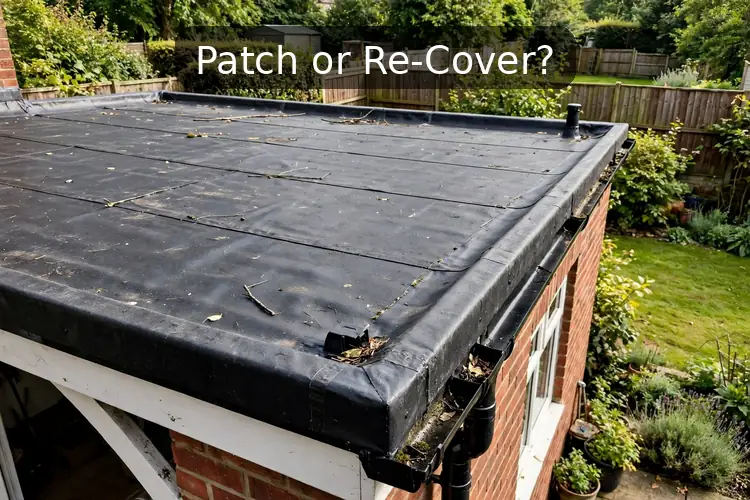
Flat roof repair cost is priced per square metre, like pitched roof work, but the numbers run higher per metre because the area is small. Checkatrade gives bitumen at £100 to £140 per square metre, EPDM rubber at £120 to £170 and GRP fibreglass at £130 to £180, all excluding VAT and for patches up to 3 square metres.
A small patch, leak or flashing repair on a flat roof typically costs £150 to £600. Re-felting a small flat roof, such as a garage or an extension, runs £1,000 to £2,500. A full replacement runs £80 to £130 per square metre depending on the covering you choose.
The material decides how long the fix lasts. Felt, or built-up bitumen, lasts roughly 10 to 20 years. EPDM rubber lasts 25 to 50 years and copes well with sun, ozone and freeze-thaw. GRP fibreglass lasts 25 to 40 years and is laid as a single continuous skin, so there are no joins to fail.
That lifespan is what turns the patch-or-replace decision. Patch it when the fault is local, the deck is firm, the covering is within its typical life and the roof still drains. A single puncture in a newer EPDM roof is a patch job, and a good patch will hold for years.
Re-cover it when the surface is tired across its whole area, or the felt roof is 15 years old and leaking in two places. Repeated patching on a covering past its life is throwing money at it.
A re-cover in EPDM or GRP usually works out cheaper per year of life than a third patch. Watch for the warning signs: ponding water that sits for days, blisters, split seams and soft boards underfoot.
Chimney Flashing Repair Cost: The Leak Most People Blame on Tiles
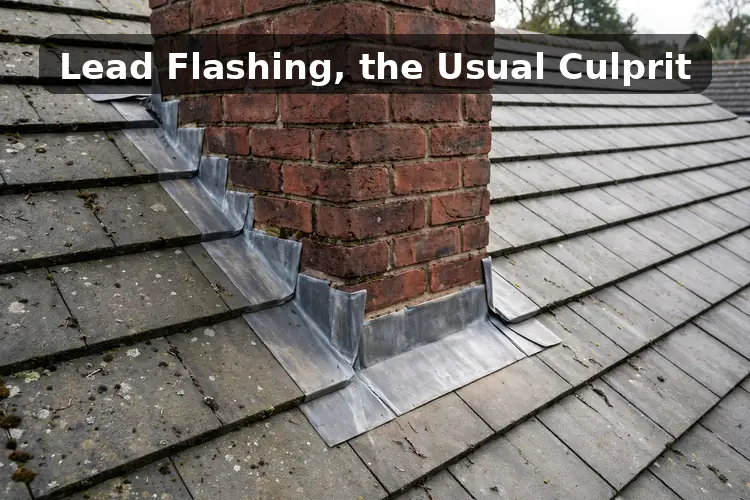
Chimney flashing repair cost runs from about £200 to re-dress or patch one side, through £350 to £550 to replace the lead on all four sides of a standard stack without scaffolding, to £800 to £1,500 for a full chimney re-flash. Scaffolding is extra, and it is often the bigger half of the bill.
MyJobQuote gives £150 to £250 for a lead patch, and an average of about £570 for a full replacement, split into £350 to £460 without scaffold and £700 to £920 with it.
Checkatrade prices lead flashing repair at £50 to £70 per metre, and stepped flashing at £80 to £120 per metre, excluding VAT. Both guides agree on the shape of the cost, even when the exact figures differ.
Flashing is the sheet lead that wraps the base of the stack, tucked into its joints and lapped over the slates or tiles beside it. It is the part of a chimney that most often lets water in.
Lead is long-lived, but it fails at the folds, at the top edge where it is tucked into mortar, and wherever a previous repair used mastic or a sand and cement fillet instead of metal.
Code 4 and Code 5 are the usual lead weights for chimney work, and a quote that does not name the code is hard to compare. Well-fitted lead lasts more than 80 years. Cheap mortar fillets and flashband tape are false economy, and they usually fail within a few winters.
A lifted edge can be redressed and repointed. A flashing that has hardened and split at several folds, or that was never fitted with soakers, is better replaced in full. If the damp has reached the chimney breast inside, expect peeling paint and stained plaster to follow, and fix the flashing before you touch the decoration.
Roof Repair Cost Per Square Metre, and How to Read a Quote

Roof repair cost UK figures are often quoted per square metre, and that is where the confusion starts. A per-metre rate suits small areas, and larger or more complex repairs are quoted as fixed prices. The two ways of pricing answer different questions, so do not compare them directly.
| Covering | Repair cost per m2 |
|---|---|
| Concrete tiles | £90 to £120 |
| Clay tiles | £110 to £160 |
| Natural slate | £150 to £220 |
| Bitumen flat roof | £100 to £140 |
| EPDM rubber | £120 to £170 |
| GRP fibreglass | £130 to £180 |
These are Checkatrade rates from June 2026, excluding VAT and access equipment, for repairs up to 3 square metres. Rates fall as the repair gets bigger, because the cost of getting there and setting up spreads across more area.
That is also why repair rates per square metre look higher than new-roof rates. A repair covers a small area, so the same setting-up cost lands on fewer metres.
Before you compare quotes, check that each one answers the same questions. A fair quote separates labour, materials, access and VAT, and it says what is included and what is not.
- Labour: how many people, for how long, at what day rate. A roofer typically charges £200 to £300 a day, or £35 to £45 an hour.
- Materials: named, not vague. Tile type, lead code, membrane brand.
- Access: scaffolding itemised separately, with the hire period stated.
- VAT: included or added on top. A VAT-registered roofer adds 20 per cent to repair work, so a £450 quote can become £540.
- Making good: waste removal, and who repairs the ceiling or plaster inside.
- Guarantee: how long the work is guaranteed for, and in writing.
Where you live moves the price. London and the South East typically run 10 to 25 per cent above the national average, and some guides put the gap at 20 to 30 per cent. Scotland and Northern Ireland can sit 10 to 15 per cent lower. Materials cost much the same everywhere, so the difference is labour and access.
There is one rule that changes the whole job. Once you are replacing 50 per cent or more of a roof covering, the work falls under the Building Regulations and you have to notify Local Authority Building Control.
A roofer registered with the NFRC Competent Person Scheme can self-certify the work instead, which saves a separate application. The Building Regulations approval pages on GOV.UK set out when approval is needed and how to apply.
Insurance is the other question people get wrong. Buildings insurance generally covers sudden, accidental damage such as storm damage or a fallen tree. It does not cover gradual wear and tear, poor maintenance or a roof that has simply aged out.
A typical excess sits in the same £150 to £500 range as a straightforward leak repair, so claiming for a slipped tile buys you nothing and costs you your no-claims position at renewal. It is worth claiming when a single storm has done sudden damage that runs into four figures.
And a small fix elsewhere in the house is a useful sense of scale. Fixing a squeaky floor costs little and takes an afternoon, while a roof leak left alone can turn into new timbers, new underlay and a plasterer. The roof is the one repair where waiting is the expensive option.
Questions Homeowners Ask Before They Book
How much does it cost to fix a leaking roof in the UK?
A roof leak repair averages around £375. A minor, accessible leak typically costs £150 to £500. If the leak is hard to trace or water has damaged the underlay or timbers, the cost can run to £1,500 or more.
Does home insurance cover roof repairs?
Buildings insurance generally covers sudden, accidental damage such as storm damage or a fallen tree. It does not cover gradual wear and tear, poor maintenance, or roofs that have simply aged out, which is why claims on roofs over 10 to 15 years old are so often refused. Keep dated records of maintenance and inspections, because insurers ask for them.
Do I need scaffolding for a roof repair?
Not always. A single low-level tile or an inspection can often be done safely from a ladder. Chimney work, a full roof section, or any awkward high-level access usually needs scaffolding, because the Work at Height Regulations 2005 require a safe, justified access method for the job.
How long does a roof repair take?
A minor fix such as replacing a few tiles takes a few hours to half a day. Tracing and fixing a leak typically takes one to three days, partly because the source has to be found first. Structural work on sagging timbers usually runs two to four days.
Is it cheaper to repair or replace a roof?
Repair while the damage is contained to one area. Once you are replacing 50 per cent or more of the covering, the work triggers Building Regulations and the cost approaches a full re-roof.
At that point it is worth comparing both quotes. If you are patching the same roof every winter, replacement is usually the cheaper option over five years.
The honest answer to roof repair cost UK is not one number. It is a range, and now you know how to read it. Get three written quotes, compare them line by line, and fix the small stuff before the next storm does it for you.