You walk into your kitchen at night flip on that one light and suddenly everything looks flat and a little too “builder-grade.” The cabinets are nice; the countertops look good. The room somehow feels nothing like those warm inviting kitchens you see in magazines.
Here’s the thing: great lighting can make a difference, then a renovation. It adds in depth highlights the details you already love and makes the entire kitchen feel more intentional. That’s why kitchen lighting ideas matter more than people think—they’re one of the cheapest ways to create a huge visual difference without ripping everything apart.
In this guide I’m breaking down 11 doable ideas you can actually picture in your own kitchen whether you’re working with a tight budget or simply want a more polished look. No vague. Complicated design talk—just practical ideas worth trying. I’ve walked through this problem myself so let’s get into it.
11 Stylish Kitchen Lighting Ideas for a Brighter, More Beautiful Space
1. Layer Your Kitchen Lighting of Using One Light
If you are using one ceiling light to light up your entire kitchen the room can feel flat and harsh. It can be too bright in some areas and too dark in others. The secret to making your kitchen look good is to use types of lights together. This is called layering your kitchen lighting. It gives your kitchen depth and makes it look nice.
Think about your kitchen lighting in three parts:
- Kitchen ambience lighting: This is the light in your kitchen. It is the light that fills the room. Recessed lights and ceiling lights give you the light you need to walk around the room.
- Kitchen task lighting: This is the light that shines on the areas where you work. Lights under the cabinets and above the sink are examples of kitchen task lighting. They light up the countertops and cooking areas without making the whole room too bright.
- Kitchen accent lighting: This is the light that makes your kitchen look nice. It highlights the things in your kitchen like glass cabinets, a nice backsplash and open shelves.
Quick Test: Does Your Kitchen Have One Light Source?
Try this at night: turn on your main kitchen light and stand in the middle of the room. If you see countertops or shadows under the cabinets your kitchen probably has only one light source.
That is where kitchen lighting needs help from tasks and accent lighting. Instead of using one bright light use several smaller lights in different areas.
Practical tip: Use smaller lights instead of one big light. A ceiling light for the light + lights, under the cabinets + a hanging light can make your kitchen feel warmer and nicer. Kitchen lighting is important to make your kitchen feel welcoming.
Layering your kitchen lighting can make a bigger difference than you expect. If you’re looking for more ways to improve the overall feel of your kitchen, these ideas can help you transform your kitchen space.
2. Make a Statement with Pendant Lights Over the Island
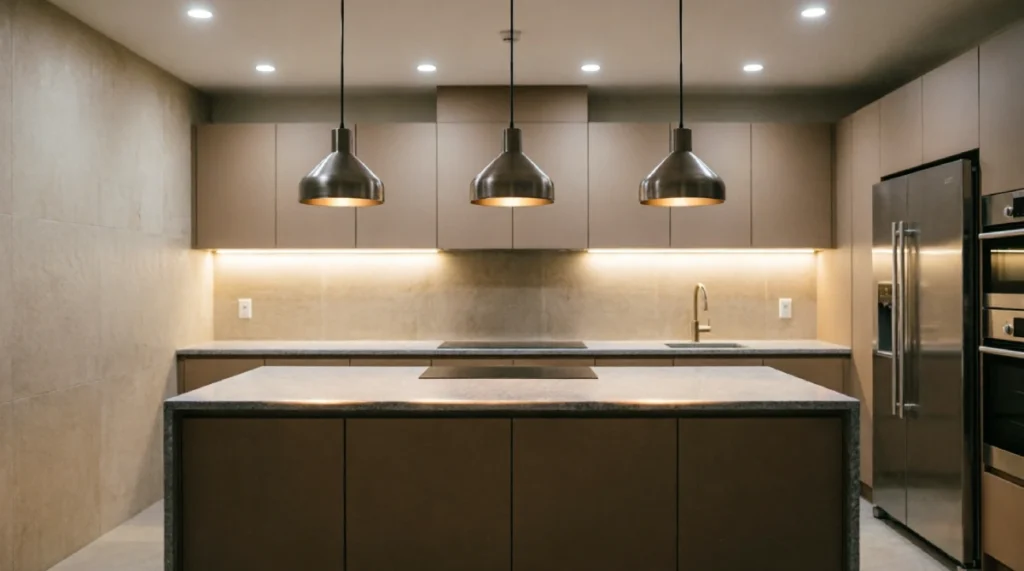
A kitchen island is often the center of the room so why leave it under a dull ceiling light? Pendant lights can instantly give the island a finished designer look while providing light for cooking, prepping, eating or working.
When looking at kitchen lighting designs focus on proportion and placement—not just the fixture style. A few simple measurements can make the difference between an arrangement and one that feels awkward.
- Choose 2–3 pendants: Two larger pendants work over a smaller island while three smaller or medium fixtures can fill a longer island without looking crowded.
- Space them evenly: Keep gaps between the pendants and avoid pushing them too close to the island’s edges.
- Match the scale: Large islands can handle fixtures while smaller islands usually look better with slimmer pendants.
- Get the hanging height right: Aim for roughly 30–36 inches between the countertop and the bottom of each pendant. This keeps the light useful without blocking conversation or sightlines.
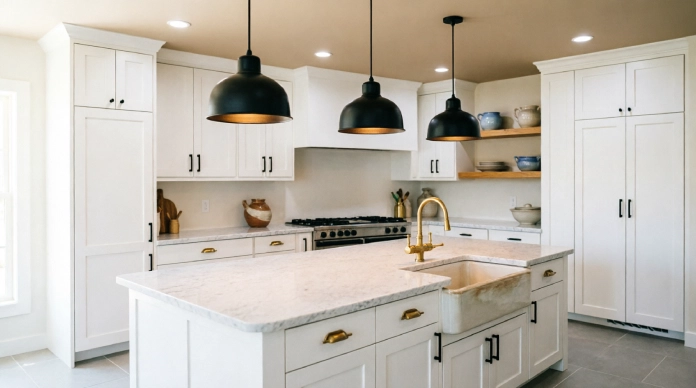
One of the upgrades? Imagine replacing three mismatched pendants—different shapes, finishes and shades, with one cohesive set. Suddenly the island looks intentional of pieced together.
That’s what makes kitchen island lighting ideas so powerful. You don’t necessarily need an island or expensive remodel. Sometimes simply giving the island a proportioned coordinated lighting feature is enough to make the entire kitchen feel more pulled together.
3. Go Bold with a Chandelier—Yes in the Kitchen
A kitchen chandelier might sound like an idea but that is what makes it work so well. Of course, the kitchen is just for cooking, a kitchen chandelier can add instant warmth and a nice feeling to the room. It looks really good above a kitchen island, breakfast table or small dining area where you want people to look.
There are kitchen chandelier ideas, and the most interesting ones are those that do not look like they belong. Think about glass that is shaped in a way metal that looks warm simple shapes that are modern or designs that look old. If you choose them carefully, they can make the kitchen, feel fancy like luxury kitchen lighting without making it feel too formal.
Keep the Kitchen Chandelier in Proportion
The mistake people make is choosing a kitchen chandelier that looks great in the store but takes over the whole kitchen. The size of the kitchen chandelier matters more than how fancy it looks.
- For a kitchen choose a small kitchen chandelier that is open and does not look too heavy.
- Over an island you can choose a bigger and more fancier kitchen chandelier.
- Above a dining nook choose a kitchen chandelier that’s the right size, for the table and does not stick out too much.
- Make sure the kitchen chandelier is high enough that it does not block people’s view or get in the way of conversations.
You want people to say, “I did not expect to see a kitchen chandelier, but I really like it”. Not “Where did that big light come from?”
That little touch of elegance can make the whole kitchen feel like it was designed with care, especially when the kitchen chandelier matches the hardware on the cabinets the finishes or the other kitchen lighting.
4. Add Under-Cabinet Lighting for Instant Warmth
If your kitchen still feels a little cold at night look underneath your cabinets. Under-cabinet lighting is one of those things that can completely change how your kitchen feels without changing your cabinets or countertops or backsplash. If you are using one big light in the ceiling, you get a soft light that makes your whole kitchen feel warmer and more welcoming.
There are two ways to do this:
- LED strip lights: These lights go along the bottom of the cabinet and make a smooth light across the countertop. They are great if you want a modern look.
- Puck lights: These are small lights that make individual pools of light. They work well if you want a traditional look or a special lighting effect.
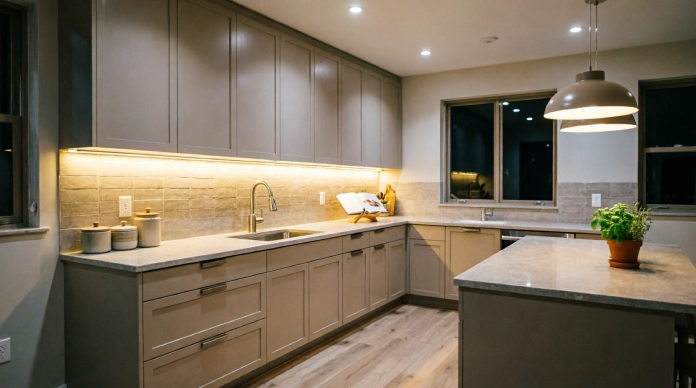
For kitchen cabinet lighting I really like the way it looks at night. Turn off the lights and leave the under-cabinet lights on and your kitchen will feel cozy instead of dark. This is perfect for having a snack at night or drinking coffee in the morning or just leaving a light on without lighting up the whole room.
Warm White vs. Cool White
Before choosing your bulbs, consider color temperature, since warmer and cooler light can create very different moods in a kitchen.
- 2700K-3000K: This light is warm and soft and welcoming. It is usually the choice for a kitchen in a home.
- Cool white: This light is crisp and energizing. It can make some kitchens feel harsh or, like a hospital.
Tip: If you want your kitchen to feel warm and welcoming, start with 2700K-3000K. Just make sure the colour of the light works well with the rest of your kitchen lights so everything feels nice and consistent.
5. Use Recessed Ceiling Lighting for a Clean Modern Base Layer
If you want your kitchen to feel bright and modern without filling the ceiling with heavy fixtures recessed lighting is a good starting point. It gives even kitchen ceiling lighting while keeping the focus on the cabinets, countertops, backsplash and other things you really want to see.
The key is spacing and placement. Recessed lights shouldn’t just be arranged in a grid across the ceiling. That can create what I like to call the “dorm room” effects of sized bright spots with no real feeling of atmosphere.
Instead think about where lights actually needed:
- Place recessed lights evenly enough to stop harsh bright spots and dark areas.
- Put them in areas where light is actually needed like countertops, walkways and places where you work.
- Don’t put every fixture in the middle of the kitchen.
- Make sure the layout is balanced without making the ceiling look too full.
This method works well for modern kitchen lighting designs, where a clean ceiling helps the rest of the design look better.
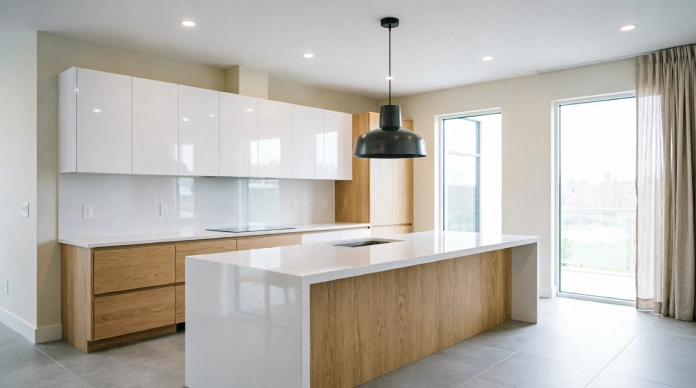
Don’t forget the dimmer switches. They are simple to add and give recessed lighting two looks: bright and useful when you are cooking or cleaning, then soft and calm when you are eating dinner or relaxing. Pair dimmed recessed lights with pendants or under-cabinet lighting. The kitchen feels completer right away.
6. Bring in Accent Lighting to Highlight What You Love About Your Kitchen
You do not need every light in your kitchen to help you with tasks like chopping vegetables or finding the coffee maker. Sometimes you just want the lights to show off the parts of the kitchen you love. That is where kitchen lighting comes in. When you use it in the way it adds depth to your kitchen, highlights the nice details and completely changes the mood of the kitchen when it is dark.
You can try using lighting in places like:
- Glass-front cabinets: You can put small lights inside to show off your glassware, dishes or other nice things you have.
- Open shelving: A small light strip under a shelf can gently light up the wall behind it and the things you have on the shelf.
- Toe-kicks: Small lights under the cabinets can make a nice glow on the floor and make the cabinets look like they are floating.
- Display areas: You can use lights to draw attention to nice things like artwork, special parts of the kitchen or a pretty wall behind the counter.
A Small Change Can Make a Big Difference
Imagine someone who loves their kitchen during the day. Thinks it looks too harsh at night. Of putting in new lights or starting a big project they just put some LED strips under the lower cabinets.
When they turned off the lights the soft glow from the LED strips made the cabinets look nice and also lit up the floor a little bit. The kitchen suddenly felt warmer and nicer. They did not have to remove any cabinets or make any big changes to the kitchen.
That is what good accent lighting should do. It does not compete with the rest of the kitchen. It quietly draws attention to the kitchen accent lighting and the nice details that deserve it. The kitchen accent lighting can really make your kitchen look nice.
7. Choose Fixtures That Solve Low Ceiling Problems
Low ceilings can make a kitchen feel smaller than it actually is, especially when the lighting fixture hangs too low or takes up too much visual space. The good news? You don’t need to raise the ceiling to make the room feel more open. Choosing the right fixtures can create the illusion of height while keeping the kitchen well lit.
For kitchen lighting designs for low ceilings, consider:
- Flush mounts: These sit close to the ceiling and provide strong ambient light without adding visual bulk.
- Semi-flush fixtures: These offer a little more decorative detail while still keeping the fixture relatively close to the ceiling.
- Slim pendants: Over an island, choose narrow, streamlined pendants rather than wide or heavily detailed designs.
- Recessed lights: These are ideal when you want plenty of illumination with almost no visual obstruction.
Be careful with chandeliers, too. While they can look stunned in kitchens with generous ceiling height, a large hanging chandelier can backfire in a low-ceiling space by blocking sightlines and making the ceiling feel even lower.
Creating the Illusion of More Height
Your fixture’s shape and visual weight matter just as much as its actual dimensions. Light-coloured finishes, open designs, and slim silhouettes can make the ceiling feel less crowded. Fixtures with clean, upward-oriented shapes can also subtly draw the eye higher.
Quick tip: In a low-ceiling kitchen, think less bulk, more light. Keep the fixtures visually light and let the illumination create a sense of openness rather than relying on oversized statement pieces.
8. Keep It Simple and Bright for Small Kitchens
A small kitchen doesn’t need five different light fixtures to feel bright. In fact, adding too many can make a tight space look even more crowded. The best small kitchen lighting Inspiration are usually the simplest: fewer fixtures, better placement, and surfaces that help spread the light. Lighting is only one part of making a small kitchen feel bigger. If you’re planning other updates, these kitchen remodel tips for small spaces can help you make better use of every inch.
Try these easy strategies:
- Choose multi-functional fixtures: A stylish flush mount can provide general illumination while adding a decorative touch. A slim pendant over an island can do the same for a workspace.
- Add under-cabinet lighting: It brightens the countertop without taking up any visual or physical space.
- Use reflective surfaces: Glossy backsplashes, glass cabinet doors, and strategically placed mirrors can bounce light around the room, making it feel brighter and more open.
- Keep the ceiling uncluttered: Avoid filling every available spot with fixtures. A clean ceiling can make a small kitchen feel less cramped.
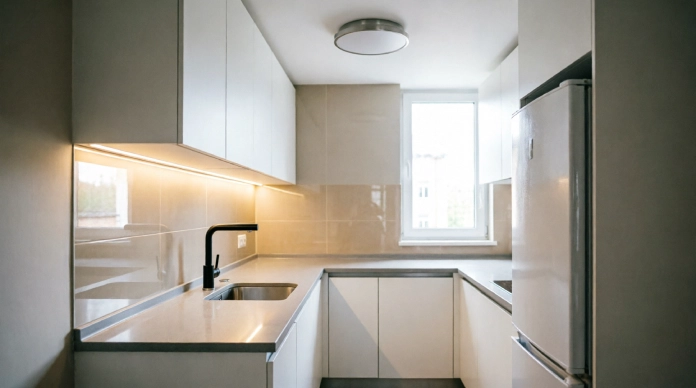
A Tiny Galley Kitchen, Two Smart Changes
Picture a narrow galley kitchen with one dull ceiling fixture and a countertop that disappears into shadows at night. Instead of installing five new lights, the homeowner makes two targeted changes: a slim LED strip under the upper cabinets and a simple, bright flush-mount ceiling fixture.
The difference is immediate. The counter becomes easier to use, the glossy backsplash reflects more light, and the entire kitchen feels less boxed in.
That’s the secret with small kitchen lighting Inspiration: don’t add more just because the room is small. Choose fewer fixtures that work harder and let light-coloured or reflective surfaces do some of the work for you.
9. Try Farmhouse-Style Fixtures for a Warm Collected Look
There’s something about farmhouse lighting that makes a kitchen feel warmer and more inviting. If your space feels a little sleek or sterile farmhouse kitchen lighting Inspiration can add the texture and character, it’s missing—without turning the room into a rustic time capsule.
Start with materials that bring a handcrafted feel:
- Wrought iron: Black or aged iron fixtures add structure and pair beautifully with wood tones.
- Wood: Wooden accents soften kitchens and bring in an organic element.
- Woven shades: Rattan, cane and woven fibers create texture while giving off a more relaxed glow.
The best part is that you don’t have to go to the farmhouse. In fact, mixing farmhouse fixtures with cabinetry often looks better. Picture white or flat-panel cabinets paired with a black wrought-iron pendant or minimalist cabinetry beneath a warm woven chandelier. That contrast keeps the kitchen feeling fresh or overly themed.
Don’t forget to layer. Let recessed lights provide the ambient lighting while farmhouse pendants add personality and, under-cabinet LEDs provide practical task lighting.
Tip: If your cabinets are modern and streamlined choose one or two farmhouse-inspired fixtures as a contrast. You’ll get the warmth of farmhouse style without sacrificing the look of a contemporary kitchen.
10. Splurge Strategically for a Luxury Feel
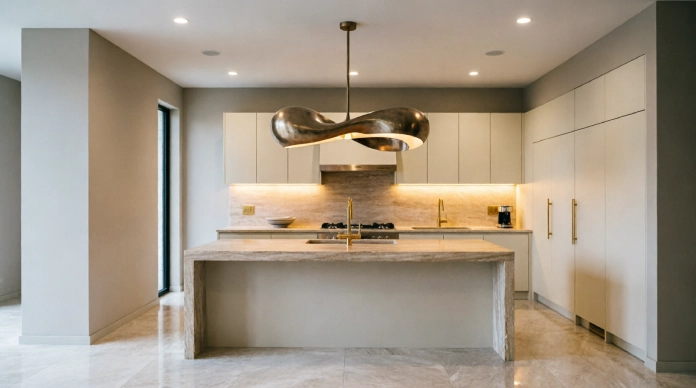
A luxurious kitchen doesn’t need an expensive light fixture in every corner. In fact, some of the best luxury kitchen lighting Inspiration follow a much simpler formula: choose one hero fixture and let everything else play a supporting role.
Designers often use this approach to create a focal point without making the room feel overdecorated. Your hero could be a sculptural pendant over the island, an elegant chandelier above a dining nook, or a pair of statement fixtures that instantly catch the eye.
Lighting is just one way to create an expensive-looking kitchen. For more inspiration, check out these luxury kitchen ideas that focus on timeless details and elevated finishes
Then keep the supporting lighting understated:
- Hero fixture: Spend more here because it becomes part of the kitchen’s visual identity.
- Recessed lighting: Choose reliable, good-quality options without overspending on decorative details.
- Under-cabinet LEDs: Prioritize good light quality and even illumination rather than expensive housing.
- Accent lighting: Keep it subtle and use it only where it adds something meaningful.
Where Should You Spend?
If you have a limited lighting budget, put your money where you’ll notice it most. A beautiful island pendant can make a stronger impression than five expensive fixtures that barely stand out.
For example, spend more on one distinctive chandelier or pendant, then pair it with simple recessed lights and affordable LED strips.
The result? A kitchen that feels expensive without requiring an expensive fixture everywhere. The secret isn’t how much you spend, it’s knowing which light deserves to be the star.
11. Pulling It All Together: Kitchen Lighting Inspiration That Match Your Style
Once you’ve figured out brightness and placement, the final step is choosing fixtures that actually fit your kitchen’s personality. The best kitchen light fixture ideas don’t compete with your cabinets, counters, or hardware, they make those details look even better.
Since your cabinets are one of the biggest visual elements in the room, these kitchen cabinet designs can also help you choose lighting finishes that complement your space
Think about the finishes already in your space before buying anything new:
- Matte black: Great for modern, minimalist, industrial, and farmhouse kitchens. It adds contrast and definition without feeling flashy.
- Brass: A warm choice that instantly brings a more polished, upscale feel, especially with white or natural wood cabinets.
- Glass: Perfect when you want your lighting to feel light and airy. Clear or seeded glass works particularly well in smaller kitchens.
- Mixed metals: Don’t be afraid to combine finishes. Black pendants with brass hardware, for example, can create a layered look when the same finishes are repeated elsewhere.
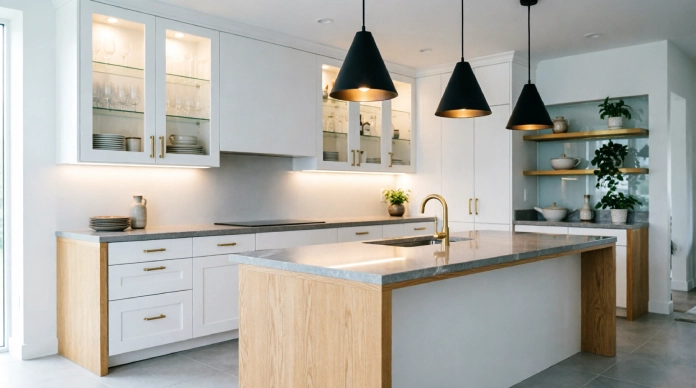
You don’t need every fixture to match perfectly. In fact, coordinating rather than matching often makes a kitchen feel more collected and designer inspired.
And that’s really the point of these kitchen lighting Inspiration: your fixtures should support the room, not overwhelm it. Choose pieces that suit your kitchen’s scale, repeat finishes thoughtfully, and let your lighting add the final layer of personality.
FAQs
1. What is the best lighting for a kitchen?
A combination of ambient, task, and accent lighting usually works best.
2. What colour temperature is best for kitchen lighting?
Warm white around 2700K–3000K creates a comfortable, inviting feel.
3. How many pendant lights should go over a kitchen island?
Usually 2–3 pendants, depending on the island’s size and the fixtures’ scale.
4. Is recessed lighting good for kitchens?
Yes. Recessed lights provide clean, even ambient lighting without taking up visual space.
5. How can I make a small kitchen look brighter?
Use under-cabinet lighting, reflective surfaces, and uncluttered fixtures to spread light and create a more open feel.
Conclusion
A beautiful kitchen doesn’t always need full renovation, often just needs better, more intentional lighting. These kitchen lighting ideas prove that a few thoughtful swaps can completely transform how your space looks and feels.
You don’t need to do everything at once. Start with one or two ideas this week, whether it’s under-cabinet lighting, new pendants, or a simple dimmer. Small changes can make a surprisingly big difference.