Table of Contents
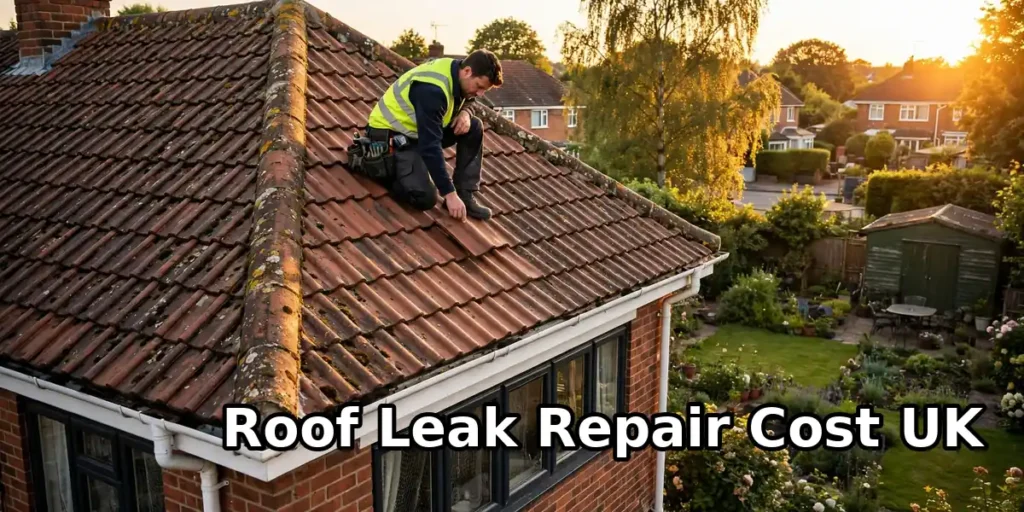
Most roof leak repairs in the UK cost £220 to £550, with MyJobQuote’s average at £375. That is the short answer to roof leak repair cost UK, and the cause, not the size of the stain, decides where your job lands in that range.
A stain the size of a dinner plate can mean a single slipped tile and a two-hour fix. A stain the size of a coin can mean a valley that has been letting water in for a year. The ceiling tells you where the water arrived. It almost never tells you where it got in.
This guide does the job in the order a roofer does it: what to do tonight, how to trace the leak to its real entry point, the fix for each cause with the price named, and finally the insurance question and the repair-or-replace call.
This is the sixth post in our Roof Repairing guides. The earlier posts price the repairs, the flat roof replacement and the full re-roof, and one gives the lifespan of every covering. This one is the leak itself: how to find it, how to fix it, and what it should cost.
Roof Leak Repair Cost UK by Cause: What Each Fix Really Costs
The table below prices roof leak repair cost UK by cause, not by roof size, because the cause is what the roofer charges for. Every figure comes from MyJobQuote’s pages, updated in September and October 2026, and the VAT position is stated on each row, because the guides do not all treat it the same way.
| Cause | Typical cost | Source |
|---|---|---|
| Slipped or broken tiles | £150 to £300 | MyJobQuote, Sep 2026; VAT not stated |
| Broken or lifted flashing | £200 to £500 | MyJobQuote, Sep 2026; VAT not stated |
| Ridge tiles | £250 to £600 | MyJobQuote, Sep 2026; VAT not stated |
| Valley | £400 to £800 | MyJobQuote, Sep 2026; VAT not stated |
| Flat-roof patch | £200 to £600 | MyJobQuote, Sep 2026; VAT not stated |
| Minor leak, traced and repaired | £150 to £400 | MyJobQuote, Oct 2026; VAT not stated |
| Major leak, wet underlay or timbers | £400 to £1,200+ | MyJobQuote, Oct 2026; VAT not stated |
| Emergency call-out | £150 to £300, plus the repair | MyJobQuote, Oct 2026; VAT not stated |
MyJobQuote gives one to three days for a typical leak repair. A single tile takes two to four hours, flashing half a day to a day, a ridge a day, and a valley one to two days. Those times come from the same guides as the prices above.
Two conflicts are worth showing, not smoothing over. MyJobQuote’s leak page puts swapping broken tiles at £150 to £300, while a Birmingham guide reading the same source gives £150 to £350 for five to ten tiles. A flat-roof patch is £200 to £600 on the leak page, but £100 to £180 per square metre on MyJobQuote’s other page.
The honest reading is that the price moves with the size of the job. A quote that names the cause is worth more than a range that does not. And the call-out is a third figure to watch: Industry Oversight puts a storm call-out at £100 to £300 on top of the job, against MyJobQuote’s £150 to £300.
On VAT, the picture is mixed. MyJobQuote’s leak repair page does not say whether its figures include VAT. Its other cost page is explicit: those supply-and-fit prices exclude scaffolding and VAT. Checkatrade’s unit rates are also before VAT, and they leave out scaffolding and removing the old covering.
So treat every figure above as the repair itself, and ask the roofer what access costs on top. The two guides I would read first are the Industry Oversight roof leak repair guide and the MyJobQuote roof leak repair cost page. The first gives the clearest plain-English account of costs, first steps and who pays.
Our roof repair cost guide prices the same jobs from the other side, by job rather than by cause, if you want a second view before you ring anyone.

Tonight First: Stop the Water, Protect the Electrics, Take the Photos
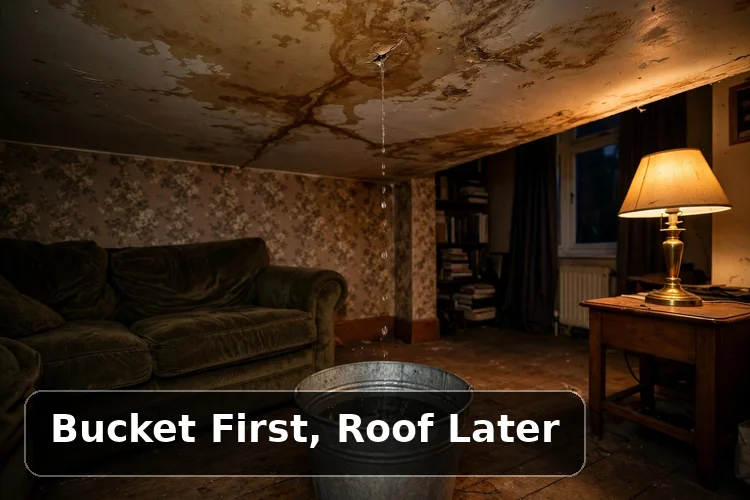
A leak at 9 pm is not a repair job. It is a damage-limitation job, and the order matters. Put a bucket under the drip first, then move anything the water can reach, then deal with the electrics, then take the photos. The roof itself can wait until morning.
If water is anywhere near a light fitting, a socket or wiring, switch that circuit off at the consumer unit. Leave it off until an electrician has looked at it. Water and a live circuit is the one part of a leak that can hurt someone before the ceiling does.
Photograph the stain and the room around it, with something in the frame for scale. Draw a light pencil line around the edge of the stain with the date beside it. That line is your evidence. If the stain grows, you can show the insurer and the roofer exactly how fast.
A tarpaulin over the leak can hold a roof until a roofer arrives, but only if you can fix it safely from a ladder, on firm ground, in daylight. Never climb onto a wet roof at night, and never walk on the tiles themselves.
A roofer with a roof ladder and crawl boards can do in twenty minutes what takes a homeowner a hospital visit.
Ring a roofer tonight if the water is coming in fast, the ceiling is bulging, or the electrics are involved. A bulging ceiling is holding water, and it will come down when it is ready, not when you are. An emergency call-out is the price of stopping the damage tonight rather than pricing it in the morning.
Trace It Before You Touch It: The Leak Is Almost Never Under the Stain
The stain on your ceiling is where the rain arrived, not where it got in. Water that slips past the tiles lands on the underlay, runs down the slope, follows a rafter or a batten, and can travel a metre or more before it drips.
Fix the spot under the stain and you will have fixed nothing.
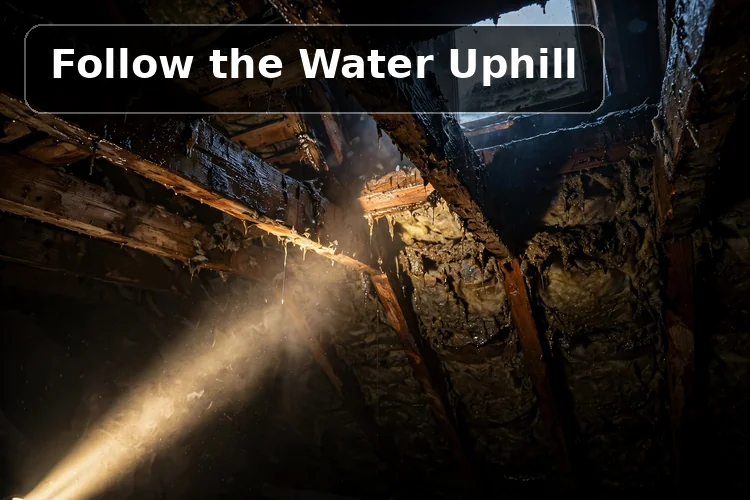
Start in the loft, in daylight, with a torch, during or just after rain if you can. Look up at the rafters and the underlay, not down at the floor. You are looking for dark or tide-marked timber, wet or stained battens, drips on the underlay, sodden or flattened insulation, and pinpricks of daylight where no light should come.
Work uphill from the stain. Find the wet patch on the ceiling below, look at the roof above that spot, then follow the wet or stained timber up the slope until the dampness stops.
The point just beyond it is the entry. Mark it with chalk or a strip of tape on the timber so you can find it again when the roof is dry.
Stay on the boards or on a proper walkway while you are up there. The ceiling below is plasterboard, and a foot placed between the joists goes straight through it. If there is no boarding, look from the hatch with the torch instead of crawling across.
If the building was built or refurbished before 2000, assume there is asbestos in it and do not disturb anything you do not need to. That is the Health and Safety Executive’s standing advice, and it applies to lofts as much as to any other part of an old house.
A dry mark and a wet mark tell different stories, so touch the timber if you can do so safely. A dark but dry tide mark is history: water has been here, but not recently. A damp or cold surface says the leak is live.
A clear, wet drip means the entry is close and the water is moving now.
Not every wet loft is a leak. Warm air from kitchens and bathrooms rises into the loft, meets cold roof timber and turns to water. A patchy drizzle along the underlay or a black mould bloom on the rafters can come from poor ventilation. A real leak tends to leave a track with a clear start point.
Condensation spreads evenly and gets worse in cold, still weather. Both can exist on one roof, and a roofer who only fixes the covering will miss the second one. If the loft is damp all over with no clear track, ask about ventilation before you pay for a repair.
If you cannot catch the leak in the rain, you can make one. With one person in the loft watching the marked area and another outside with a hosepipe, wet the roof in sections. Start low and work up, giving each area a few minutes. When the watcher sees water appear, you have found the entry zone.
Six Repairs, in the Order a Roofer Does Them
Once you know the cause, the repair is usually straightforward. These six cover nearly every UK leak, and they run in the order a roofer checks them, from the most common cause to the least.
1. A slipped, cracked or missing tile
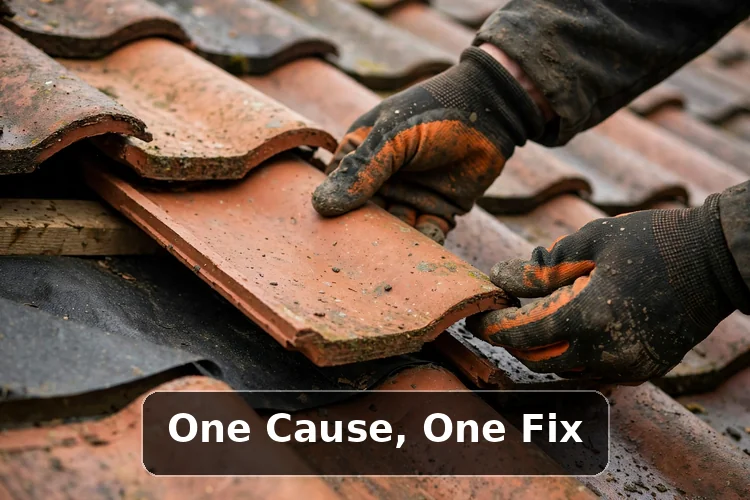
This is the most common cause, and the cheapest fix. A single gap lets wind-driven rain straight in, and the tile that slipped is usually on the side that takes the prevailing wind. From the ground with binoculars you can often spot a tile that has slipped out of line or a bare patch where one is gone.
Lift the tiles either side of the damaged one, remove the nails or clips holding it, and slide a matching replacement in. Match the profile, size and colour: take the broken piece to a builders’ merchant or a reclamation yard, because a mismatched tile on a visible slope looks worse than a neat repair.
Secure it with a tile clip or galvanised nails, reset the lapping tiles, and check the coursing from ground level before you come down. A tile that sits proud of its neighbours will lift in the next wind, and the leak will be back with it.
2. Broken or lifted flashing
Flashing is the lead or metal strip that seals the join where the roof meets anything that pokes through it: a chimney, a soil vent pipe, or the wall of an extension. When it cracks, rusts or lifts, water routes underneath the covering and appears inside a long way from the join.
Scrape off the old, cracked sealant or mortar, clean the area so the new material can bond, then re-seat or refit the lead so it sits flat against the roof surface. Seal it with a weatherproof sealant or re-point with mortar, and take care not to create a water trap that holds moisture against the roof.
Where the flashing meets a chimney stack, our chimney repair guide prices the leadwork and repointing as separate jobs. Chimney flashing is the one flashing repair where the stack itself is often part of the fault.
3. Ridge tiles that have worked loose
The ridge is the line of tiles along the top of the roof, and it is usually the first place a roofer looks. The mortar bedding crumbles with frost and age, the tiles work loose, and rain gets in along the top edge where it can run a long way before it shows.
Re-bed the loose tiles in fresh mortar, or fit a dry ridge system that holds the tiles mechanically instead of with mortar. A dry ridge costs more on the day and asks nothing of the mortar afterwards, which is why most roofers now fit it on a re-roof.
Either way, the ridge is not a sealant job. A tube of mastic across a loose ridge is a patch, not a repair, and it will be the first thing to fail in the next frost.
4. A valley that has blocked or split
A valley is the fold where two roof slopes meet, and it channels more water than any other part of the roof. Leaves and moss block it, the channel overflows, and water gets under the tiles on either side. A valley leak often shows as a stain on a wall below the join, well away from the roof itself.
Clear the channel first, then check the tiles and the flashing on both sides of it. Small gaps take a waterproof sealant. A split or rusted valley lining needs replacing, and that is a roofer’s job: the valley carries the water for two slopes, and a bad repair there leaks worse than the fault it replaced.
5. A flat-roof patch that has failed
Flat roofs leak differently. Look for blisters, splits and ponding, water that stands for more than 48 hours after rain. A blister that has split is an open door, and felt that is cracked across a wide area says the membrane is finished rather than just damaged.
Clean and dry the damaged section, cut away any loose or perished material, and patch it with a compatible material: felt on felt, EPDM on EPDM, liquid membrane where the roof takes it. The wrong product fails fast, because it does not bond to what is underneath.
If the faults are widespread or the felt is past 15 years, patching buys months, not years. Our flat roof replacement guide prices the full job, membrane by membrane, if the patch is only the start of the story.
6. A blocked gutter or a soaked eave
A gutter that is blocked or sagging spills rain over its back edge, where it soaks the fascia and the top of the wall and then appears inside as if it came from the roof. It is the cheapest leak to fix and the easiest to miss, because nobody looks at the gutter when the ceiling is wet.
Clear the gutter and the downpipe, check the fall so water runs to the outlet, and look at the eaves felt while you are there. If the felt has rotted or dropped short of the gutter, water runs behind the fascia instead of into it, and that needs a roofer to put right.
A gutter cleared in autumn is a leak that never happens in winter. It is the only repair on this list that costs nothing but an afternoon and a pair of gloves.
What Your Insurance Will and Will Not Pay For
This is where roof leak repair cost UK meets a second question: who pays. The answer turns on the cause, and it is the cause that decides most claims before anyone looks at the price.
Buildings insurance pays when a sudden, identifiable event damaged the roof: a storm that stripped tiles, a tree that fell on it, fire, or vandalism. It does not pay when the roof simply reached the end of its life. Wear and tear, gradual deterioration, poor maintenance and pre-existing damage are the exclusions behind most refusals.
The line is sharper than most owners expect. If a storm blows tiles off, the repair is usually covered. If the roof is leaking because it is old and has not been maintained, it likely is not.
A roof more than ten years old can be treated as wear and tear in some policies, so read the wording on age before you ring the insurer.
What counts as a storm has a definition. The Association of British Insurers defines it as gusts of at least 55 miles per hour, torrential rain of 25 millimetres an hour or more, snow at least 30 centimetres deep in 24 hours, or hail heavy enough to damage hard surfaces. Your insurer’s own definition may differ.
The Financial Ombudsman Service has accepted that rain, hail or snow on its own can amount to a storm even without high winds. That matters, because many leaks follow heavy rain with no great wind at all, and an insurer that insists on wind speed alone is applying a narrower test than the ombudsman does.
Only about a third of storm damage claims ended in a payment in 2024, according to the Financial Conduct Authority’s review, reported by Which?. The gap is usually evidence, not bad faith: the insurer has to be shown an insured event caused the damage, and you have to show the roof was in good condition before it.
Photos of the roof before the storm, a survey, and a roofer’s report that names the cause all help. A claim with none of them is easy to refuse. Keep the photos, the pencil line around the stain and the roofer’s written cause together, because that file is the claim.
Two things to check before you claim. First, the excess: a £250 excess on a £300 repair means the claim is barely worth making, and a claim on your record can cost more than the repair at renewal.
Second, the contents side: buildings insurance covers the structure, and contents insurance covers what the water damaged inside, but only when the same sudden event caused it.
If the leak came from wear and tear, neither side pays. The clearest plain-English account of the whole question is the MoneySuperMarket guide to roof repairs and insurance, which sets out what is covered, what is not, and what evidence helps.

Repair or Replace: The Call That Saves the Second Bill
A repair that costs a tenth of a replacement and buys five years is good money. A repair that costs a third and buys one winter is not. The call is about how much of the roof is failing, not how much the quote is.
Repair when the fault is local: one slipped tile, one cracked flashing, one blister on a felt roof that is otherwise sound. MyJobQuote puts a minor leak repair at £150 to £400 and a major one, with wet underlay or timbers, at £400 to £1,200 or more.
When the same roof needs a call-out every year, add up three years of patch bills before you pay for a fourth.
Replace when the faults are widespread, the fixings are going, or the roof is past the lifespan its own covering promises. Our guide to how long a roof lasts gives the lifespan of every covering, and our new roof cost guide prices a full re-roof by material and house size, with MyJobQuote’s average replacement at £5,250.
One rule of thumb helps: if the repair costs more than a quarter of a re-roof and the covering has less than a quarter of its life left, get the re-roof priced before you sign the repair. A roofer who quotes both, and tells you which one he would buy, is the roofer to keep.

Questions Every Leaking-Roof Owner Asks

How much does it cost to repair a roof leak in the UK?
Most jobs land between £220 and £550, with MyJobQuote’s average at £375. A single slipped tile can be £150 to £300, flashing £200 to £500, and a major leak with wet timbers £400 to £1,200 or more. Scaffolding and VAT are usually on top, so ask the roofer to name them in the quote.
Can I repair a leaking roof myself?
A single tile, reached safely from a ladder on firm ground, is a job a careful homeowner can do. Anything above a single storey, anything on a wet or steep roof, and anything involving leadwork or a valley belongs to a roofer.
A roofer brings a roof ladder, crawl boards and insurance. Never walk directly on the tiles, and never climb a wet roof.
How do I find where a roof is leaking from?
Start in the loft with a torch, during or just after rain. Find the stain on the ceiling below, then follow the wet timber uphill until the dampness stops. The point just beyond it is the entry. Water can travel a metre or more along a rafter before it drips, so the entry is almost always higher than the stain.
Will home insurance pay for a roof leak?
It pays when a sudden event caused it, such as a storm or a falling tree, and the roof was in good condition before. It does not pay for wear and tear, poor maintenance or damage that was already there.
Check the excess first: a small repair can cost less than the excess, and a claim can cost more at renewal than the repair itself.
How long does a roof leak repair take?
Most jobs take half a day to a day, and MyJobQuote gives one to three days for a typical leak repair. A single tile takes two to four hours. A valley or a major leak with wet timbers takes one to two days, and a flat-roof patch needs dry weather to cure.
So the honest answer to roof leak repair cost UK is a range, not a number, and the range narrows the moment you know the cause. Find the entry first, fix only what failed, and keep the photos and the quote together.
And keep the table from this guide. When a quote lands, check the cause against it. If the price promises a small job and the cause says a big one, ask the roofer to walk you through it before you sign.